

Hip-hop influences for Canadian fans: 5 cultural roots
Canadian hip-hop fans often struggle to trace the genre’s layered cultural roots back through decades of fusion and evolution. Understanding where hip-hop blends African American and Latino roots, Jamaican sound systems, socio-political themes, and multicultural impact in Canada helps you appreciate both global classics and local artists like Stevie The Manager. This guide breaks down five major cultural influences shaping hip-hop, offering concrete examples and context to deepen your connection to the music.
Table of Contents
- Criteria For Identifying Hip-Hop Cultural Influences
- African American And Latino Roots Of Hip-Hop
- Jamaican Sound System And DJ Influence
- Socio-Political Activism In Hip-Hop Lyrics
- Canadian Multiculturalism’s Role In Hip-Hop
- Stevie The Manager And His Hip-Hop Influences
- Summary Comparison And Situational Recommendations
- Discover Stevie The Manager’s Musical Journey
Key takeaways
| Point | Details |
|---|---|
| Bronx origins | Hip-hop originated in the 1970s in the Bronx as a cultural movement combining DJing, MCing, breakdancing, and graffiti rooted in African American and Latino communities. |
| Jamaican influence | DJ Kool Herc introduced sound system and toasting techniques foundational to hip-hop’s early development. |
| Activism themes | Groups like Public Enemy used hip-hop as a powerful voice against systemic racism and social injustice in the 1980s. |
| Canadian multiculturalism | Immigrant communities shape Canadian hip-hop through multilingual lyrics and diverse cultural references. |
| Stevie The Manager | His music embodies this blend of global and local hip-hop influences through West Coast Canadian vibes and multicultural sounds. |
Criteria for identifying hip-hop cultural influences
Before diving into specific influences, you need a framework to organize how different cultures shaped hip-hop. This structure helps you recognize patterns in music you already love and discover new layers in unfamiliar tracks.

Geographic and cultural origin matters because hip-hop absorbed elements from every community where it took root. The Bronx gave birth to the four elements, Jamaica contributed sound system culture, and Canada added multilingual diversity. Each location left distinct fingerprints on hip hop’s global footprint.
Musical style contributions include specific techniques that define hip-hop’s sound:
- DJing innovations like breakbeat looping and scratching
- Vocal delivery styles from toasting to complex rhyme schemes
- Production methods ranging from sampling to drum programming
- Rhythmic patterns and tempo preferences unique to regional scenes
Social and political activism stands as a defining influence throughout hip-hop history. Artists use lyrics to address inequality, police brutality, poverty, and systemic racism. This tradition connects directly to African American oral storytelling and protest music.
Canadian multiculturalism represents a growing force in modern hip-hop. Toronto, Vancouver, and Montreal host thriving scenes where English, French, Punjabi, and other languages blend naturally. You can analyze geographic music trends to see how immigration patterns shape local hip-hop evolution.
African American and Latino roots of hip-hop
The Bronx in the late 1970s served as hip-hop’s birthplace, where African American and Latino youth created a new culture from limited resources. Block parties became laboratories for innovation as DJs stretched breakbeats and MCs hyped crowds with rhythmic chants.
Four core elements emerged from these gatherings:
- DJing: Manipulating records to create continuous dance breaks
- MCing: Rhythmic vocal delivery over beats, evolving into rap
- Breakdancing: Athletic street dance requiring skill and creativity
- Graffiti art: Visual expression claiming public space
These elements gave marginalized communities powerful tools for self-expression and cultural identity. Early pioneers like DJ Kool Herc, Grandmaster Flash, and Afrika Bambaataa built frameworks still used today. The history of hip-hop shows how each element developed simultaneously, reinforcing the others.
DJing transformed turntables into instruments, letting artists manipulate existing records into entirely new compositions. MCing evolved from simple party chants into complex lyrical storytelling. Hip hop dance brought competitive energy and athletic expression to street corners. Graffiti claimed urban landscapes as canvases for bold artistic statements.
This foundation in African American and Latino hip hop culture established hip-hop as more than music. It became a complete cultural movement addressing community needs through creative expression.
Jamaican sound system and DJ influence
Jamaican sound system culture brought crucial musical DNA to early hip-hop development. Sound systems were mobile DJ setups featuring massive speakers, pioneered in Jamaica during the 1950s and 1960s. DJs competed to deliver the loudest, clearest bass and most engaging vocal performances.
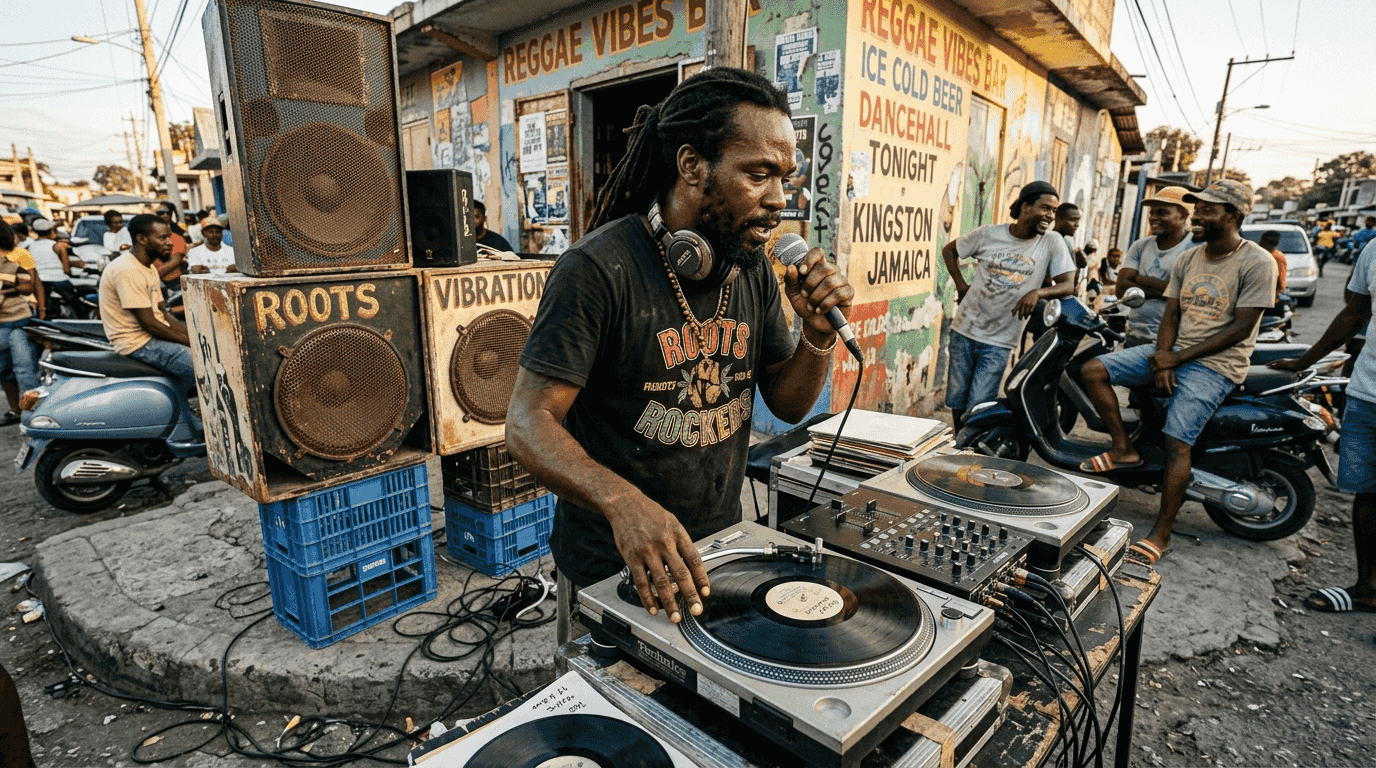
Toasting emerged as a proto-rap vocal style where DJs chanted rhythmic phrases over instrumental reggae and dub tracks. This technique emphasized wordplay, boasting, and crowd interaction. The vocal delivery and competitive spirit directly influenced early hip-hop MCing.
DJ Kool Herc migrated from Jamaica to the Bronx in 1967, bringing sound system knowledge that revolutionized hip-hop. He noticed dancers responded most energetically to percussion breaks in funk and soul records. Herc isolated these breaks by switching between two identical records, creating extended dance sections called breakbeats.

Key Jamaican contributions include:
- Sound system amplification techniques maximizing bass impact
- Toasting vocal style inspiring MC delivery patterns
- Breakbeat isolation creating hip-hop’s rhythmic foundation
- Competitive DJ culture driving technical innovation
Pro Tip: Explore early Jamaican sound system recordings and dub tracks to hear the roots of hip-hop’s rhythmic vocal delivery and production techniques.
The Jamaican genre origins of reggae and dub provided templates for hip-hop production. Understanding this connection helps you appreciate why collaborate in hip hop often involves cross-cultural musical exchange.
Socio-political activism in hip-hop lyrics
Hip-hop became a powerful platform for social justice from its earliest days, giving voice to communities facing systemic oppression. Artists transformed personal experiences with racism, poverty, and police brutality into urgent calls for change.
Common activist themes include:
- Systemic racism and institutional discrimination
- Economic inequality and poverty’s cyclical nature
- Police brutality and mass incarceration
- Educational disparities and limited opportunities
- Community empowerment and political awareness
Public Enemy emerged in the 1980s as hip-hop’s most prominent activist voice, creating dense, confrontational tracks addressing Black American struggles. Their music combined militant imagery, historical references, and urgent production to demand social change. The group’s influence established a template for politically conscious hip-hop that continues today.
This legacy resonates through modern hip-hop as artists continue addressing contemporary injustices. Kendrick Lamar, J. Cole, and Killer Mike carry forward the tradition of using rap as social commentary. Canadian artists similarly address local issues around immigration, Indigenous rights, and urban inequality.
“Hip-hop was never just entertainment. It was always a mirror held up to society, forcing uncomfortable conversations about power, race, and justice.”
The activist tradition connects directly to African American musical heritage, from spirituals encoded with escape instructions to jazz as cultural resistance. Understanding this lineage deepens appreciation for why hip hop culture maintains its edge and urgency decades after its birth.
Canadian multiculturalism’s role in hip-hop
Canada’s multicultural society creates unique conditions for hip-hop evolution, producing sounds and styles impossible in more homogeneous environments. Immigration from Caribbean nations, South Asia, Africa, and elsewhere brings diverse musical traditions that blend into Canadian hip-hop.
Multilingual vocal diversity defines Canadian hip-hop’s distinctive character. Artists seamlessly switch between languages within single tracks, reflecting everyday urban experiences:
| Language | Example Artists | Common Usage |
|---|---|---|
| English/French | Dead Obies, Loud | Bilingual verses and choruses |
| English/Punjabi | AP Dhillon, Karan Aujla | Toronto diaspora fusion |
| English/Somali | K’naan, Smoke Dawg | East African influence |
| English/Patois | Kardinal Offishall, Maestro | Caribbean heritage |
Immigrant communities impact hip-hop through:
- Musical traditions blending with North American production
- Lyrical themes addressing diaspora experiences and identity
- Cross-cultural collaborations expanding creative possibilities
- Language mixing reflecting real multilingual environments
Canadian urban centers function as cultural laboratories where global influences merge naturally. Toronto’s Caribbean community shaped the city’s distinctive hip-hop sound, while Vancouver’s Asian and Indigenous populations contribute unique perspectives. Montreal’s French language requirement creates entirely different creative constraints and opportunities.
Pro Tip: Listen carefully for language switches and cultural references in Canadian hip-hop tracks to identify which immigrant communities influenced each artist’s sound and perspective.

The Canadian hip-hop guide explores how these multicultural elements create regional styles distinct from American hip-hop. Artists who collaborate in hip hop across cultural lines produce innovative fusions impossible in isolated communities. Understanding hip-hop genres Canadian trap drill rise requires recognizing how immigrant influences shape local interpretations of global trends.
Stevie The Manager and his hip-hop influences
Stevie The Manager embodies the multicultural fusion defining modern Canadian hip-hop while honoring the genre’s foundational roots. His West Coast Canadian vibe blends influences from multiple cultural sources into cohesive artistic statements.
His music integrates diverse cultural elements:
- Jamaican rhythmic patterns and vocal delivery styles
- African American storytelling traditions and lyrical complexity
- Vancouver’s multicultural urban soundscape
- West Coast production aesthetics with Canadian sensibilities
Albums like “Vancouver Vibrationz” showcase these blended influences through production choices and lyrical themes. The project captures Vancouver’s unique position as a Pacific gateway city where Asian, Indigenous, and immigrant cultures intersect with traditional hip-hop elements. Tracks reference local experiences while connecting to broader hip-hop narratives.
Stevie’s lyrics often address socio-political themes relevant to Canadian urban communities. He tackles economic challenges, cultural identity navigation, and community solidarity. This approach connects directly to hip-hop’s activist tradition while reflecting specifically Canadian multicultural realities.
Exploring his stevie the manager discography reveals how one artist synthesizes global hip-hop influences with local cultural specificity. His work demonstrates that understanding hip-hop’s diverse roots enhances appreciation for contemporary innovation. The 90s hip hop influence remains audible in his production choices and lyrical approaches, showing how historical foundations support modern creativity.
Summary comparison and situational recommendations
Comparing hip-hop’s major cultural influences reveals how each contributed distinct elements that combine into the genre you hear today. This table clarifies the unique contribution from each source:
| Influence | Geographic Origin | Musical Style | Lyrical Themes | Primary Impact |
|---|---|---|---|---|
| African American/Latino | Bronx, NYC | Four elements foundation | Community expression | Created core hip-hop framework |
| Jamaican | Jamaica/Diaspora | Sound system, toasting | Dance, competition | DJing techniques, vocal delivery |
| Activism | African American tradition | Aggressive, urgent production | Social justice, inequality | Political consciousness |
| Canadian Multiculturalism | Toronto, Vancouver, Montreal | Multilingual, fusion | Diaspora identity | Cultural diversity, language mixing |
Explore these influences based on your interests:
- For foundational knowledge: Study early Bronx pioneers and the four elements through documentaries and classic tracks from 1979 to 1985
- For DJ technique appreciation: Listen to Jamaican dub and sound system recordings, then trace their influence through early hip-hop DJing innovations
- For activist themes: Explore Public Enemy’s discography alongside contemporary conscious rappers addressing current social issues
- For multicultural fusion: Dive into Canadian hip-hop guide artists representing diverse immigrant communities and linguistic traditions
- For comprehensive understanding: Study Stevie The Manager’s work as a case study synthesizing all these influences into cohesive modern hip-hop
Pro Tip: Create focused listening sessions where you explore one influence at a time with historical context, then return to familiar tracks to identify how multiple influences layer together.
Understanding contemporary rap culture guide requires recognizing how historical influences continue shaping modern innovation. Each cultural contribution remains active in current hip-hop rather than existing as isolated historical artifacts.

Discover Stevie The Manager’s musical journey
Ready to hear these cultural influences in action? Explore Stevie The Manager’s discography to experience how one Canadian artist synthesizes global hip-hop traditions with local multicultural perspectives. His catalog demonstrates the living evolution of hip-hop’s diverse roots.

Deepen your understanding through expert content analyzing hip-hop’s cultural layers. Our 90s hip hop influence guide connects golden era innovations to modern sounds, while our hip hop slang expert analysis decodes the linguistic creativity defining the culture. These resources transform passive listening into active cultural engagement, enriching every track you experience.
FAQ
What are some examples of hip-hop influences from Jamaican culture?
Toasting, a rhythmic vocal style where DJs chant over instrumental tracks, served as proto-rap delivery inspiring early MCs. DJ Kool Herc brought sound system techniques from Jamaica to the Bronx, introducing massive bass amplification and breakbeat isolation that became hip-hop’s rhythmic foundation. These Jamaican contributions created essential musical DNA still audible in hip hop’s global footprint today.
How does Canadian multiculturalism shape local hip-hop?
Canadian hip-hop features multilingual lyrics mixing English, French, Punjabi, Somali, and other languages within single tracks, reflecting real urban diversity. Immigrant communities contribute musical traditions, lyrical perspectives, and cultural references that blend into distinctly Canadian sounds impossible in more homogeneous environments. This creates regional styles explored in the Canadian hip-hop guide that differ significantly from American hip-hop while honoring foundational elements.
In what ways does Stevie The Manager reflect hip-hop’s diverse influences?
Stevie blends West Coast Canadian production aesthetics with Jamaican rhythmic patterns and African American storytelling traditions into cohesive tracks. His lyrics address socio-political themes relevant to multicultural Canadian communities while maintaining connection to hip-hop’s activist heritage. Albums like “Vancouver Vibrationz” showcase how local experiences and global influences merge, making his Stevie The Manager discography an educational resource for understanding cultural fusion in modern hip-hop.
Why does understanding hip-hop’s cultural roots matter for fans?
Recognizing cultural influences deepens appreciation for artistic choices, lyrical references, and production techniques you might otherwise miss. It transforms passive listening into active cultural engagement where you hear layers of meaning and historical connection. This knowledge helps you discover new artists, understand regional differences, and participate more meaningfully in hip-hop culture beyond surface-level consumption.
Recommended
- Canadian hip-hop guide: roots, culture, and impact in 2026
- Hip Hop Genres: 45% Rise in Canadian Trap & Drill
- What is contemporary rap: culture and evolution guide
- Role of Hip Hop Journalism: Impact on Music Culture
- 7 Micro-Trend Examples in Music Every A&R Should Know – Blog – Music24.com

No Comments