

Hip-hop community support types that build stronger networks
TL;DR:
- Hip-hop community support includes mentorship, artist development, events, digital programs, and therapy.
- Community-driven spaces foster skills, authenticity, healing, and lasting connections within Canadian hip-hop.
- Hybrid models and peer leadership make support networks more accessible, resilient, and culturally authentic.
Hip-hop has always been more than music. It’s a survival strategy, a language, and a network built on mutual recognition. But when you’re actually trying to plug into that network, whether as a fan, an emerging artist, or someone who wants to give back, knowing which type of support structure to seek out can feel like a maze. The landscape spans youth mentorship programs, paid artist residencies, weekly cyphers, digital workshops, and therapeutic initiatives. Each serves a different need. This article maps them all out, draws on real Canadian examples, and gives you the tools to choose the path that fits your goals.

Table of Contents
- Youth education and mentorship programs
- Artist development and employment opportunities
- Outreach events, cyphers, and festivals
- Innovative hybrid and digital support models
- The therapeutic power of hip-hop community support
- What most people miss about hip-hop community support
- Take your next step to support and connect in hip-hop
- Frequently asked questions
Key Takeaways
| Point | Details |
|---|---|
| Mentorship matters | Education and connection through hip-hop provide critical support and resilience for youth. |
| Career pathways exist | Artist residencies and professional development programs turn talent into sustainable opportunities. |
| Events drive culture | Outreach activities like cyphers and festivals unite communities and preserve hip-hop’s core. |
| Digital support scales impact | Hybrid and online options open access to thousands more, especially post-pandemic. |
| Hip-hop heals | Therapeutic programs foster well-being, empowerment, and authentic storytelling for all members. |
Youth education and mentorship programs
Direct mentorship is where hip-hop community building usually starts, and for good reason. When young people find a mentor who speaks their language, literally and culturally, the results are transformative.
Hip-hop programs use DJing, MCing, and breaking to build real skills and resilience in youth, with organizations like PATH to Hip Hop offering TEACHART, PATH to CLASS, internships, and ongoing mentorship. These aren’t watered-down after-school activities. They’re structured pathways that treat hip-hop’s four core elements, DJing, MCing, graffiti writing, and breaking, as legitimate vehicles for developing confidence, critical thinking, and career readiness.
What makes these programs especially powerful is the peer modeling component. When a young person sees someone from their own neighborhood, someone who looks like them and came from a similar situation, thriving inside hip-hop culture, the psychological impact is enormous. Role models inside these spaces aren’t celebrities on a screen. They’re accessible, relatable, and real.
Key features of effective mentorship programs include:
- Structured skill-building: Weekly sessions focused on specific hip-hop crafts tied to broader life skills
- Real internship pipelines: Connections to studios, event production, and community organizations
- Evaluation and progression: Youth receive feedback and advance through levels, building accountability
- Cultural respect: Programs treat hip-hop as a serious art form, not a gimmick
Pro Tip: If you’re looking to support youth in your area, find a program that integrates hip-hop authentically. Programs that treat it as decoration rather than a core learning tool tend to lose participants fast.
The role of educating fans on hip-hop culture inside these settings also can’t be overstated. When young participants learn why hip-hop emerged and what it has meant to communities historically, they connect to something larger than any single track or trend. That connection is what builds loyalty and lasting community.
Artist development and employment opportunities
Beyond youth mentorship, the next level of support involves structured career and economic development for artists. Talent needs more than encouragement. It needs paychecks, professional training, and real pathways to sustainability.
Unity Charity maintains a roster of 70+ artists, many of whom came directly through their development programs, while Hip Hop For Change offers the Pipeline to Positivity paid residency model that compensates artists for community work. This is a critical distinction. When artists are paid for their contributions to community programming, the relationship between art and service becomes sustainable rather than extractive.

Here’s a breakdown of what artist development programs typically offer:
| Support type | What it includes | Who benefits most |
|---|---|---|
| Paid residency | Stipends for teaching, performing, or facilitating | Emerging artists building income |
| Production training | Studio time, beat-making, audio engineering | Producers and recording artists |
| Business skills | Contracts, royalties, branding, social media | Artists ready to go professional |
| Networking events | Industry showcases, label meetups, collaborative sessions | Artists at any stage |
| Stage performance coaching | Live presence, crowd engagement, mic technique | Performers preparing for bigger stages |
A numbered approach to entering these development pathways:
- Identify your current stage. Are you pre-professional, semi-professional, or ready for full-time pursuit? Different programs serve different stages.
- Research paid vs. volunteer roles. Programs that pay are more sustainable for your growth.
- Apply to multiple pipelines simultaneously. These programs are competitive. Cast a wide net.
- Commit to the full program length. Most run 12 to 14 weeks, and the value compounds over time.
- Leverage alumni networks aggressively. Past participants are often your best resource for gigs and referrals.
Pro Tip: Getting featured in hip-hop news often starts with documenting your development journey. Keep photos, record sessions, and share your process. Programs give you credibility. You give them a story. Both sides win.
For Canadian artists in particular, these structured employment opportunities address a very real barrier. Historically, Canadian rap faced institutional resistance from major labels and mainstream radio. Programs that create internal economies within the hip-hop community help artists build track records and income streams independent of gatekeepers.
Outreach events, cyphers, and festivals
Career pathways flourish alongside a vibrant event scene. Here’s how outreach and gatherings keep hip-hop connected and constantly evolving for everyone involved.
Cyphers, workshops, and festivals actively build community and preserve cultural authenticity, with Hip Hop For The Future running weekly cyphers and Back 2 School Drip Fest, while PATH organizes PATH to LIFE concerts that blend performance with purpose. These aren’t just fun gatherings. They are the nervous system of the community, transmitting information, opportunity, and culture in real time.
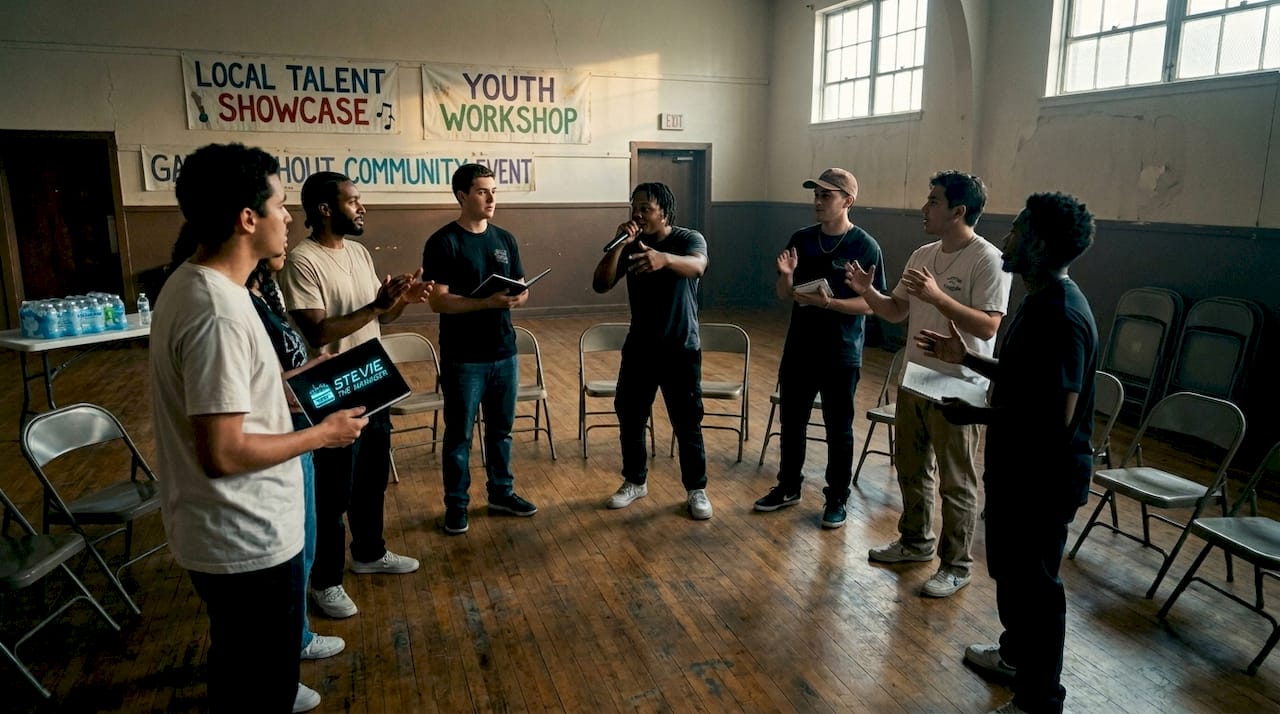
The spectrum of events is wide. A quick comparison:
| Event type | Scale | Purpose | Best for |
|---|---|---|---|
| Weekly cypher | Small, intimate | Skill sharpening, peer feedback | Active artists and freestylers |
| Workshop series | Medium | Skill instruction, networking | Beginners to intermediate artists |
| Community showcase | Medium to large | Performance platform, visibility | Artists seeking an audience |
| Annual festival | Large | Cultural celebration, industry exposure | All levels, fans and artists |
Consider these event benefits that you might not immediately think about:
- Spontaneous collaboration: Cyphers create accidental partnerships that no networking spreadsheet could engineer
- Safe practice environments: Newcomers can perform in low-stakes spaces before bigger stages
- Cultural preservation: Recurring events pass down traditions organically from veterans to newcomers
- Open mic access: Most outreach events reserve slots specifically for unproven talent
“The cypher is democracy. It doesn’t care about your following count or who you know. If you’ve got something to say and you can say it, you belong.” This mindset, common in grassroots hip-hop spaces, is why events remain the heartbeat of every strong hip-hop network.
Understanding the benefits of participating in rap events goes beyond just performing. You’re learning how to read rooms, how to connect with an audience, and how to represent yourself professionally under pressure. Those are skills that transfer well beyond music.

Strong hip-hop fan engagement also happens at these events in ways that online platforms simply can’t replicate. When a fan watches an artist they discovered at a cypher perform on a festival stage a year later, that loyalty is unbreakable. Events create those arcs.
Innovative hybrid and digital support models
Building on physical spaces, the next wave of community support blends online resources with real-life connection for powerful reach that was previously impossible.
COVID-19 forced every hip-hop program to reinvent itself fast. What emerged from that pressure wasn’t just survival. It was innovation. Unity reached 6,000+ Canadian youth through online program pivots during the pandemic, proving that digital delivery could scale far beyond what in-person events allowed. That number represents communities that traditional outreach never touched.
Here’s how hybrid support models typically work now:
- Virtual workshops: Live-streamed instruction in production, writing, and performance with real-time Q&A
- On-demand content libraries: Recorded sessions, tutorials, and masterclasses accessible any time
- Digital mentorship matching: Platforms connecting emerging artists with mentors regardless of geography
- Online cyphers and showcases: Video-based events that allow participation from multiple cities or provinces simultaneously
- Hybrid community hubs: Physical spaces that simultaneously stream to online participants, giving remote audiences a live experience
The geographic impact of this shift matters enormously in Canada. A young artist in Prince George, BC, or Sudbury, Ontario, previously had no realistic path to mentorship from Vancouver or Toronto-based programs. Digital and hybrid models changed that completely.
The appeal of educating fans digitally through these channels also creates a snowball effect. When content is accessible and shareable, the community teaches itself. One good workshop video can reach an audience far larger than any single event ever could.
The key for programs going forward is maintaining authenticity in digital spaces. Hip-hop has always valued face-to-face connection and the electricity of real-time performance. The best hybrid models don’t abandon that. They use digital tools to extend the community’s reach, then bring people back together in person when possible.
The therapeutic power of hip-hop community support
At the core of many support structures is healing. Let’s examine how hip-hop uniquely functions as therapy for those who need it most, especially when traditional systems fall short.
Hip-hop functions as therapy where conventional youth programs fail, while community radio and independent stores historically gave Canadian artists pathways through industry obstacles that would otherwise have stopped them cold. This distinction is important. Mainstream mental health resources often feel clinical, inaccessible, or culturally disconnected to young people in marginalized communities. Hip-hop spaces offer something different. They meet people where they are.
“When you hear someone rap about exactly what you went through, you don’t feel alone anymore. That’s not entertainment. That’s medicine.”
The therapeutic elements built into hip-hop community support include:
- Storytelling as processing: Writing verses about personal trauma helps externalize pain and create distance from it
- Community validation: Having your experiences recognized and affirmed by peers builds self-worth
- Creative control: In environments where young people often have very little agency, hip-hop gives them complete ownership of their voice
- Consistent safe spaces: Regular gatherings create predictable environments where trust can develop over time
- Peer accountability: The cypher and collaborative writing process naturally build mutual support habits
For Canadian artists specifically, the mental health dimension of hip-hop has been shaped by very specific cultural barriers. Early Canadian rappers faced an industry that largely ignored them. Community radio stations and independent record stores became their lifeline. Those grassroots support systems weren’t just economic solutions. They were identity affirmations.

Pro Tip: If you’re building or joining a hip-hop community space, create explicit room for personal storytelling alongside technical skill-building. The most durable communities are the ones where people feel seen, not just trained.
What most people miss about hip-hop community support
Most conversations about hip-hop community support focus on programs: who’s running them, what they teach, and how to access them. That framing misses something essential.
The most resilient hip-hop networks aren’t built from the top down. They grow from the importance of community connection that already exists at the street level, in cyphers, in studios, in barbershops and corner stores. Structured programs work best when they amplify what’s already there rather than replace it.
What gets overlooked is the role of peer leadership. When a 22-year-old who went through a youth program comes back to mentor a 14-year-old, that handoff carries weight that no institutional program can replicate. It’s real, it’s local, and it’s earned. Programs that build in this peer-to-peer chain become self-sustaining ecosystems. Programs that don’t tend to collapse when funding dries up.
Cultural authenticity is the other missing piece. Hip-hop communities can spot performative support from miles away. When organizations use hip-hop as a vehicle for their own messaging rather than honoring it as a culture with its own logic and history, participants disengage. Fast. The programs that last are the ones where hip-hop isn’t a wrapper around a different message. It is the message.
The most powerful takeaway: you don’t need to choose just one type of support. The strongest networks weave together mentorship, events, career development, and healing into something that flexes depending on what the community needs at any given moment. Rigidity is the enemy of resilience.
Take your next step to support and connect in hip-hop
Ready to contribute to and benefit from hip-hop’s diverse supports? Here are direct ways to connect and grow.
Whether you’re a longtime fan looking to go deeper or an emerging artist trying to navigate the landscape, the knowledge to move forward is already within reach. Start by building your foundation in hip-hop culture origins and elements so you understand the full context of what you’re stepping into.
From there, explore how hip-hop’s cultural impact continues to shape communities far beyond music, giving you the bigger picture of why this network matters. At stangrtheman.com, you’ll find guides, news, and stories from inside the Canadian rap scene that help you make real moves, not just informed opinions. Dive into resources on why educating fans matters and turn that knowledge into action. The community is here. Come build with us.
Frequently asked questions
What are the main types of hip-hop community support?
They include youth mentorship and education, artist development, outreach events, digital and hybrid programs, and therapeutic initiatives, with organizations like PATH to Hip Hop offering structured examples across multiple categories.

How do hip-hop events help build community?
Events like cyphers and festivals create shared physical and creative space where artists and fans connect, collaborate, and pass down cultural traditions in ways that digital platforms can’t fully replicate.
Can hip-hop community support help with mental health?
Yes. As documented in hip-hop therapy research, hip-hop-based programs serve as effective therapeutic tools for youth who don’t connect with traditional mental health resources, using storytelling and community validation as core healing mechanisms.
Are there online hip-hop community support options?
Absolutely. Digital and hybrid programs expanded dramatically after COVID-19, with Unity reaching over 6,000 youth online alone, proving that geographic barriers no longer have to limit access to quality hip-hop support.
What makes hip-hop community support different in Canada?
Canadian hip-hop support grew largely from grassroots necessity, where community radio and independent stores filled gaps that mainstream industry ignored, creating a distinctly resilient and culturally authentic support tradition that still shapes the scene today.
Recommended
- Hip-hop networking checklist for Canadian artists in 2026
- Why the hip-hop community matters: culture and connection
- Key reasons to participate in rap events: grow skills
- What is hip hop networking: Guide for emerging artists

No Comments