

Why Mental Health Matters in Hip-Hop: Healing Through Rap
TL;DR:
- Hip-hop serves as a vital mental health outlet rooted in community pain and survival narratives.
- Canadian artists are openly advocating for mental health through albums, social media, and outreach.
- Hip-hop therapy is an evidence-based approach using music and culture to reduce symptoms and foster healing.
Hip-hop gets misread constantly. Critics reduce it to flashy cars and aggressive lyrics, missing the genre’s long history of processing grief, trauma, and survival. For millions of fans, especially in communities where therapy carries a heavy stigma, rap music has quietly functioned as a mental health lifeline. Canadian artists are now stepping openly into that role, naming their struggles out loud and building platforms around healing. What follows is an evidence-based look at why mental health and hip-hop are inseparable, how Canadian voices are shaping that conversation, and what it means for fans who want more than just a good beat.

Table of Contents
- The roots of mental health themes in hip-hop
- Canadian hip-hop’s pivotal role in mental health advocacy
- Beyond the music: Hip-hop therapy and real-world mental health solutions
- Shifting mindsets: Destigmatization, education, and the road ahead
- What most people miss: The uncomfortable truth about mental health in hip-hop
- Explore more on hip-hop’s culture and impact
- Frequently asked questions
Key Takeaways
| Point | Details |
|---|---|
| Hip-hop reflects real struggles | Rap music often reveals the mental health challenges and resilience found in marginalized communities. |
| Canadian artists lead advocacy | Figures like Jay Whiss and TOBi drive mental health awareness among fans and the music industry in Canada. |
| Hip-hop therapy impacts youth | Culturally relevant hip-hop therapy reduces symptoms and bridges gaps for those skeptical of traditional support. |
| Destigmatization is growing | Artists are breaking taboos about mental health in rap culture through education and honest storytelling. |
The roots of mental health themes in hip-hop
Hip-hop was never built on fantasy. It grew out of the South Bronx in the 1970s, born from communities facing poverty, police violence, and systemic neglect. The music became a container for pain that had nowhere else to go. When you listen closely to early rap, you hear it: coded language about depression, grief, and survival dressed up in wordplay and bravado.
The psychology of rap is deeper than most casual listeners realize. Rappers have long used the booth the way others use a journal or a therapist’s couch, translating raw experience into verses that resonate across zip codes. That’s not an accident. It’s a function of the form itself.
Understanding why mental health narratives dominate hip-hop requires looking at the social conditions that shaped the genre. Poverty, housing instability, racism, and community violence are not just lyrical backdrops. They are documented drivers of anxiety, depression, and post-traumatic stress. When artists reflect those realities, they’re documenting lived mental health crises.
Here’s what’s consistently shaped mental health storytelling in rap:
- Survival narratives: Processing violence, loss, and systemic inequality through verse
- Coded vulnerability: Expressing pain through metaphor when direct language felt too risky
- Community mirroring: Giving voice to shared experiences that fans rarely saw in mainstream media
- Intergenerational trauma: Referencing cycles of struggle passed down through families
- Resistance through healing: Using creativity itself as a form of psychological resilience
The rap lyricism themes that define the genre’s most celebrated works are saturated with this kind of emotional excavation. But the genre’s reputation has worked against that legacy.
Hip-hop faces misconceptions as promoting violence and materialism, which overshadows its mental health messages. Some view mental health discussion as taboo in Black communities, yet artists continue pushing destigmatization forward.
That tension, between external stigma and internal advocacy, defines where hip-hop stands today. The genre hasn’t abandoned its roots. It’s building on them.
Canadian hip-hop’s pivotal role in mental health advocacy
Canada doesn’t always get its due in global hip-hop conversations. But Canadian artists are doing something important: they’re naming mental health struggles with unusual directness, and they’re doing it in albums, interviews, and community spaces where it can actually move people.

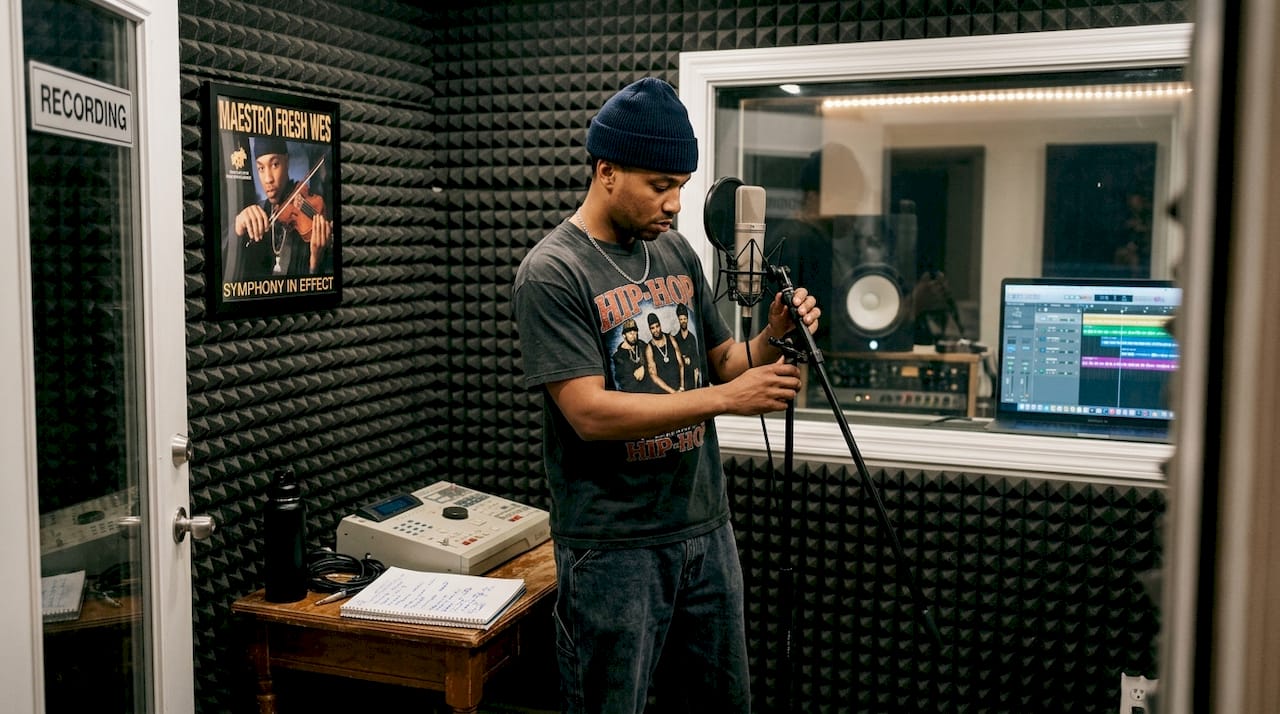
Jay Whiss is one of the most striking examples. He released Peace of Mind as a direct engagement with his own psychological experience, and his mental health advocacy through music remained a defining part of his legacy before his death from brain cancer in 2025. His willingness to be honest about internal struggle in an industry that often punishes softness was significant. It told younger Canadian artists that vulnerability was a valid choice.
TOBi represents a newer wave. His music sits at the intersection of R&B and rap, and his storytelling tackles identity, belonging, and emotional fragility with a precision that resonates deeply with diaspora communities. As one of the artists bridging rap culture and mental well-being in Canada, TOBi demonstrates that vulnerability can coexist with artistic ambition.
Here’s a snapshot of what Canadian hip-hop is doing in the mental health space:
- Album-length advocacy: Projects like Peace of Mind centering mental health as a primary theme
- Social media transparency: Artists using platforms to share real-time mental health experiences
- Collaborative initiatives: Musicians partnering with organizations to fund access to counseling
- Youth-focused outreach: School visits and Q&A events addressing stigma directly
- Lyric annotation projects: Explaining mental health references in songs for broader audiences
The hip-hop community connection that makes this work powerful is real. Fans who see their favorite artists speak openly about anxiety or depression are more likely to seek support themselves. That ripple effect matters.
For anyone wanting context on how this scene developed, the Canadian hip-hop guide offers a solid grounding in the cultural forces that made this kind of advocacy possible.
Beyond the music: Hip-hop therapy and real-world mental health solutions
Hip-hop’s power extends beyond music and into real therapeutic practice. Hip-hop therapy (also called hip-hop cognitive behavioral therapy or HHC) is a structured clinical approach that uses rap, spoken word, and music analysis as tools within evidence-based mental health treatment. It’s not just putting on a playlist in a waiting room. It’s a method.
HHC is particularly effective for youth who distrust traditional clinical environments. For neurodivergent individuals and communities of color, hip-hop therapy benchmarks show significant symptom reduction, specifically because the cultural competence built into the approach lowers the defensive walls that often block traditional therapy from working.
How hip-hop therapy works in practice:
- Assessment through music preference: Clinicians identify which artists and albums resonate with the client
- Lyric analysis: Sessions involve breaking down lyrics to surface hidden emotions and belief systems
- Creative writing exercises: Clients write verses or journal entries to process specific experiences
- Listening as intervention: Curated playlists address specific therapeutic goals like grief or self-worth
- Community integration: Group sessions normalize shared struggle and build peer accountability
| Factor | Traditional therapy | Hip-hop therapy |
|---|---|---|
| Cultural relevance | Often low for youth of color | High, built into the model |
| Engagement rate | Moderate among skeptical youth | Significantly higher |
| Stigma barrier | High in many communities | Lower due to familiar format |
| Symptom reduction | Effective with buy-in | Effective, especially for PTSD |
| Accessibility | Clinic-based | Clinic and community settings |
The influence of hip-hop on identity formation makes it an especially potent therapeutic vehicle. When a young person already sees an artist as a trusted voice, bringing that artist’s work into a healing context creates immediate relevance.

Pro Tip: When searching for a hip-hop therapy program, ask specifically whether the clinician has training in culturally responsive practice. A therapist who plays rap but doesn’t understand its cultural context can actually reinforce disconnection rather than reduce it.
Shifting mindsets: Destigmatization, education, and the road ahead
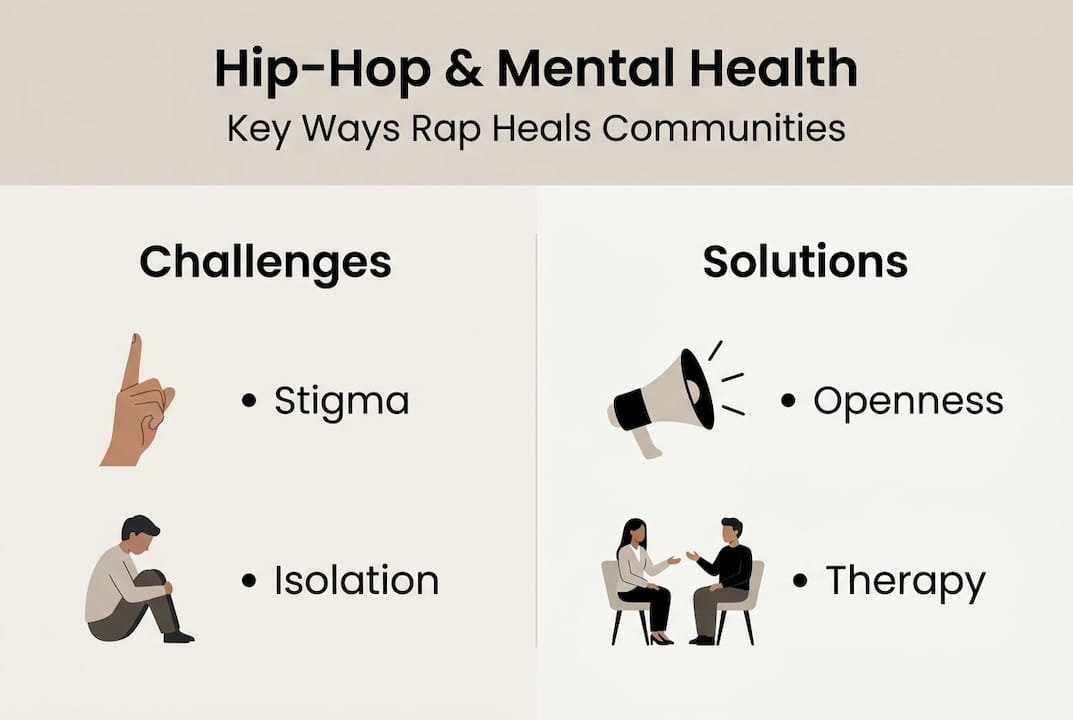
Stigma around mental health in hip-hop communities hasn’t vanished, but it has shifted. A decade ago, openly discussing depression or anxiety in a rap context was often career limiting. Today it’s increasingly common, and in some spaces, it’s expected.
| Mindset dimension | Ten years ago | 2026 |
|---|---|---|
| Artist openness | Rare, coded, indirect | Common, direct, celebrated |
| Fan response | Skepticism, dismissal | Identification, amplification |
| Industry support | Minimal | Growing, though uneven |
| Therapy access | Rare discussion | Active advocacy |
| Media framing | Mental health as weakness | Mental health as strength |
More artists are emphasizing destigmatization even as misconceptions persist, which signals a genuine cultural shift rather than a trend. That said, good intentions without structural support don’t get far. The Canadian music sector represents a tipping point for resource needs, with mental health conditions fluctuating in direct response to industry pressures and social conditions.
Education is where lasting change gets anchored. Here’s what’s actively driving that shift:
- Lyric annotation platforms: Genius and similar tools allowing fans to decode mental health themes in real time
- Fan-led advocacy campaigns: Community-organized awareness drives tied to album releases
- School curriculum integration: Hip-hop texts being used in health education classes
- Artist-led panels: Open conversations at festivals and conferences about industry mental health realities
Educating hip-hop fans about these dimensions doesn’t dilute the music. It deepens the connection. And the classic hip-hop lessons embedded in the genre’s most important works have always carried this weight. The Canadian scene data confirms what artists have been saying for years: the need for real, funded support structures is urgent.
Pro Tip: If you’re organizing a community awareness event, anchor it to a specific artist’s release or lyric. Concrete cultural touchpoints get more traction than abstract calls to “break the stigma.”
What most people miss: The uncomfortable truth about mental health in hip-hop
Here’s what even passionate advocates often overlook: visibility is not the same as support. An artist posting about their anxiety is valuable. An artist having actual access to a mental health professional, legal protection against industry exploitation, and financial stability while taking time off is different. We tend to celebrate the disclosure and forget to fund the infrastructure.
There’s also a real danger in what could be called the commodification of struggle. When labels market an artist’s trauma as a brand identity, healing becomes a product rather than a process. Fans consume the pain without questioning whether the artist is actually okay. That’s a problem.
The classic lessons from hip-hop that matter most have always been about authenticity over performance. Demanding real resources, not just representation, is the next step. Mental health literacy in fan communities means knowing the difference between an artist sharing their story and an industry packaging it for profit. That awareness is what moves advocacy from surface level to structural.

Explore more on hip-hop’s culture and impact
If the connection between hip-hop and mental health resonates with you, there’s a lot more to explore. From the origins of the culture to where it’s headed, understanding the full picture deepens your appreciation and your advocacy.

Start with the hip-hop culture guide for a grounded overview of where everything began. Then check out the breakdown of hip-hop’s influence on identity and community to understand why the music hits differently. And if you want to know where the culture is heading, the 2026 hip-hop trends piece lays out what’s shifting right now. Stevie The Manager and the team at Stangr The Man are committed to telling these stories honestly, because the music deserves that depth.
Frequently asked questions
How does hip-hop therapy differ from traditional therapy?
Hip-hop therapy uses rap music and cultural references to connect with youth who may distrust clinical settings, offering a culturally relevant entry point into healing. HHC benchmarks show significant symptom reduction specifically because of this cultural alignment.
Which Canadian hip-hop artists address mental health?
Jay Whiss and TOBi are among the most notable. Jay Whiss’s Peace of Mind album directly engaged mental health themes, and TOBi continues that tradition with emotionally layered storytelling.
Why is mental health still stigmatized in hip-hop communities?
Stigma stems from cultural taboos around vulnerability and persistent misconceptions about hip-hop promoting toughness over openness, but artists and advocates are actively pushing back against that narrative.
Has hip-hop therapy shown measurable results?
Yes. Research confirms that hip-hop therapy reduces symptoms significantly among youth of color and neurodivergent individuals, particularly when delivered by culturally competent clinicians.
Recommended
- The Psychology of Rap: Unraveling the Connection Between Beats, Lyrics, and the Human Mind – Stevie The Manager aka Stangr The Man
- Why the hip-hop community matters: culture and connection
- Hidden Life Lessons: What Classic Hip Hop Taught Me About Success – Stevie The Manager aka Stangr The Man
- Why hip-hop is influential: culture, identity, impact
- Why Naming Your Feelings Helps — The Caia Journal
- Understanding Gardening for Mental Health Benefits – Lushy Gardens

No Comments