

Why Release Singles vs Albums: A Strategic Guide
Releasing singles is the most effective music release strategy for independent musicians today. The single format gives artists frequent touchpoints with listeners, repeated algorithmic exposure, and focused promotional windows that a full album simply cannot replicate. Understanding why release singles vs albums matters comes down to one core reality: streaming platforms reward consistency, not volume. Artists who release one track every six to eight weeks build more sustained momentum than those who drop twelve songs at once and go quiet for two years. Albums still serve a purpose, but that purpose belongs to a specific career stage.

Why release singles vs albums: the core strategic difference
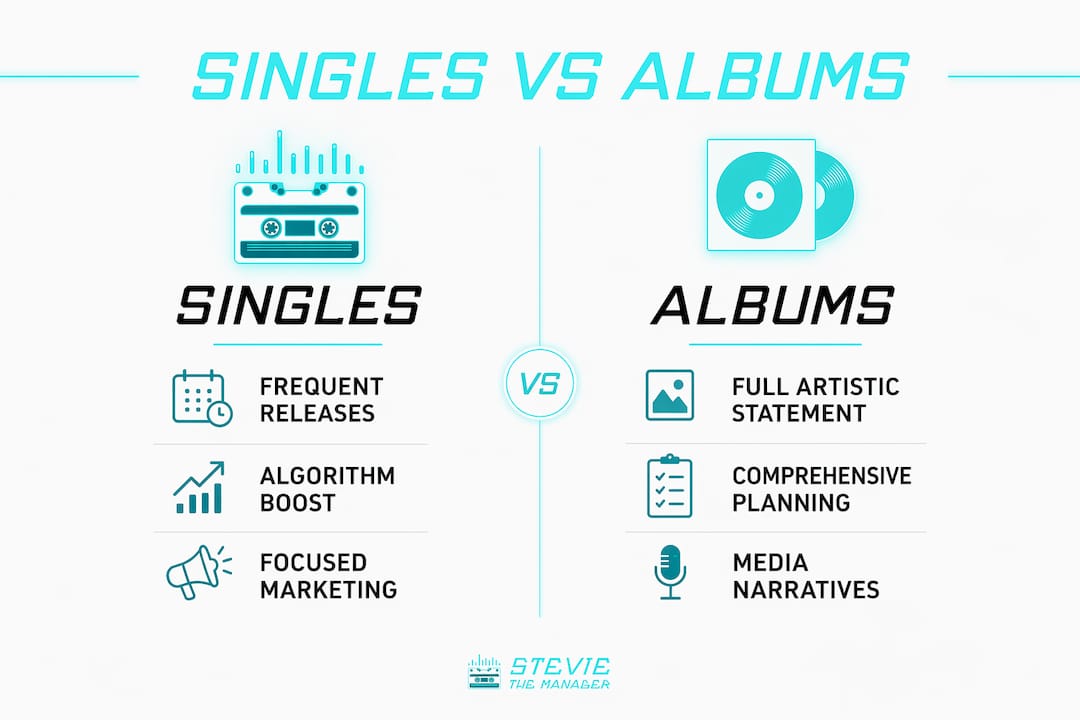
The single format is the engine of modern music promotion, allowing targeted social media and PR campaigns that maximize limited resources. For an independent artist working without a full label team, that focus is not optional. It is the difference between a release that gets heard and one that disappears.
Albums, by contrast, are full artistic statements. They require comprehensive planning including artwork, sequencing, and timing to deliver a coherent project. Without proper preparation, albums risk underperforming and wasting the promotional energy an artist spent months building. That risk is real for artists who do not yet have a committed fanbase ready to invest time in a full listening session.

The album vs single release debate is not about which format is better in the abstract. It is about which format fits where you are in your career right now.
How singles maximize algorithmic exposure and streaming momentum
Streaming platforms reward regular releases with algorithmic boosts that most artists underestimate. Releasing singles every 6–8 weeks triggers Spotify’s Release Radar and Discover Weekly algorithms multiple times per year. Each trigger is a fresh opportunity to reach listeners who have never heard your name.
An album release gives you one spike. A singles strategy gives you six to eight spikes in the same timeframe. That math alone explains why independent artists who release singles consistently outperform those chasing a single big album moment.
Streaming platforms also only allow one new release to appear in “new release” slots per week per artist. Releasing multiple singles on the same day means they compete against each other for that slot. Staggered releases maximize playlist features and algorithm visibility every time.
The waterfall release strategy takes this further. Waterfall releases bundle singles so that older tracks are included with newer ones, stacking stream counts across multiple releases containing the same song via Spotify’s ISRC system. Each new single you drop carries the streams from the previous version forward. That compounding effect builds catalog weight over time.
Key algorithmic advantages of the singles approach:
- Release Radar and Discover Weekly trigger with every new release, not just once per project
- Playlist pitching opportunities multiply with each individual track submission
- ISRC stream stacking through waterfall releases compounds total stream counts
- Staggered release dates prevent self-competition in new release slots
- Consistent activity signals to algorithms that you are an active artist worth promoting
Pro Tip: Submit each single to Spotify for Artists playlist consideration at least seven days before the release date. Algorithmic playlists like Release Radar are automated, but editorial playlists require manual pitching. Missing that window means missing the editorial opportunity entirely.

What are the marketing benefits of releasing singles?
Marketing one track per release is more effective than promoting multiple album tracks simultaneously. Promoting several tracks at once dilutes attention and reduces the impact of every individual song. When you release a single, every social post, every ad dollar, and every press pitch points at one thing.
Singles also give artists frequent feedback on audience preferences. Audience response to singles is faster and clearer than album feedback cycles, which can obscure which tracks truly resonate. If a single underperforms, you adjust before the next one. If it overperforms, you double down on that sound. Albums do not give you that real-time signal.
For independent artists with limited budgets and small teams, this matters even more. Short-form video content amplifies single releases in ways that full albums struggle to match. Short-form video formats have become one of the most direct paths to new listeners for independent musicians in 2026. A fifteen-second clip built around one hook lands harder than a trailer for a twelve-track project.
A focused singles rollout looks like this:
- Identify the strongest track from your current batch of recordings
- Build a content calendar around that one song for four to six weeks
- Pitch the track to playlists and blogs two to three weeks before release
- Release the single and run targeted ads during the first 72 hours
- Analyze streaming and social data before planning the next release
Pro Tip: Treat each single release like a mini-campaign with a start date, a peak push window, and a wind-down phase. Artists who plan this way spend less money and get more consistent results than those who release and immediately move on.
When does an album make more sense than singles?
Albums offer immersive, cohesive experiences that deepen fan engagement and enable storytelling beyond what singles provide. Album cycles create media opportunities and touring momentum aligned with full projects. A single cannot carry the narrative weight of a well-sequenced fifteen-track album where every song builds on the last.
The artists who benefit most from albums share specific characteristics:
- They have an established fanbase that actively seeks out their full projects
- They have the budget and team to execute a proper album rollout, including press, radio, and live events
- They have a clear artistic vision that requires the space of a full project to express
- They have already used singles to test and confirm audience appetite for their sound
- They are prepared for the longer promotional cycle an album demands
Without those conditions in place, an album release often becomes a missed opportunity. The promotional energy required to launch an album properly is significant. Artists who release albums before building a fanbase through singles frequently find that the project lands quietly and the momentum fades fast.

Albums also generate the kind of media narratives that singles rarely do. A full project gives journalists, bloggers, and podcasters something substantial to review and discuss. That coverage creates a larger promotional event than any single release can. But that event only pays off when the audience is already primed and waiting.
Practical release strategies combining singles and albums
The most successful modern release strategy combines singles leading up to an EP or album, benefiting from both consistent exposure and a cohesive project. Leading with multiple singles builds a vetted fanbase that boosts album launch success. This hybrid approach is the standard for artists who understand how streaming and audience development actually work together.
The waterfall method is the clearest example of this in practice. Waterfall releases help small artists work with streaming algorithms by stacking streams for repeated tracks embedded in subsequent singles and EPs. You release a single, then include it in an EP, then include the EP tracks in the full album. Each step carries the streams from the previous release forward.
Here is how the hybrid approach breaks down across release types:
| Release type | Best use case |
|---|---|
| Single | Building algorithmic presence, testing sounds, maintaining momentum |
| EP (3–6 tracks) | Consolidating singles into a cohesive mini-project, growing fanbase |
| Full album | Artistic statement for an established audience, major career milestone |
Singles during album production gaps keep your name active in algorithms and listener feeds. Going silent for six months while you finish an album means starting over with the algorithm when you return. Releasing one or two singles during that window costs little and preserves the momentum you built.
For artists still developing their sound, singles also serve as a testing ground. Releasing tracks across different tempos, themes, or production styles gives you real data on what your audience responds to. That data shapes a stronger album when the time comes. Guessing what your audience wants is expensive. Testing it with singles is not.
Pro Tip: Release two to four singles before any EP or album drop. Each single builds the audience that will stream the project on day one. A strong first-week stream count signals to algorithms that the project deserves wider promotion.
Key Takeaways
Singles are the most effective release format for independent musicians because they sustain algorithmic activity, focus promotional energy, and generate real-time audience feedback that shapes stronger long-term careers.
| Point | Details |
|---|---|
| Singles trigger algorithms repeatedly | Releasing every 6–8 weeks activates Spotify’s Release Radar and Discover Weekly multiple times per year. |
| Focused marketing beats diluted campaigns | Promoting one track at a time maximizes the impact of limited budgets and small teams. |
| Waterfall strategy stacks streams | Including older singles in new releases compounds total stream counts via ISRC tracking. |
| Albums require audience readiness | Full projects perform best when an established fanbase is already primed by prior singles. |
| Hybrid approach builds career momentum | Releasing singles leading into an EP or album combines consistent exposure with cohesive project impact. |
The singles-first mindset is the right one for most artists
I have watched too many independent artists spend a year recording an album, release it with no runway, and wonder why it barely moved. The album was not the problem. The timing was. They skipped the part where you build the audience first.

Consistency with singles is harder than it sounds. Finishing a track, getting it mixed and mastered, building the artwork, writing the pitches, and executing the social campaign every six to eight weeks takes real discipline. Most artists underestimate that workload when they are doing it solo. But that discipline is exactly what separates artists who grow from artists who stall.
The music industry survival tips that actually hold up over time all point in the same direction: stay active, stay consistent, and let the data guide your decisions. Singles give you that data. Albums give you a moment. You need the data before you can make the moment count.
Albums matter. I am not dismissing them. When an artist has genuinely earned the audience and has something real to say across a full project, an album is the right move. But releasing an album before you have done the work of building through singles is like opening a restaurant before you have tested the menu. The stakes are too high and the feedback loop is too slow.
Build with singles. Earn the album.
— Stephanos G
Lit Nightz Records and the independent artist release path
Lit Nightz Records was built around the realities independent artists face when releasing music without major label support. The label’s focus on artist development and release planning reflects a direct understanding of what it takes to grow a career through consistent output and smart promotion.
Artists looking to sharpen their release approach can find practical guidance across Lit Nightz News, covering everything from digital music promotion to understanding record label promotion in 2026. For a deeper look at how Lit Nightz Records supports independent hip-hop artists, visit the full label overview and see what the independent path looks like when it is built with intention.
FAQ
Why do independent artists release singles instead of albums?
Singles give independent artists more frequent algorithmic exposure and allow focused marketing campaigns on one track at a time. This approach builds consistent momentum without requiring the budget or team infrastructure that a full album rollout demands.
How often should an independent artist release singles?
Releasing singles every 6–8 weeks is the recommended cadence for maintaining continuous algorithmic activity on platforms like Spotify. This frequency triggers Release Radar and Discover Weekly multiple times per year, keeping the artist visible to new listeners.
What is a waterfall release strategy?
A waterfall release bundles previously released singles into each new release, stacking stream counts across multiple versions of the same song using Spotify’s ISRC system. This compounds an artist’s total streams and increases algorithm visibility over time.
Should I release an album as an independent artist?
An album makes sense when you have an established fanbase built through prior singles and the resources to execute a full promotional rollout. Releasing an album before building that audience typically results in low impact and wasted promotional effort.

What is the best hybrid release strategy for career growth?
The most effective approach is to release two to four singles spaced 6–8 weeks apart, then consolidate them into an EP or album. This method builds audience and streaming data before the larger project drops, increasing its chances of performing well on release day.
Recommended
- How to release music and win as an indie rap artist
- Music Industry Survival Tips for Independent Artists 2026
- How to release a hip-hop album in Canada: 2026 guide
- How album drops shape hip-hop culture and your playlist

No Comments