


Why Music Catalogs Matter for Artists: Career Guide
TL;DR:
- A music catalog is the complete collection of songs an artist owns or controls, generating income from multiple revenue streams. Proper registration, organization, and preparation of assets are essential for maximizing long-term earnings and licensing opportunities. Building a well-managed catalog helps artists sustain their careers and attract sync licensing placements.
A music catalog is the complete collection of songs an artist owns or controls, and it is the single most durable asset a musician can build. Unlike a viral hit that fades within weeks, a well-managed catalog generates income and opens doors for years. Understanding why music catalogs matter for artists means understanding the difference between a one-time paycheck and a career that compounds over time. This guide breaks down how catalogs generate revenue, why organization matters, and how independent artists can position their body of work for long-term success.

Why do music catalogs matter for artists’ long-term income?
A music catalog generates income across multiple revenue streams simultaneously, which no single release can do alone. That is the core argument for building one deliberately rather than releasing music at random.
The industry recognizes two distinct rights in every song: the master recording and the musical composition. Owning both is the foundation of maximizing catalog revenue. Artists who only collect master royalties through a distributor leave performance and mechanical royalties unclaimed.
The main royalty types a catalog can generate include:
- Streaming royalties paid by platforms like Spotify and Apple Music per stream
- Performance royalties collected by PROs like ASCAP, BMI, or SESAC when a song plays publicly
- Mechanical royalties owed when a song is reproduced, collected through the MLC in the United States
- Sync licensing fees paid when a song appears in film, TV, advertising, or video games
- Digital performance royalties collected by SoundExchange for non-interactive streaming on platforms like Pandora
- Neighboring rights paid to performers and master rights holders in international markets
Distributor platforms typically collect only master-side streaming royalties. That means performance and mechanical royalties require separate registrations with PROs and the MLC. Many artists leave significant money unclaimed simply because they do not know this distinction exists.
Pro Tip: Register with a PRO like ASCAP or BMI before your next release, not after. Royalties are not retroactive in most cases, and unregistered songs generate zero performance income regardless of how many times they play.
A back catalog, defined as any release more than one year old, continues earning fees and royalties through sync placements in films, TV shows, and games long after the initial release cycle ends. That passive income is what separates artists with sustainable careers from those constantly chasing the next release.
Why is catalog organization critical for career growth?
A music catalog functions as both an artistic identity and a discovery engine. Every song you release adds to a body of work that new fans, music supervisors, and playlist curators can explore. Catalogs generate audience connection for decades, which is something a single viral moment cannot replicate.

The operational side of catalog management is where most independent artists fall short. A disorganized catalog costs real money. Weak metadata leads to withheld royalties and causes sync partners to reject songs due to what the industry calls “diligence risk.” That means a music supervisor who wants your track may pass on it simply because the rights are unclear.
Strong catalog management requires:
- Accurate metadata on every track, including ISRC codes, songwriter credits, and publisher information
- Split sheets signed by every collaborator before a song is released, not after a dispute arises
- Documented ownership of both master recordings and publishing rights
- Registered copyrights with the U.S. Copyright Office for legal protection
- Consistent naming conventions across all distribution and PRO registrations
Catalog management is a core operational skill that improves licensing approvals and lowers business risk. Treating it as a one-time task rather than an ongoing practice is one of the most common and costly mistakes emerging artists make.

Pro Tip: Create a master spreadsheet for your catalog that tracks every song’s ISRC code, PRO registration status, split sheet location, and sync-ready assets. Update it with every release.
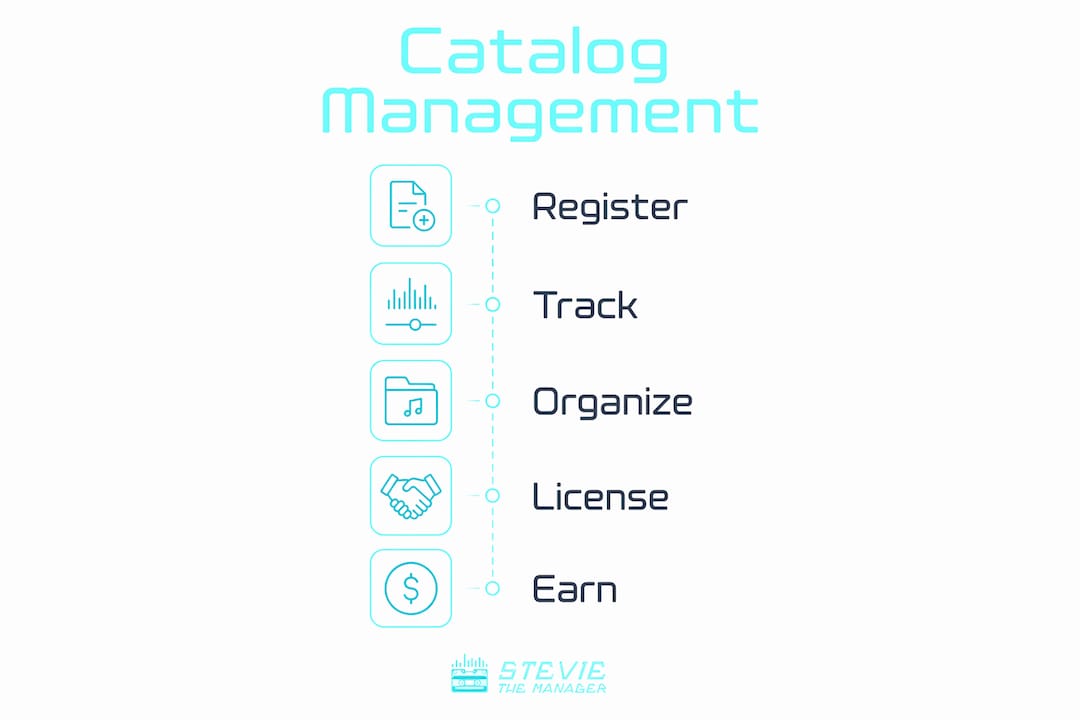
Understanding music publishing rights is inseparable from catalog management. Publishing rights cover the composition itself, and controlling them means you collect every dollar the song earns, not just the master royalties.
What benefits do music catalogs create for independent artists?
Independent artists benefit from catalog ownership in ways that signed artists often do not. A label-signed artist typically assigns master rights to the label, which collects the majority of master royalties. An independent artist who owns their masters and publishing controls the full income from every stream, sync, and performance.
A large, diverse catalog increases opportunity surface area, giving artists more chances to land on playlists, earn sync placements, and attract new fans organically. A single-song artist has one shot. An artist with 30 songs has 30 simultaneous opportunities running at all times.
| Approach | Outcome |
|---|---|
| Chasing viral hits only | Income spikes then drops; career depends on constant new releases |
| Building a catalog consistently | Multiple revenue streams run simultaneously; older songs keep earning |
| Owning masters and publishing | Full royalty collection across all income types |
| Assigning rights to a label | Reduced royalty share; limited catalog control |
| Registering with PROs and MLC | Performance and mechanical royalties claimed and collected |
The catalog also reduces pressure on any single release. When an artist has 20 or 30 songs generating streaming income, a new release does not need to go viral to justify its existence. It simply adds to the existing revenue base and gives fans more to explore. This is the mindset shift that separates artists building careers from those burning out chasing trends.
Learning how to make money from rap music through catalog ownership is one of the most practical skills an independent artist can develop in 2026.
How do artists prepare their catalogs for sync licensing?
Sync licensing is the most lucrative single placement an independent artist can land. A song placed in a Netflix series, a national ad campaign, or a major video game can generate more income than months of streaming. But music supervisors have specific requirements, and most independent artists are not prepared to meet them.
Broadcast-ready assets significantly increase sync placement chances. The assets a supervisor needs include:
- Full stereo mix of the song in WAV or AIFF format at 44.1kHz or higher
- Instrumental version with vocals removed so editors can adjust for dialogue
- Acapella version for remixing or layering in production
- Stems (separated tracks for drums, bass, melody, and vocals) for maximum editorial flexibility
- Cleared samples with documented licenses for any third-party material used in the track
- One-stop clearance confirmation, meaning one entity controls both master and publishing rights
Sync licensing requires separate licensing of the composition and the master recording. A supervisor must clear both before placing a song. If different parties own each right and one is unresponsive, the placement falls through. Independent artists who own both rights have a significant advantage because they can approve a sync deal in one conversation.

Building relationships with music supervisors and sync licensing companies like Musicbed, Artlist, or Songtradr gives catalog access to placement opportunities that most artists never reach through streaming alone. Submitting to these platforms requires the same broadcast-ready assets listed above.
Key takeaways
A music catalog is the most durable income asset an artist can own, and managing it well requires registering rights, organizing metadata, and preparing sync-ready assets from day one.
| Point | Details |
|---|---|
| Own both rights | Control master recordings and publishing to collect every royalty type available. |
| Register with PROs and MLC | Distributors only collect master streaming royalties; performance and mechanical royalties require separate registration. |
| Maintain clean metadata | Accurate ISRC codes, split sheets, and ownership records prevent withheld royalties and sync rejections. |
| Prepare sync-ready assets | Instrumentals, stems, and cleared samples are required for music supervisor placements. |
| Build consistently | A larger catalog creates more simultaneous revenue streams and reduces dependence on any single release. |
Catalog-building changed how I think about music as a career
The conversation around catalog-building has shifted noticeably in the past few years, and I think most emerging artists are still catching up to what that shift actually means in practice.
The old model was simple: release a song, promote it hard for two weeks, then move on. The new reality is that artists treating music as long-term assets build stronger brands and face less pressure with every new release. That is not a theory. It is what separates artists who are still earning from records they made five years ago from those who need a hit every six months just to stay relevant.
What I have observed is that the artists who struggle most are not the ones with the least talent. They are the ones who never documented anything. No split sheets, no PRO registration, no instrumental versions sitting in a folder ready to send. When a placement opportunity arrives, they are not ready. The moment passes.
The catalog mindset is really a documentation mindset. Every song you finish should come with a complete package: registered rights, organized metadata, and broadcast-ready files. That habit, built early, compounds the same way a financial investment does. A well-organized back catalog also shapes how fans and industry professionals perceive your legacy, which matters more than most artists realize until it is too late to fix.
My honest advice: stop thinking about your next release and start thinking about your catalog as a whole. What does it say about you? Is it findable, licensable, and properly registered? Those questions matter more than your next single’s cover art.
— Stephanos G
How Lit Nightz News supports artists building their catalogs
Lit Nightz News covers the music industry from the perspective of artists who are actively building careers, not just chasing streams.


For independent artists looking to grow their reach and get their catalog in front of new audiences, the Get Featured on Lit Nightz News program offers direct artist and brand promotion. Stangr The Man built his own catalog, including projects like Intensify Thought 1 & 2 and Vancouver Vibrationz, through the same independent approach this site covers. Artists who want to understand how hip-hop culture shapes catalog identity will find the resources here grounded in real experience, not theory. The platform exists to help artists at every stage make smarter decisions about their music and their careers.
FAQ
What is a music catalog?
A music catalog is the full collection of songs an artist owns or controls, including both master recordings and publishing rights. It generates income through streaming, sync licensing, performance royalties, and mechanical royalties.
Why do artists need to register with a PRO?
PROs like ASCAP, BMI, and SESAC collect performance royalties that distributors do not. Without PRO registration, artists forfeit income every time their songs play publicly on radio, TV, or in live venues.
What is the difference between master and publishing rights?
The master recording is the specific recorded version of a song. The publishing right covers the underlying composition, including the melody and lyrics. Both must be licensed separately for sync placements.
How does a back catalog help with sync licensing?
A back catalog gives music supervisors a wider pool of songs to choose from, increasing the chance of a placement. Older catalog tracks earn fees and royalties from media placements in films, TV, and games long after their original release.
What assets do artists need for sync licensing?
Music supervisors require a full stereo mix, an instrumental version, cleared samples, and documented one-stop clearance. Missing any of these assets can cause a supervisor to pass on an otherwise strong track.
Recommended
- The music manager’s role: essential guide for hip-hop artists
- What Is Music Publishing? A Guide for Songwriters
- Digital music promotion guide: boost your reach and fanbase
- Music marketing for hip-hop artists: 5 strategies for 2026

No Comments