


Why the hip-hop community matters: culture and connection
Hip-hop is often dismissed as just music or entertainment, but that view misses its true power. Across Canada, hip-hop communities serve as vital social networks that foster mental health, amplify marginalized voices, and create spaces for cultural identity and belonging. From Vancouver to Quebec City, these communities address systemic issues like racial profiling while nurturing the next generation of artists through inclusive events and mentorship. This article explores why hip-hop communities matter beyond the beats, examining their role in mental wellness, social justice, authenticity, and community-building efforts that shape Canadian culture today.
Table of Contents
- Key takeaways
- How hip-hop communities foster mental health and social support
- Hip-hop as a platform for social justice and cultural identity in Canada
- Challenges and authentic expression within the Canadian hip-hop community
- Community events and collective efforts that build inclusive spaces
- Discover more about hip-hop culture and influence
- FAQ
Key Takeaways
| Point | Details |
|---|---|
| Mental health benefits | Hip hop activities reduce depression and anxiety while boosting self esteem and social support. |
| Social justice platform | Canadian hip hop collectives use rap to address police brutality and racial profiling, validating community experiences and spurring accountability. |
| Inclusive events and mentorship | Communities host sober inclusive events where Indigenous and emerging artists build networks and confidence through mentorship. |
| Authenticity and identity | Authenticity and cultural identity are central to hip hop communities guiding practice and relevance for youth. |
| Barriers to participation | Financial constraints and gender barriers challenge participation and growth within hip hop communities. |
How hip-hop communities foster mental health and social support
Participation in hip-hop activities offers measurable mental health benefits. Research from Beats, Rhymes, and Life small-group studies demonstrates that hip-hop engagement reduces depression and anxiety symptoms while increasing self-esteem and social support among participants. These gains extend to social-emotional skills like critical thinking and peer connection, areas where traditional interventions often fall short for youth.

Canadian groups exemplify this impact through community-centered programming. Tribe Artist Society in Calgary hosts around 200 annual events providing sober, inclusive environments where Indigenous and emerging artists build networks and confidence. These gatherings prioritize mental wellness alongside artistic development, recognizing that creative expression and social belonging are inseparable for many participants.
Hip-hop pedagogy resonates because it meets youth where they are culturally. Activities like MCing and cyphers create low-pressure opportunities for self-expression and skill-building. Participants engage with hip-hop culture and impact through formats that feel authentic rather than clinical, making mental health support accessible without stigma.
Pro Tip: If you struggle with anxiety or isolation, joining a local cypher or open mic can provide structured social interaction that builds confidence through creative participation rather than forced conversation.
Key mental health benefits include:
- Reduced symptoms of depression and anxiety through regular creative engagement
- Improved self-esteem from skill development and peer recognition
- Enhanced social-emotional skills including empathy, critical thinking, and conflict resolution
- Access to supportive networks that understand cultural context and identity challenges
“Hip-hop communities create spaces where youth can process trauma, celebrate identity, and build resilience through culturally relevant expression that traditional mental health services often lack.”
This combination of creative outlet, social connection, and cultural validation makes hip-hop communities uniquely effective mental health resources, particularly for marginalized youth facing systemic barriers to conventional support services.
Hip-hop as a platform for social justice and cultural identity in Canada
Canadian hip-hop collectives leverage music as activism, addressing issues that mainstream media often ignores. The Limoilou Starz collective in Quebec City uses rap to highlight police brutality and racial profiling, creating narratives that validate community experiences and demand accountability. Their work reflects statistical realities: data shows visible minorities face disproportionate police stops, a disparity these artists transform into powerful social commentary.
This activism serves dual purposes. It raises awareness among broader audiences while providing catharsis and validation for communities experiencing these injustices daily. Hip-hop becomes both megaphone and mirror, amplifying marginalized voices while reflecting their lived realities back with artistic clarity.
Cultural identity formation is central to this process. Artists explore Canadian hip-hop roots and culture while asserting their own narratives, creating space for diverse experiences within the broader hip-hop tradition. This negotiation between global genre conventions and local specificity strengthens community bonds and cultural pride.
| Issue | Statistical Evidence | Hip-Hop Response |
|---|---|---|
| Racial profiling | Black Canadians stopped by police at 3x the rate of white Canadians | Limoilou Starz creates tracks documenting personal experiences and systemic patterns |
| Police brutality | Indigenous people 10x more likely to be killed by police | Collectives center Indigenous voices and stories in their music and events |
| Cultural erasure | Mainstream media underrepresents diverse Canadian narratives | Artists assert local identity and hip-hop identity and social justice through independent releases |
Key social justice contributions include:
- Documenting systemic racism through personal narratives and community testimony
- Creating counter-narratives that challenge stereotypes and media misrepresentation
- Building coalitions across marginalized communities through shared artistic platforms
- Preserving cultural memory and identity for future generations
These efforts position hip-hop communities as essential civic infrastructure, filling gaps left by institutions that fail to address or even acknowledge the challenges facing marginalized Canadians. The music becomes evidence, therapy, and organizing tool simultaneously.

Challenges and authentic expression within the Canadian hip-hop community
Despite its cultural impact, Canadian hip-hop faces institutional undervaluation that limits resources and recognition. Galleries, funding bodies, and mainstream media often overlook local scenes in favor of American imports, creating financial barriers that prevent artists from sustaining careers and communities from growing infrastructure.
Gender inequities compound these challenges. Female rappers in Canadian hip-hop navigate additional obstacles including industry sexism, limited performance opportunities, and exclusion from male-dominated networks. These barriers reduce diversity within communities and silence vital perspectives.
Authenticity presents its own complexity. Artists balance US hip-hop influences with local community ties, creating hybrid identities that honor global genre traditions while asserting Canadian specificity. This negotiation involves constant choices about language, subject matter, and aesthetic that shape both individual careers and community character.
| Region/Identity | Authenticity Approach | Community Impact |
|---|---|---|
| Quebec francophone | Blend French lyrics with hip-hop beats, assert linguistic and cultural distinctiveness | Strengthens francophone identity while expanding hip-hop’s linguistic range |
| Indigenous artists | Center traditional knowledge and contemporary Indigenous experiences | Reclaims narrative control and educates broader audiences |
| Toronto multicultural | Incorporate diverse musical traditions reflecting the city’s demographics | Creates inclusive spaces that celebrate rather than erase cultural diversity |
| Vancouver Asian Canadian | Navigate model minority stereotypes while asserting hip-hop credibility | Expands who belongs in hip-hop and challenges genre’s racial boundaries |
Overcoming financial and gender barriers requires strategic action:
- Seek grants from arts councils and cultural organizations that prioritize equity and emerging artists
- Build coalitions with other marginalized artist communities to share resources and amplify collective voice
- Create independent platforms and events that bypass traditional gatekeepers and industry structures
- Document and celebrate hip-hop fan engagement to demonstrate community value and cultural impact
- Mentor emerging artists, especially women and non-binary creators, to build sustainable pipelines
Pro Tip: If institutional support feels inaccessible, focus on building direct relationships with your community through social media, house shows, and collaborative projects that create value outside traditional industry structures.
These challenges shape community dynamics and artistic output. Artists who navigate them successfully often become community leaders, using their platforms to advocate for systemic change while creating opportunities for those following behind.
Community events and collective efforts that build inclusive spaces
Community events form the backbone of hip-hop’s social infrastructure. Tribe Artist Society hosts approximately 200 events annually, providing performance opportunities and networking spaces that nurture artist development while fostering belonging. These gatherings prioritize sobriety and inclusivity, creating environments where Indigenous artists and newcomers feel welcomed and valued.
Such events serve multiple functions simultaneously. They offer stages for emerging artists to develop skills and build audiences. They create networking opportunities that lead to collaborations and mentorship relationships. They establish cultural spaces where community members can gather, celebrate identity, and strengthen social bonds.
The diversity of event formats reflects community needs and creative possibilities:
- Open mics and cyphers for skill development and peer feedback in low-pressure settings
- Showcases featuring established and emerging artists that build intergenerational connections
- Workshops teaching production, lyricism, and business skills essential for sustainable careers
- Community gatherings combining performance with social services, mental health resources, and activist organizing
- Collaborative projects bringing together artists across disciplines and geographic boundaries
Pro Tip: Attending local hip-hop events regularly, even as an audience member, expands your network and understanding of community dynamics while supporting artists and organizers who sustain these vital spaces.

Collectives amplify these efforts by providing organizational structure and continuity. They pool resources, share knowledge, and create systems that outlast individual projects. This infrastructure helps overcome the geographic and social fragmentation that threatens community cohesion, especially in cities where gentrification and economic pressures scatter artists and fans.
Cultural exchange happens organically at these events. Artists from different backgrounds share techniques, perspectives, and stories that enrich everyone’s practice. Audiences encounter diverse voices and narratives that challenge assumptions and expand understanding. These interactions build the social capital that makes communities resilient and creative.
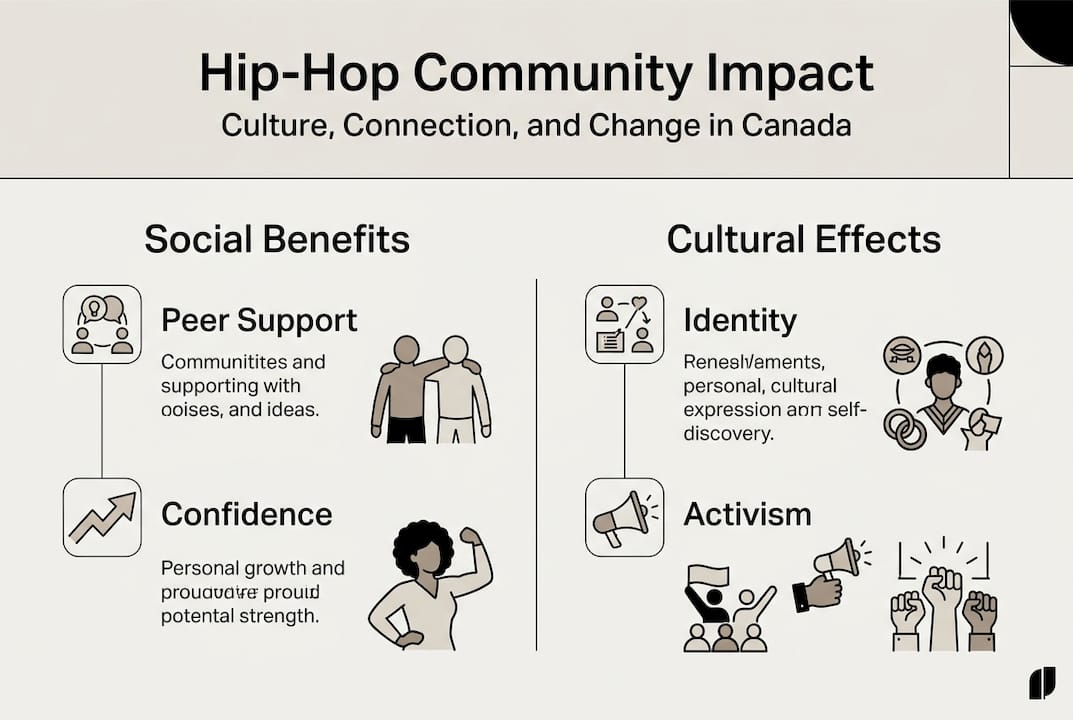
Engaging with hip-hop networking opportunities and understanding hip-hop collaboration benefits strengthens both individual careers and collective capacity. Events transform isolated artists into connected community members with shared purpose and mutual support.
Discover more about hip-hop culture and influence
If this exploration of hip-hop communities resonates with you, Stangr The Man offers extensive resources diving deeper into the culture’s evolution and impact. Our articles examine hip-hop culture and impact from multiple angles, helping fans and artists appreciate the genre’s complexity and social significance.
Stay current with hip-hop trends in 2026 shaping the scene’s direction, from production innovations to cultural shifts redefining what hip-hop means and who it serves. Learn about female rappers shaping hip-hop and challenging industry norms while expanding the genre’s creative possibilities. These resources provide context and inspiration for anyone invested in hip-hop’s ongoing evolution as both art form and community.
FAQ
What is the role of community events in hip-hop?
Community events provide essential performance stages where emerging artists develop skills, build confidence, and connect with audiences in supportive environments. They create networking opportunities that lead to collaborations, mentorship relationships, and career advancement. These gatherings also establish safe cultural spaces where community members celebrate identity, strengthen social bonds, and access resources beyond music.
How does hip-hop help mental health among youth?
Hip-hop engagement reduces anxiety and depression by boosting self-esteem through creative achievement and peer recognition. Participation provides social-emotional support via networks that understand cultural context and identity challenges. The culturally relevant expression format makes mental health work accessible without clinical stigma, meeting youth where they are rather than forcing them into uncomfortable traditional therapy models.
What social issues does hip-hop address in Canadian communities?
Canadian hip-hop addresses police brutality, racial profiling, and systemic racism through personal narratives that document community experiences and demand accountability. It tackles cultural erasure by asserting diverse Canadian identities often ignored by mainstream media. Hip-hop serves as a platform amplifying marginalized voices, creating counter-narratives that challenge stereotypes while preserving cultural memory for future generations.
What challenges do Canadian hip-hop artists face?
Artists face institutional undervaluation as galleries, funders, and media overlook local scenes in favor of American imports, creating financial barriers to sustainable careers. Gender inequalities limit opportunities for female and non-binary creators through industry sexism and exclusion from male-dominated networks. Navigating authenticity amid diverse influences requires constant negotiation between global hip-hop conventions and local community ties, shaping both individual expression and collective identity.

Recommended
- Why hip-hop is influential: culture, identity, impact
- What is hip hop networking: Guide for emerging artists
- What is hip-hop fan engagement and how it works in 2026
- Hip Hop’s Global Footprint: Exploring the Phenomenon Behind 1.85 Billion Listeners Worldwide – Stevie The Manager aka Stangr The Man

No Comments