

Why educating fans on hip-hop culture matters: impact
TL;DR:
- Hip-hop education deepens cultural understanding beyond passive enjoyment and promotes active participation.
- It enhances mental health by fostering community, reducing anxiety, and encouraging self-expression.
- Learning about hip-hop’s elements empowers fans to become community leaders and cultural advocates.
Most hip-hop fans can name their favorite albums, quote bars word for word, and debate who has the best flow. But there’s a huge difference between loving hip-hop and truly understanding it. The gap between passive enjoyment and genuine cultural awareness is where real empowerment lives. When fans learn about hip-hop’s roots, its social context, and the elements that make it an art form, they stop being spectators and start becoming participants in something much bigger. This article breaks down what hip-hop education actually involves, why it matters for identity and community, and how it improves both artistic appreciation and mental wellbeing.

Table of Contents
- What does hip-hop culture education mean?
- Empowering fans through deeper understanding
- Education’s impact on artistic appreciation and participation
- Mental health and fan wellbeing benefits
- Hip-hop education: What most fans and advocates miss
- Connect with deeper hip-hop culture resources
- Frequently asked questions
Key Takeaways
| Point | Details |
|---|---|
| Education deepens engagement | Learning hip-hop culture helps fans connect more meaningfully with the art and community. |
| Empowerment and leadership | Education enables fans to develop leadership skills, express themselves, and actively shape the culture. |
| Mental health boost | Participating in hip-hop education can reduce depression and anxiety while strengthening social bonds. |
| Better artistic appreciation | Fans who understand hip-hop’s elements engage more deeply with its creative and storytelling aspects. |
What does hip-hop culture education mean?
Hip-hop education is not a single class or a YouTube playlist. It’s a broad, ongoing process that happens through formal programs, community spaces, artist workshops, and everyday cultural exchange. The goal is to move fans and students from surface-level consumption to deep cultural awareness.
At its core, hip-hop education centers on five foundational elements: DJing, MCing, breakdancing, graffiti, and knowledge. That last element is often overlooked, but it’s arguably the most important. Knowledge is the philosophical backbone of hip-hop culture, encouraging critical thinking, self-awareness, and a responsibility to understand the world you live in.
A common misconception is that hip-hop is purely entertainment. That framing shrinks the culture to a product. Hip-hop is a living, breathing art form rooted in Black and Latino communities navigating real social struggles. Treating it as just music misses everything underneath. The four elements of hip-hop are not decorations on the genre. They are its structure.
Research backs this up. Hip-hop education enhances learning by boosting student engagement, motivation, memorization, and critical thinking through elements like DJing, MCing, cyphers, breakdance, knowledge, and graffiti. The data is clear: this is a legitimate educational tool, not a novelty.
Here’s a quick breakdown of those core educational pathways:
| Element | Educational value |
|---|---|
| DJing | Music theory, timing, technical skill |
| MCing | Oral communication, storytelling, vocabulary |
| Breakdancing | Physical discipline, spatial awareness |
| Graffiti | Visual art, design, self-expression |
| Knowledge | Critical thinking, cultural history, identity |
Formal programs exist in schools, universities, and nonprofits. But informal education, mentorship at open mics, community cyphers, and online discussions, carries just as much weight. Both have a role. The difference is access, and that’s a conversation worth having.
- Hip-hop education can be formal (schools, universities) or informal (community spaces, open mics)
- All five elements of hip-hop carry distinct educational benefits
- The “knowledge” element specifically builds critical thinking and self-awareness
- Treating hip-hop as entertainment alone strips away its cultural depth
- Research confirms measurable learning improvements through hip-hop pedagogy
Empowering fans through deeper understanding
When fans genuinely understand hip-hop culture, something shifts. They’re not just listening anymore. They’re connecting, questioning, and contributing. That transition is where real empowerment begins.
Research confirms that Hip-hop education empowers Black students in leadership, identity formation, resistance, and self-expression. While this research focuses on students, the findings translate directly to fan communities. When people understand the cultural language of hip-hop, they feel seen, validated, and equipped to advocate for themselves and others.

Hip-hop’s influence on identity runs deep. For many fans, hip-hop is the first place they heard their experience reflected back at them. Education amplifies that connection by giving it context and meaning. You understand why a lyric hits differently when you know the history behind it.
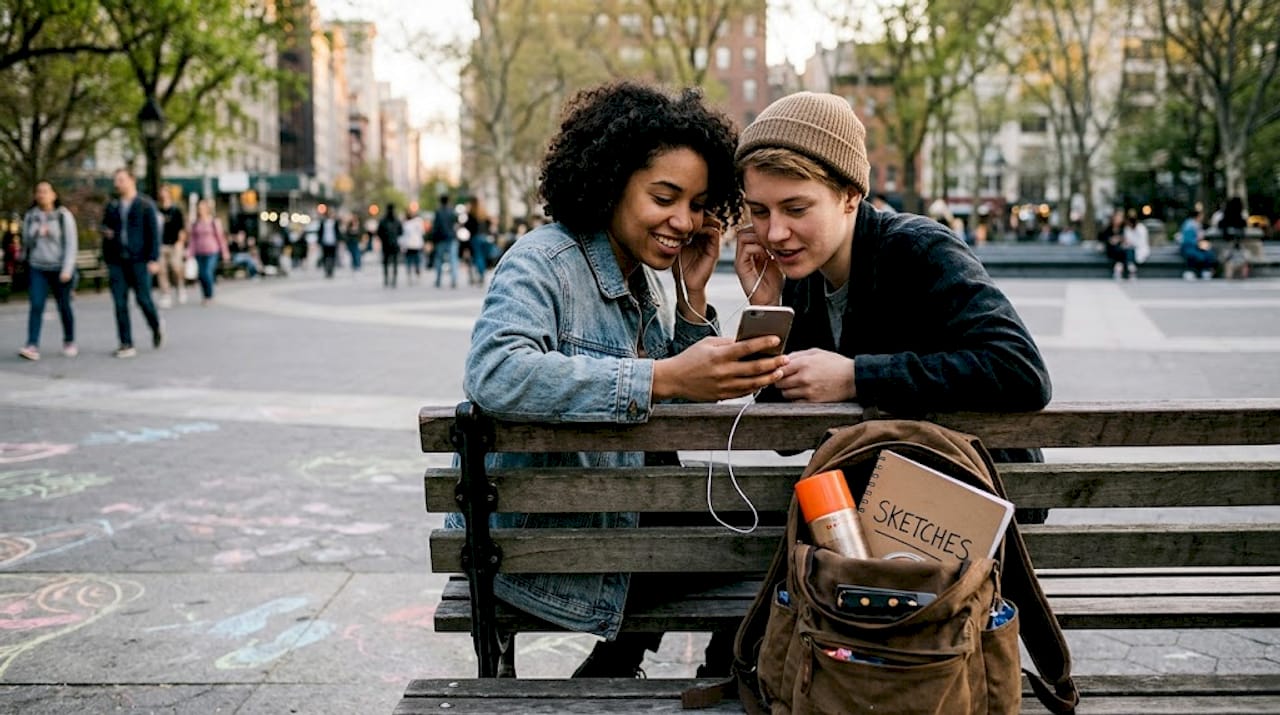
There’s also a clear contrast between passive and active fans when it comes to community impact. Passive fans consume. Active fans build. Educated fans are far more likely to organize events, mentor younger fans, challenge harmful narratives, and push for cultural respect. They become advocates, not just audiences.
| Passive fan | Active, educated fan |
|---|---|
| Streams music | Supports artists directly |
| Quotes lyrics | Understands cultural context |
| Watches events | Organizes or volunteers |
| Follows trends | Shapes cultural conversations |
| Consumes content | Creates and mentors |
Pro Tip: If you want to go from passive to active, start by learning the history behind your five favorite songs. Who made them? What was happening socially at that time? What element of hip-hop does the track emphasize? That kind of curiosity builds real cultural literacy fast.
- Educated fans take leadership roles in their communities
- Understanding context transforms how fans interpret lyrics and events
- Fan education directly supports identity formation and self-expression
- Advocacy and cultural stewardship grow naturally from deeper knowledge
Building hip-hop community connection starts with education. It’s what turns a crowd into a movement.
Education’s impact on artistic appreciation and participation
Knowing the culture changes how you hear the music. That’s not an exaggeration. When you understand what makes a flow technically impressive, what a well-constructed concept album means in the context of hip-hop history, or how a DJ’s set builds emotional tension, you’re experiencing art on a completely different level.
Hip-hop education enhances learning through its elements, and one of the biggest outcomes is improved engagement with the art itself. Fans who understand technique don’t just enjoy the surface. They notice the details, the storytelling structure, the production choices, the cultural references.
This kind of awareness also pushes fans toward participation. Hip-hop fan engagement goes beyond social media likes. Educated fans show up to events, engage in cyphers, and actively support artists whose work reflects cultural depth.
Here’s how to move from fan to active participant:
- Study the basics. Learn each of the five elements and their history.
- Attend live events. Concerts, open mics, and cyphers give you real-time exposure.
- Engage in the conversation. Join online communities or local groups that discuss hip-hop critically.
- Try one element yourself. Write bars, practice a scratch, or pick up a can. Doing builds understanding faster than watching.
- Support emerging artists. Participating in rap events connects you directly to creators and growing scenes.
Pro Tip: Attend an open mic and just listen the first time. Notice how performers build their set, what gets the crowd going, and how different styles land differently. That observation sharpens your ear better than hours of passive listening at home.

- Education shifts fans from passive listeners to cultural participants
- Technique awareness deepens appreciation for craft and storytelling
- Live events accelerate learning through direct immersion
- Trying an element yourself builds empathy and respect for artists
- Hip-hop networking within educated communities creates real career and creative opportunities
Mental health and fan wellbeing benefits
This one surprises people. Hip-hop education isn’t just good for cultural literacy or artistic appreciation. It directly benefits mental health, and the research is compelling.
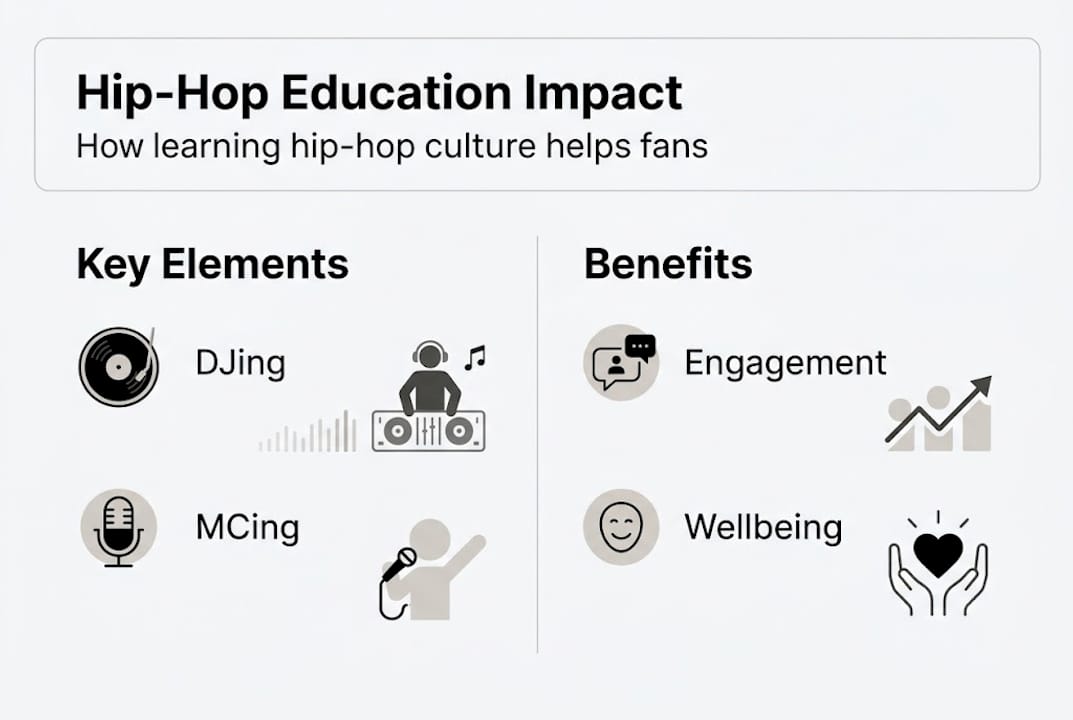
Hip-hop pedagogy reduces depression and anxiety symptoms in adolescents through small-group counseling approaches. The mechanism makes sense: hip-hop gives people a shared language for expressing pain, frustration, and hope. In group settings, that shared language breaks down isolation and builds trust faster than traditional therapeutic methods often do.
The benefits extend beyond formal therapy. Community-based hip-hop education creates spaces where people feel understood. Building hip-hop communities around shared cultural knowledge gives individuals a sense of belonging that is protective against mental health struggles.
“Hip-hop culture has always been about survival and expression. When you give people the tools to understand and use that culture intentionally, you give them tools for life.”
Research also confirms positive learning outcomes tied to hip-hop education more broadly, including improvements in emotional regulation and social connection. Those aren’t small things. For young fans especially, a community built around meaningful cultural education can be a genuine anchor during difficult periods.
- Group-based hip-hop education lowers depression and anxiety symptoms
- Shared cultural language builds trust and reduces isolation
- Community knowledge creates belonging and psychological safety
- Emotional regulation improves through active participation in hip-hop culture
- Wellbeing outcomes are strongest in structured, community-centered educational formats
The wellbeing case for hip-hop education is not soft or speculative. It’s backed by evidence, and it deserves more attention from advocates and community leaders alike.
Hip-hop education: What most fans and advocates miss
Here’s the part that most conversations leave out. Too many people treat hip-hop education like trivia. They think knowing who invented scratching or being able to name the Zulu Nation’s founding year makes them culturally educated. That’s surface knowledge, and it’s actually kind of missing the point.
Real hip-hop education is about agency. It’s about understanding the culture well enough to use it as a tool for your own growth and your community’s advancement. The cultural impact of hip-hop has never been about facts and dates. It’s been about what people do with the culture once they understand it.
From years of watching how fans, artists, and educators engage with hip-hop, the pattern is obvious. People who treat education as a living practice, something they keep building on through events, conversations, and creative participation, are the ones who genuinely grow. The ones who stop at trivia stay stuck as consumers. Hip-hop was built by people who had something to say and the cultural tools to say it. Education is how you get those tools. Don’t settle for being a fan when you could be a contributor.

Connect with deeper hip-hop culture resources
You’ve just covered a lot of ground. Understanding hip-hop culture at this level puts you ahead of most fans, but knowing is only the beginning.
At stangrtheman.com, we go deep on everything from the origins and elements of hip-hop culture to the real-world hip-hop’s influence on identity and community. If you want to stay current, the 2026 hip-hop culture shifts guide breaks down where the culture is heading next. Whether you’re a lifelong fan or just starting to dig deeper, these resources are built for people who take hip-hop seriously. The culture rewards those who invest in understanding it.
Frequently asked questions
What are the main elements fans should learn about hip-hop culture?
Fans should learn about DJing, MCing, breakdance, graffiti, and the principle of knowledge to fully appreciate hip-hop culture. Hip-hop education enhances learning through all five elements, each contributing a distinct layer of cultural and creative understanding.
How does hip-hop education influence fan community building?
Educated fans engage more deeply, strengthen community connections, and support positive cultural change. Hip-hop education empowers Black students in leadership and community roles, a dynamic that extends naturally into fan communities.
Are there mental health benefits to educating fans on hip-hop culture?
Yes. Hip-hop pedagogy reduces depression and anxiety symptoms through group counseling approaches, with community belonging and shared cultural language playing key roles in those outcomes.
How can fans practically engage in hip-hop culture education?
Fans can attend live events, join community workshops, participate in cyphers, and explore reputable online resources focused on hip-hop’s core elements and history.
Does hip-hop education impact artistic appreciation?
Absolutely. Educated fans show greater appreciation for lyrical complexity, musical innovation, and cultural storytelling. Empirical reviews on hip-hop education confirm positive data on both learning and artistic engagement metrics.
Recommended
- What is hip-hop fan engagement and how it works in 2026
- Hip Hop’s Global Footprint: Exploring the Phenomenon Behind 1.85 Billion Listeners Worldwide – Stevie The Manager aka Stangr The Man
- What is hip hop culture? Origins, elements, impact
- Exploring the 4 Elements of Hip Hop Culture: Breaking, MCing, DJing, and Graffiti – Stevie The Manager aka Stangr The Man

No Comments