
What Is Record Label Promotion: 2026 Artist Guide
TL;DR:
- Record label promotion includes activities like playlist pitching, social media campaigns, and influencer seeding to increase an artist’s visibility. A coordinated 12-week campaign maintains momentum before and after release, focusing on quality content and strategic relationships. Community engagement and conversion metrics matter more for long-term success than short-term views or viral moments.
Record label promotion is the coordinated set of activities a label uses to increase an artist’s visibility across radio, streaming platforms, social media, and press. It combines radio plugging, playlist pitching, influencer seeding, and press outreach into one unified push designed to drive streams, grow a fanbase, and build long-term career momentum. The industry term for this function is “music promotion,” and it sits under a broader umbrella that also includes marketing and PR. Understanding how these pieces connect is the first step toward using them effectively, whether you run a label, manage an artist, or are building your own career from the ground up.

What is record label promotion and how does it work?
Record label promotion is defined as a coordinated umbrella of marketing, PR, and fan engagement activities designed to drive immediate visibility for a release. It is distinct from marketing, which builds long-term brand identity, and from PR, which manages media relationships. Promotion focuses on getting a specific song or album in front of as many qualified listeners as possible, as fast as possible.
The core channels in a standard label promotion campaign include:
- Radio plugging: Pitching tracks to radio programmers and music directors at stations to secure airplay and chart positions.
- Playlist pitching: Submitting tracks to editorial curators on Spotify and Apple Music for inclusion on curated playlists.
- Press outreach: Sending releases, EPKs (electronic press kits), and interview pitches to music blogs, magazines, and online publications.
- Social media campaigns: Running coordinated content drops, countdowns, and paid ads across Instagram, YouTube, and TikTok.
- Influencer seeding: Sending music to content creators who can organically introduce it to their audiences.
- Live event pushes: Coordinating performances, showcases, and listening events around a release window.
Each channel serves a different audience segment. Radio reaches passive listeners. Playlists capture active streamers. Press builds credibility. Social media and influencers create conversation. A label that uses only one channel leaves significant reach on the table.
Pro Tip: Influencer seeding works best when the creator genuinely connects with the music. A single authentic post from a micro-influencer with 20,000 engaged followers often outperforms a paid placement from an account with 500,000 passive ones.
How do record labels schedule and execute promotion campaigns?
The standard promotional timeline for a release runs 12 weeks and follows a clear sequence of milestones. Labels that skip steps or compress the timeline consistently underperform compared to those that follow the full cycle.
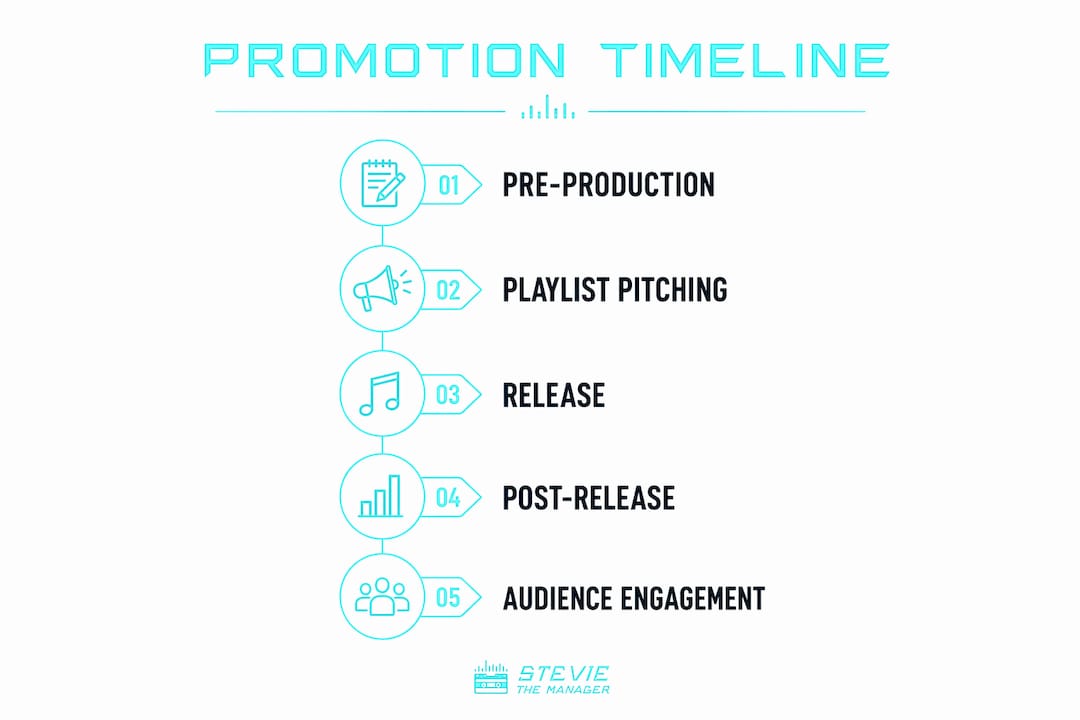
A typical 12-week rollout looks like this:
- Weeks 12–9: Finalize masters, lock in artwork and metadata, and register the release with distributors.
- Weeks 8–6: Pitch to editorial playlist curators on Spotify and Apple Music. This window is non-negotiable. Curators need lead time.
- Weeks 4–3: Launch pre-save campaigns across streaming platforms and begin social media ramp-ups with teaser content.
- Week 1 (Release week): Execute the full press push, drop music videos, coordinate influencer posts, and run paid social ads.
- Weeks 1–8 post-release: Maintain active promotion through follow-up press, playlist re-pitching, and continued social content.
The post-release window is where most independent campaigns fail. Algorithms monitor engagement signals well after launch day, and labels that go quiet after release week lose the algorithmic momentum they worked weeks to build.
| Campaign Phase | Key Activity | Timing |
|---|---|---|
| Pre-production | Master finalization, metadata | 12–9 weeks out |
| Playlist pitching | Editorial curator submissions | 8–6 weeks out |
| Pre-release hype | Pre-save campaigns, teasers | 4–3 weeks out |
| Release week | Press, video, influencer push | Week 0 |
| Post-release | Re-pitching, social content | 1–8 weeks after |
Consistency across releases also matters. Releasing music roughly once a month keeps streaming algorithms engaged and audiences primed. Labels that go dark for months between releases lose algorithmic favor and have to rebuild momentum from scratch each time.

Pro Tip: When pitching editorial playlists, write a short, specific pitch that names the genre, the mood, and the comparable artists. Curators receive hundreds of submissions. A vague pitch gets ignored.
What role does content quality play in label promotion success?
Promotion amplifies what already exists. Strong content gets amplified into a hit. Weak content gets amplified into a visible failure. No promotional budget fixes a song that does not connect.
A professional label website is one of the most overlooked assets in promotion. A well-designed label website is a primary credibility signal for press contacts, booking agents, and sync licensing professionals. When a journalist or playlist curator receives a pitch and then visits a broken or outdated website, the pitch loses credibility instantly.
Strong branding across all artist touchpoints reinforces promotion. Consistent visuals, a clear artist identity, and professional release assets (cover art, press photos, EPKs) signal that a label takes its artists seriously. That signal matters to gatekeepers who decide whether to cover, playlist, or book an act.
Specific content assets that support promotion include:
- Release-specific landing pages that house the stream link, press quotes, and social sharing buttons in one place.
- Electronic press kits (EPKs) with a bio, high-resolution photos, streaming links, and contact information.
- Music videos and lyric videos that give press and fans something visual to share. Music videos drive fan engagement in ways audio alone cannot replicate.
- Short-form clips cut from full videos for use on TikTok, Instagram Reels, and YouTube Shorts.
Labels that treat content as an afterthought consistently underperform in promotion, regardless of how much they spend on radio or playlist pitching.
How are TikTok and influencer marketing reshaping label promotion?
The shift from pure exposure to community building is the defining change in record label marketing strategies over the past three years. TikTok and influencer seeding have disrupted the traditional promotional hierarchy, where radio and press held the most power. Discovery now happens in comment sections and For You pages.
The most effective modern campaigns focus on conversion metrics over raw view counts. Saves, shares, playlist adds, and follower gains tell a label whether promotion is building a real audience. A million views with zero saves means the content did not connect deeply enough to drive action.
“The goal of promotion is not just to get people to hear the music. It is to get them to care enough to come back. Fandom is built through repeated, authentic touchpoints, not a single viral moment.”
User-generated content (UGC) is now a core tactic for labels at every budget level. When fans create their own videos using a track, the song reaches audiences the label could never target directly. Labels seed this by sending music to fan accounts, content creators, and micro-influencers who already engage with the genre. Short-form videos promote music in ways that traditional channels simply cannot match for speed and organic reach.

The practical lesson for emerging artists and small labels is clear. Chasing viral spikes without a plan to convert viewers into fans produces short-term numbers and long-term stagnation. The labels building sustainable careers in 2026 treat every promotional touchpoint as a chance to deepen a relationship, not just rack up plays.
Key Takeaways
Effective record label promotion requires a coordinated 12-week campaign combining playlist pitching, influencer seeding, press outreach, and sustained post-release engagement to build lasting audience traction.
| Point | Details |
|---|---|
| Promotion is coordinated, not random | Combine radio, playlists, press, and social media into one unified campaign for maximum impact. |
| Playlist placement multiplies streams | Tracks on curated playlists can see up to 10 times more streams than tracks without placement. |
| Post-release momentum is non-negotiable | Maintain active promotion for 4–8 weeks after release to sustain algorithmic support. |
| Content quality determines promotion ceiling | No promotional spend compensates for weak music, poor visuals, or an unprofessional online presence. |
| Community beats virality | Conversion metrics like saves and shares matter more than raw view counts for long-term career growth. |
What I have learned about promotion that most guides skip
By Stephanos G
The biggest mistake I see emerging artists and small labels make is treating promotion as a one-time event. They spend weeks building toward release day, then go quiet the moment the song drops. That is exactly backwards. Release day is when the work starts, not when it ends.
The second mistake is confusing activity with strategy. Posting every day, running ads, and sending pitches to every playlist curator in existence is not a promotion plan. A plan has a sequence, a target audience, and a conversion goal. Without those three things, you are just making noise.
What actually works is simpler than most people expect. Release consistently. Build real relationships with curators and journalists before you need them. Create content that gives fans something to share. And measure what matters. Saves and playlist adds tell you more about your promotion’s effectiveness than stream counts ever will.
The artists I have watched build real traction share one habit. They treat every release as a learning cycle, not a lottery ticket. They study what worked, adjust what did not, and show up again the next month. That consistency compounds over time in ways that no single viral moment can replicate. If you want a practical starting point, the music industry survival tips at Lit Nightz News lay out the fundamentals without the hype.
— Stephanos G
How Lit Nightz News helps artists get real promotion
Lit Nightz News covers the music industry from the perspective of artists who are actually building careers, not just talking about it. The platform features independent artists, shares release news, and publishes industry insights grounded in real experience.
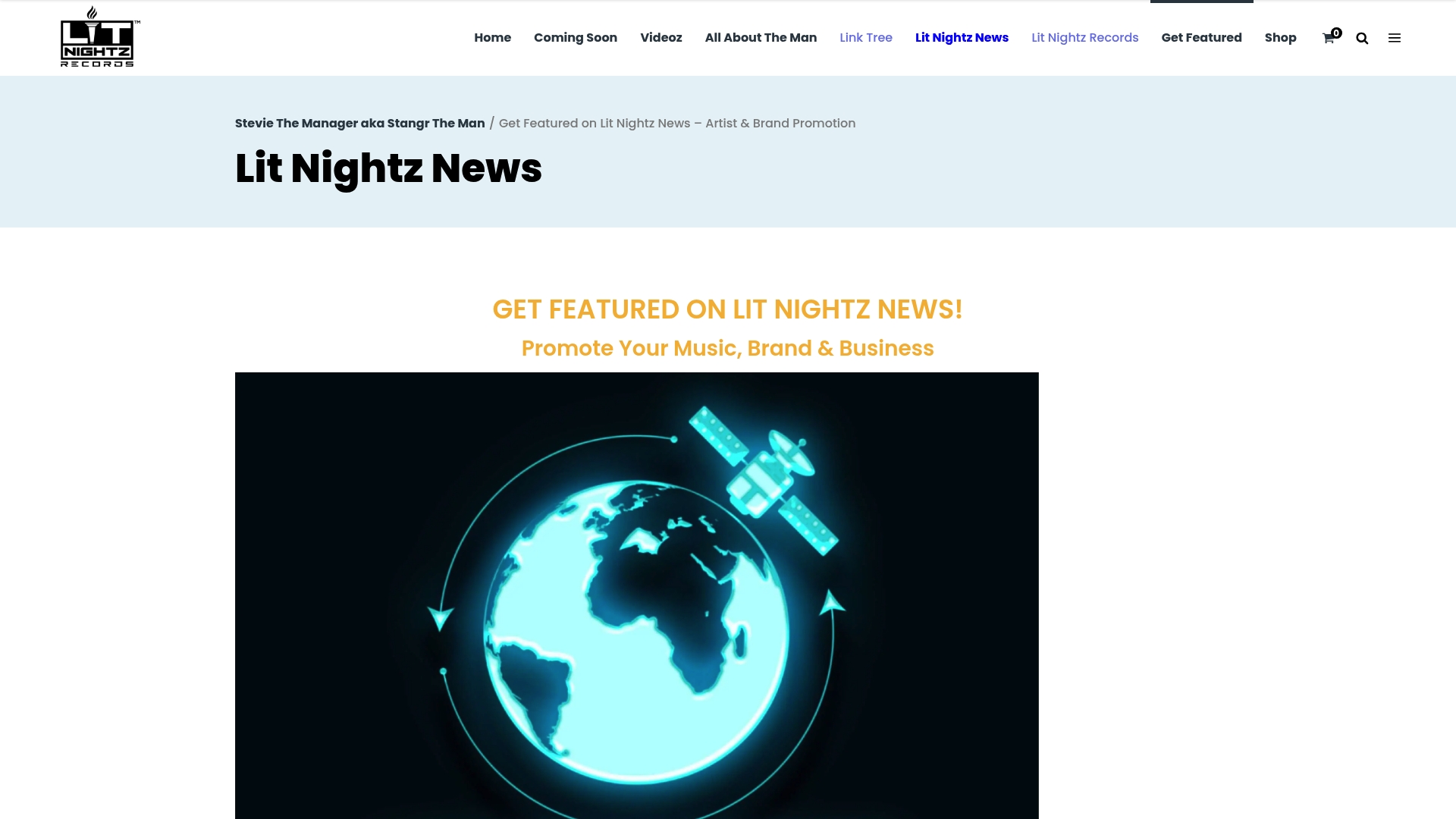
If you are an emerging artist or a label looking to get your music in front of an engaged hip-hop audience, the Get Featured page is where to start. Lit Nightz News offers artist features, brand promotion, and tailored campaign support designed for independent acts at every stage of development. The platform is built around the same principles covered in this guide: consistent presence, authentic storytelling, and promotion that builds real fans rather than empty numbers. For artists serious about hip-hop trends shaping culture in 2026, this is the community to be part of.

FAQ
What is record label promotion in simple terms?
Record label promotion is the coordinated set of activities a label uses to increase an artist’s visibility across radio, streaming platforms, press, and social media. The goal is to drive streams, grow a fanbase, and build long-term career momentum for the artist.
How long does a standard record label promotion campaign last?
The standard promotional timeline runs 12 weeks, starting with playlist pitching 6–8 weeks before release and continuing with active post-release promotion for 4–8 weeks after the drop date.
Why does playlist pitching matter so much in music promotion?
Tracks placed on curated playlists can experience up to 10 times more streams than tracks without placement. Playlist inclusion exposes music to listeners who are already in discovery mode and actively open to new artists.
What metrics should labels track to measure promotion success?
Labels should prioritize saves, shares, playlist adds, and follower gains over raw stream counts. Conversion metrics indicate whether listeners are becoming fans, which is the foundation for long-term algorithmic and commercial support.
How do independent artists promote a record label without a major budget?
Independent artists can use micro-influencer seeding, consistent social content, editorial playlist pitching, and a professional EPK to compete effectively. Music marketing workflows built around TikTok and UGC give small labels access to organic discovery that does not require a major label budget.
Recommended
- The Role of Record Labels in Artist Growth: 2026 Guide
- Digital music promotion guide: boost your reach and fanbase
- How to release a hip-hop album in Canada: 2026 guide
- Album promotion strategies for hip-hop success in Canada

No Comments