

What is Vancouver hip-hop? A guide to its culture and legends
When most people think of Vancouver’s music scene, grunge and indie rock come to mind first. But beneath that surface lies a powerful hip-hop culture that has shaped Canadian rap for over three decades. From pioneering groups who challenged industry discrimination to award-winning solo artists who built empires from underground roots, Vancouver’s hip-hop scene tells a story of resilience, creativity, and cultural pride. This guide explores how Vancouver hip-hop evolved from basement cyphers to national recognition, spotlighting the artists, movements, and moments that defined Van City’s unique voice in Canadian music.
Table of Contents
- Key takeaways
- Origins and pioneers: how Vancouver hip-hop started
- Notable artists shaping Vancouver hip-hop culture
- Evolution and vibrancy: Vancouver hip-hop today
- Vancouver hip-hop scene mechanics and cultural significance
- Discover more about hip-hop culture with Stangr The Man
- Frequently asked questions
Key Takeaways
| Point | Details |
|---|---|
| Underground roots to national map | Vancouver’s early underground scene from basements and small venues built the foundation for national recognition. |
| Rascalz Juno boycott | In 1998 Rascalz refused to attend the Juno ceremony to protest lack of hip hop category coverage, sparking industry changes. |
| Diverse hip hop styles | Swollen Members introduced a darker horrorcore influenced sound that broadened Vancouver’s hip hop palette and earned multiple Junos. |
| Independent labels mattered | Independent labels like Battle Axe Records and Figure IV Entertainment gave artists control and distribution outside major label systems. |
Origins and pioneers: how Vancouver hip-hop started
Vancouver’s hip-hop story begins in the early 1990s when underground artists started building a scene from scratch. While Toronto dominated Canadian rap headlines, Vancouver artists created their own identity in basements, community centers, and small venues across the city. The grunge explosion overshadowed these early efforts, but dedicated crews kept the culture alive through raw talent and determination.

Rascalz formed in 1991 and became the first group to put Vancouver hip-hop on the national map. Red1, Misfit, and DJ Kemo coined the term “Van City” and released albums that blended conscious lyrics with West Coast production. Their 1997 album Cash Crop went gold in Canada, proving Vancouver could compete with any hip-hop market. But their biggest impact came from what they refused to accept.
In 1998, Rascalz won a Juno Award for Best Rap Recording but declined to attend the ceremony because organizers refused to present hip-hop categories during the televised broadcast. This boycott spotlighted discrimination against Canadian hip-hop and forced the Canadian Academy of Recording Arts and Sciences to change policies. The protest became a watershed moment that opened doors for every hip-hop artist who followed. Understanding the role of hip hop journalism helps explain how this story spread and amplified change across the industry.
Swollen Members emerged shortly after with a darker, more aggressive sound that contrasted with Rascalz’s conscious approach. Madchild and Prevail, backed by producer Rob the Viking, created horrorcore-influenced tracks that won multiple Juno Awards and expanded Vancouver’s sonic palette. Their success proved the city could support multiple hip-hop styles simultaneously.
Pro Tip: Independent labels like Battle Axe Records and Figure IV Entertainment were crucial in developing Vancouver’s early scene by giving artists creative control and distribution channels without major label interference.
Key factors in Vancouver hip-hop’s foundation:
- Underground venues and community centers provided performance spaces when mainstream clubs ignored rap
- Local radio shows and college stations gave airtime to Vancouver artists before commercial stations recognized hip-hop
- Graffiti culture connected visual artists with MCs and DJs, creating a complete hip-hop ecosystem
- Cross-border influence from Seattle and Portland brought West Coast sounds that Vancouver artists adapted to Canadian contexts
Notable artists shaping Vancouver hip-hop culture
Vancouver’s hip-hop identity comes from diverse voices that each brought unique perspectives and styles to the scene. These artists transformed local underground movements into nationally recognized careers while staying rooted in Van City culture.
Madchild stands as one of Vancouver’s most prolific solo artists beyond his Swollen Members work. His hardcore delivery and horrorcore imagery created a signature sound that influenced countless younger artists. Albums like Dope Sick and Silver Tongue Devil showcased his technical skills and willingness to address personal struggles with addiction and mental health openly.
Snak the Ripper built his reputation from graffiti roots and street credibility before launching a successful rap career. He founded Stealth Bomb Records to maintain complete artistic control and released From the Dirt, which hit number one on iTunes Canada Hip-Hop charts and peaked at number 40 on Canadian Albums. His independent approach inspired a generation of Vancouver artists to build their own infrastructure rather than chase major label deals.

Other essential Vancouver hip-hop figures include:
- Checkmate: Known for battle rap skills and clever wordplay that earned respect in competitive circuits
- Higher Knowledge: Indigenous artist who blends traditional storytelling with contemporary beats, representing First Nations voices in hip-hop
- Boslen: Younger generation artist mixing melodic elements with hard-hitting lyrics about Vancouver street life
- STANGR The Man: Vancouver rapper whose albums Intensify Thought 1 and 2 and Vancouver Vibrationz showcase the city’s evolving sound and independent spirit
These artists reflect Vancouver’s multicultural makeup and prove that hip-hop thrives when diverse perspectives contribute to the conversation. Exploring the broader Canadian hip-hop guide shows how Vancouver artists fit into national movements while maintaining distinct local flavor.
Top Vancouver hip-hop albums that defined the scene:
- Rascalz: Cash Crop (1997) – Gold-certified album that proved Vancouver could produce commercially successful hip-hop
- Swollen Members: Bad Dreams (2001) – Juno-winning album that brought darker production to Canadian mainstream
- Snak the Ripper: From the Dirt (2015) – Independent release that topped charts without major label support
- Madchild: Dope Sick (2012) – Raw, personal album that addressed addiction while showcasing technical prowess
- Rascalz: Global Warning (1999) – Follow-up to Cash Crop that solidified their legacy and influence
Indigenous artists like Higher Knowledge and groups such as Snotty Nose Rez Kids bring crucial perspectives that connect hip-hop to First Nations experiences and traditions. Their work addresses colonization, identity, and resilience through powerful lyrics that educate listeners while maintaining authentic hip-hop aesthetics. This diversity makes Vancouver’s scene richer and more representative of Canada’s actual cultural landscape. The rise of hip hop genres in Canada shows how different styles coexist and influence each other.
“Vancouver hip-hop isn’t one sound or one story. It’s Indigenous voices, immigrant experiences, street narratives, and conscious messages all existing together. That’s what makes it real.” – Perspective from the scene
Evolution and vibrancy: Vancouver hip-hop today
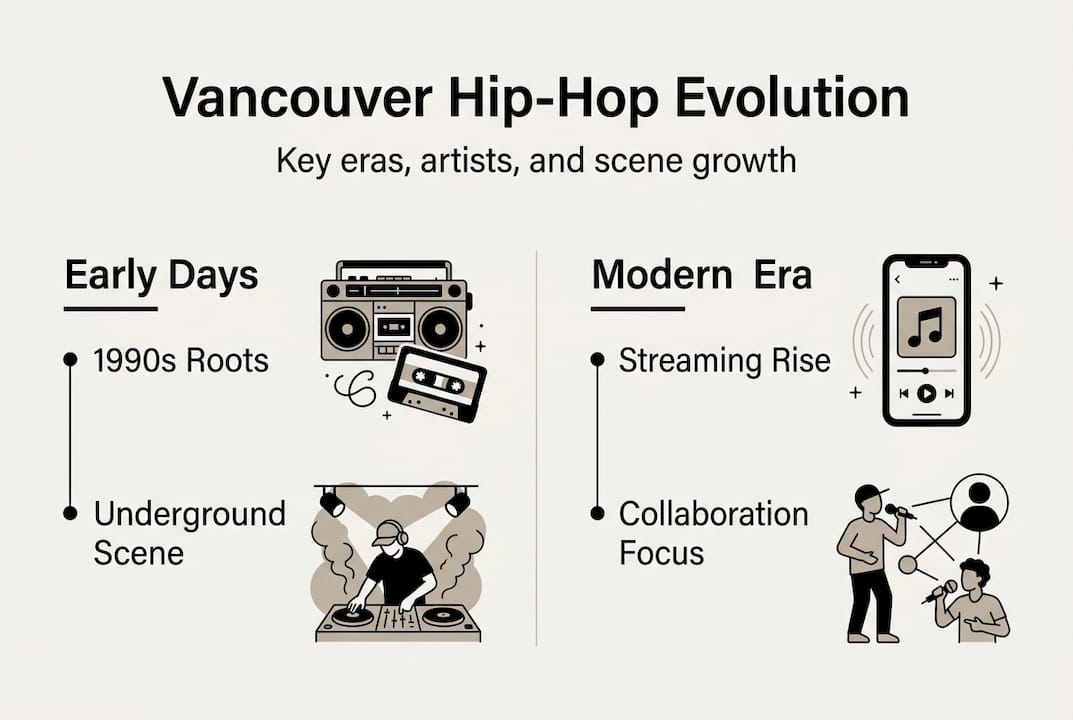
Vancouver’s hip-hop scene has transformed dramatically from its underground 1990s origins to today’s thriving digital ecosystem. Understanding this evolution reveals how local artists adapted to industry changes while maintaining cultural authenticity.
The 1990s underground scene operated in grunge music’s shadow, with Vancouver known more for Nirvana-inspired bands than rap crews. Hip-hop artists performed in small venues, sold cassettes at shows, and built followings through word of mouth and local radio. Limited mainstream media coverage meant artists relied on grassroots promotion and community support to survive.
The Rascalz’s 1998 Juno protest marked a turning point that brought institutional changes supporting hip-hop. The Canadian Academy of Recording Arts and Sciences began televising rap categories and treating hip-hop with equal respect. This policy shift gave Vancouver artists better visibility and legitimized hip-hop as a serious art form worthy of national recognition.
Swollen Members led the 2000s mainstream breakthrough with multiple Juno wins and commercial success that proved Vancouver hip-hop could compete nationally. Their darker production and aggressive delivery influenced countless artists and showed that Van City had its own sound distinct from Toronto’s approach. Major labels started signing Vancouver acts, and radio stations added more hip-hop to their rotations.

Today’s scene operates through completely different mechanisms than the 1990s underground. Streaming platforms like Spotify and Apple Music give Vancouver artists global reach without traditional gatekeepers. Independent labels such as Stealth Bomb Records and Lit Nightz Records provide infrastructure while preserving artist ownership. Collectives like Capital Wave foster collaboration and community that drives creativity forward.
Pro Tip: Vancouver artists today succeed by building direct fan relationships through social media and streaming rather than chasing radio play or major label deals, giving them more creative freedom and financial control.
| Era | Distribution | Key Challenge | Success Metric |
|---|---|---|---|
| 1990s Underground | Cassettes, local shows | Limited media coverage | Local following, word of mouth |
| 2000s Mainstream | CD sales, radio play | Major label control | Juno awards, chart positions |
| 2010s Digital | iTunes, YouTube | Standing out in crowded market | Social media followers, streams |
| 2020s Streaming | Spotify, TikTok | Algorithm visibility | Playlist placements, engagement |
Indigenous representation has grown significantly with groups like Snotty Nose Rez Kids bringing First Nations perspectives to larger audiences. Their politically charged lyrics address systemic issues while maintaining hip-hop’s rebellious spirit. This growth reflects broader movements toward Indigenous voices being heard and respected in Canadian culture. The rise of underground rap shows how independent artists maintain authenticity while reaching wider audiences.
Collaboration defines modern Vancouver hip-hop more than competition. Artists frequently work across crews, labels, and styles to create music that benefits the entire scene. This cooperative spirit contrasts with stereotypical rap beefs and builds a sustainable community where veterans mentor newcomers. Understanding why collaboration matters in hip hop reveals how Vancouver’s approach creates lasting success.
Vancouver hip-hop scene mechanics and cultural significance
Vancouver’s hip-hop infrastructure operates differently than major markets like Toronto or Los Angeles, creating unique advantages and challenges for artists building careers in Van City.
Independent labels form the backbone of Vancouver’s scene by providing artist development, distribution, and marketing without demanding creative control. Labels like Figure IV, Stealth Bomb, Battle Axe, and Lit Nightz fostered a DIY culture where artists own their masters and make their own decisions. This independence preserves artistic vision and builds long-term wealth for creators rather than executives.
| Label | Founded | Focus | Notable Artists |
|---|---|---|---|
| Battle Axe Records | 1999 | Hardcore hip-hop | Swollen Members, Madchild |
| Stealth Bomb Records | 2010 | Independent rap | Snak the Ripper, associated acts |
| Lit Nightz Records | 2010s | Vancouver talent | STANGR The Man, local artists |
| Figure IV Entertainment | 1990s | Scene development | Various Vancouver acts |
Graffiti culture shaped many Vancouver hip-hop artists’ early experiences and worldviews. Snak the Ripper came up through graffiti before transitioning fully to rap, bringing visual art sensibilities to his music and brand. This connection between visual and musical expression creates a complete hip-hop culture rather than just a music genre. Many artists experienced homelessness or housing insecurity while developing their craft, giving their lyrics authentic street perspective.
The scene emphasizes collaboration across traditional boundaries. Artists work with producers, DJs, and visual artists from different crews and backgrounds. Rock and electronic musicians collaborate with rappers, creating fusion sounds that reflect Vancouver’s diverse music culture. This openness to experimentation keeps the scene fresh and prevents stagnation.

Key structural elements supporting Vancouver hip-hop:
- Independent venues like the Cobalt and smaller spaces provide performance opportunities for emerging artists
- Community organizations offer youth programs teaching hip-hop elements and creating pipeline for new talent
- Local media outlets and blogs cover the scene consistently, giving artists visibility beyond social media
- Recording studios offer affordable rates and mentorship, making professional production accessible
The Rascalz boycott catalyzed policy changes that extended far beyond one award show. Their protest forced Canadian music institutions to recognize hip-hop’s cultural and commercial value. This activism legacy continues as Vancouver artists speak out on social issues and use their platforms for community advocacy. Hip-hop became a vehicle for addressing inequality, discrimination, and systemic problems affecting marginalized communities.
Vancouver hip-hop’s cultural significance extends beyond entertainment. The scene provides identity and community for youth from diverse backgrounds, offering alternatives to gang involvement and creating positive pathways. Indigenous artists use hip-hop to preserve languages, share traditional stories, and address colonization’s ongoing impacts. Immigrant communities find voice through rap, expressing experiences that mainstream media often ignores.
The scene influences Canadian music culture broadly by proving that hip-hop thrives outside Toronto. Vancouver’s success inspired artists in smaller cities to build local scenes rather than relocating to larger markets. This decentralization strengthens Canadian hip-hop overall by creating multiple creative centers with distinct sounds and perspectives. The Vancouver Vibrationz movement exemplifies how local artists create cultural moments that resonate nationally.
Vancouver’s approach to hip-hop combines West Coast influences with Canadian sensibilities, creating something neither fully American nor purely Toronto-influenced. This unique positioning gives Van City artists their own lane in the crowded hip-hop landscape. The city’s natural beauty, urban challenges, and multicultural makeup all feed into lyrics and aesthetics that feel distinctly Vancouver.
Discover more about hip-hop culture with Stangr The Man
Vancouver’s hip-hop story connects to broader movements that shaped rap culture globally. If you want to understand how hip-hop influences identity, language, and social change beyond Van City, Stangr The Man offers expert insights drawn from years in the scene.
Explore why hip-hop remains culturally influential across generations and communities worldwide. Discover how 90s hip hop laid foundations that Vancouver artists built upon when creating their own sound. Get detailed analysis of hip hop slang and linguistic innovation that transforms how we communicate. These resources provide context that deepens your appreciation for Vancouver’s contributions to hip-hop culture.
Frequently asked questions
What year did Rascalz form and why are they important?
Rascalz formed in 1991 and became Vancouver hip-hop’s first nationally recognized group. They popularized the “Van City” nickname and released the gold-certified album Cash Crop in 1997. Their 1998 Juno Award boycott protested hip-hop’s exclusion from televised ceremonies, forcing policy changes that gave Canadian rap fair recognition. This activism opened doors for every Vancouver artist who followed and established hip-hop as a legitimate art form worthy of institutional respect.

Who are some key solo artists in Vancouver’s hip-hop scene?
Madchild brought horrorcore intensity and technical skill through Swollen Members and solo work. Snak the Ripper built an independent empire through Stealth Bomb Records with street-credible lyrics and DIY ethos. Checkmate earned respect through battle rap prowess and clever wordplay. Higher Knowledge represents Indigenous voices by blending traditional storytelling with contemporary beats. Boslen and STANGR The Man represent newer generations pushing Vancouver hip-hop forward with fresh perspectives.
How did the 1998 Rascalz Juno protest affect Canadian hip-hop?
The protest forced the Canadian Academy of Recording Arts and Sciences to televise hip-hop categories during the main Juno Awards broadcast. This change gave rap artists equal visibility with rock, pop, and country performers. The boycott sparked national conversations about discrimination in Canadian music institutions and led to increased media coverage of hip-hop. It legitimized rap as a serious art form and encouraged more venues, radio stations, and industry professionals to support hip-hop artists.
What role do independent labels play in Vancouver hip-hop?
Independent labels like Stealth Bomb Records, Lit Nightz Records, and Battle Axe Records provide infrastructure while preserving artist ownership and creative control. They handle distribution, marketing, and business operations without demanding masters or dictating artistic direction. This model allows artists to build sustainable careers on their own terms. Labels also foster collaboration by bringing together complementary artists and creating community rather than just signing individual acts. The DIY spirit these labels promote has become essential to Vancouver hip-hop’s identity and long-term sustainability.
Recommended
- The Rise Of Underground Rap: Lit Nightz Records and STANGR The Man, Is It Vancouver’s Time? – Stevie The Manager aka Stangr The Man
- Canadian hip-hop guide: roots, culture, and impact in 2026
- Hip Hop Genres: 45% Rise in Canadian Trap & Drill
- Role of Hip Hop Journalism: Impact on Music Culture

No Comments