

Inside the Tory Lanez $100M Lawsuit: Hip-Hop Impact
TL;DR:
- Tory Lanez filed a $100 million lawsuit against the California prison system alleging mistreatment and safety violations.
- The lawsuit is separate from his 10-year criminal conviction for the 2020 shooting of Megan Thee Stallion.
- The case highlights issues of artist rights, prison conditions, and the influence of legal battles on hip-hop culture.
Tory Lanez dropped a legal bomb on April 14, 2026, when he filed a $100 million lawsuit against the California prison system from behind bars. That number alone stopped the internet cold. But this case is about more than just a staggering dollar figure. It touches on prison conditions, artist rights, a high-profile conviction, and the way the hip-hop world processes celebrity legal drama in real time. This explainer breaks down what triggered the lawsuit, what Lanez is actually alleging, how it connects to his existing sentence, and why the whole situation is sending ripples through the music industry.

Table of Contents
- What sparked the $100M lawsuit?
- A breakdown of the key allegations and prison events
- How this lawsuit ties to Lanez’s conviction and ongoing sentence
- Ripple effects: The lawsuit’s impact on hip-hop culture and industry dynamics
- Perspective: Why the real drama isn’t just about one artist
- Explore more hip-hop stories and insights
- Frequently asked questions
Key Takeaways
| Point | Details |
|---|---|
| Lawsuit origins clarified | Tory Lanez sued the California prison system for $100M over alleged mistreatment and safety issues. |
| Industry-wide impact | High-profile lawsuits like this influence artist rights debates and public perceptions in hip-hop. |
| Ties to conviction | The lawsuit cannot be separated from Lanez’s 10-year sentence resulting from his 2020 conviction. |
| Ripple effects on culture | Such legal battles prompt broader conversations about justice and accountability within music. |
What sparked the $100M lawsuit?
With the scale of the drama set, let’s break down what exactly triggered this massive legal move.
On April 14, 2026, Tory Lanez made headlines again when he sued the California Department of Corrections and Rehabilitation, the warden, and several officers in a federal civil lawsuit. The $100 million figure is not a typo. It is one of the largest personal injury and civil rights claims ever filed by a celebrity inmate against a state prison system.
Lanez, whose real name is Daystar Peterson, is currently serving a 10-year sentence. His legal team argues that prison staff failed to protect him and actively contributed to dangerous conditions during his incarceration. The lawsuit names specific individuals within the system, which signals that this is not a broad, vague complaint. It is a targeted legal strategy.
To put the scale in perspective, here is a quick look at the key players and timeline:
| Element | Detail |
|---|---|
| Filing date | April 14, 2026 |
| Plaintiff | Tory Lanez (Daystar Peterson) |
| Defendants | CA Dept. of Corrections, warden, officers |
| Lawsuit type | Federal civil lawsuit |
| Amount claimed | $100 million |
| Current facility | California Men’s Colony |
“A $100 million civil lawsuit against a state prison system by an incarcerated celebrity is extraordinarily rare. It signals serious allegations and a legal team willing to go to war.”
For fans tracking Tory Lanez appeal developments, this lawsuit adds a new layer to an already complicated legal picture. The appeal and the civil suit are separate legal tracks, but together they paint a portrait of a legal strategy that is anything but passive.
What makes this lawsuit stand out is not just the money. It is the public nature of the filing and the message it sends. Lanez is not quietly serving his time. He is fighting back through the courts, and that decision carries real consequences for how the public, the industry, and the legal system respond to him going forward.
A breakdown of the key allegations and prison events
Now that you know who’s being sued and why, let’s dive into the heart of Lanez’s allegations and what really went down behind bars.

The lawsuit centers on several serious claims about how Lanez was treated inside the California prison system. His legal team alleges that officers failed to protect him from known threats, that safety protocols were ignored, and that his civil rights were violated during his incarceration. These are not minor procedural complaints. They go to the core of what a prison system is legally obligated to provide.
Here are the main allegations laid out in the suit:
- Failure to protect: Officers allegedly ignored credible threats to Lanez’s safety from other inmates.
- Safety protocol violations: Prison staff reportedly failed to follow standard procedures during a known risk period.
- Civil rights violations: The lawsuit claims constitutional protections were not upheld.
- Retaliation concerns: Lanez’s team suggests that some actions by staff may have been retaliatory in nature.
- Transfer circumstances: Lanez was transferred for his safety to the California Men’s Colony amid allegations and prison rumors, raising questions about why the situation escalated before a transfer was ordered.
There have also been rumors circulating online about the specific incident that triggered the transfer. Some accounts mention an altercation involving another inmate, with details about a Casio watch and claims of self-defense. None of these details have been officially confirmed in court documents, and it is important to separate verified allegations from internet speculation.
Pro Tip: When following celebrity legal cases, always distinguish between what is in the actual court filing and what is being reported as rumor or unnamed source material. The gap between the two is often enormous.
This situation is not entirely unique in hip-hop history. Young Thug’s jail drama showed how prison conditions and communications can become central to a celebrity’s legal and public narrative. But a $100 million civil suit aimed directly at the prison system itself is a different level of escalation entirely.

The dollar amount also matters strategically. A claim this large forces the state to take the lawsuit seriously and allocate legal resources to defend against it. It also signals to the public that Lanez believes the harm done to him was severe and documented.
How this lawsuit ties to Lanez’s conviction and ongoing sentence
Understanding the allegations is only half the story. Let’s see how this lawsuit intersects with Lanez’s already controversial legal history.
Lanez is currently serving a 10-year sentence for the 2020 shooting of Megan Thee Stallion, a conviction that was upheld by the California Supreme Court in February 2026. That court’s decision to decline a review of his case closed one major legal door for Lanez and his supporters. The civil lawsuit against the prison system opened another.
It is worth understanding how these two legal matters sit side by side. The criminal conviction is separate from the civil suit, but they share the same public stage. Every new development in either case gets filtered through the lens of the other.

Here is how Lanez’s case compares to other notable music industry legal battles:
| Case | Charge/Issue | Outcome | Dollar amount |
|---|---|---|---|
| Tory Lanez | Assault, prison civil suit | Convicted, suit pending | $100M civil claim |
| R. Kelly | Sexual abuse charges | Convicted, 30 years | Multiple civil suits |
| Tekashi 6ix9ine | RICO, firearms | Plea deal, released | N/A |
| XXXTentacion | Assault charges | Died before verdict | Estate disputes |
The conviction and the appeal case have already reshaped how fans and critics view Lanez’s legacy. Some supporters maintain his innocence. Others point to the jury verdict as definitive. Either way, the conversation around his name now carries legal weight that affects everything from streaming numbers to industry relationships.
This also connects to a broader conversation about the rise of female rappers and how the Megan Thee Stallion case became a cultural flashpoint about gender, power, and accountability in hip-hop. The lawsuit does not change the criminal conviction, but it does keep Lanez’s name in the news cycle in a way that shapes ongoing public opinion.
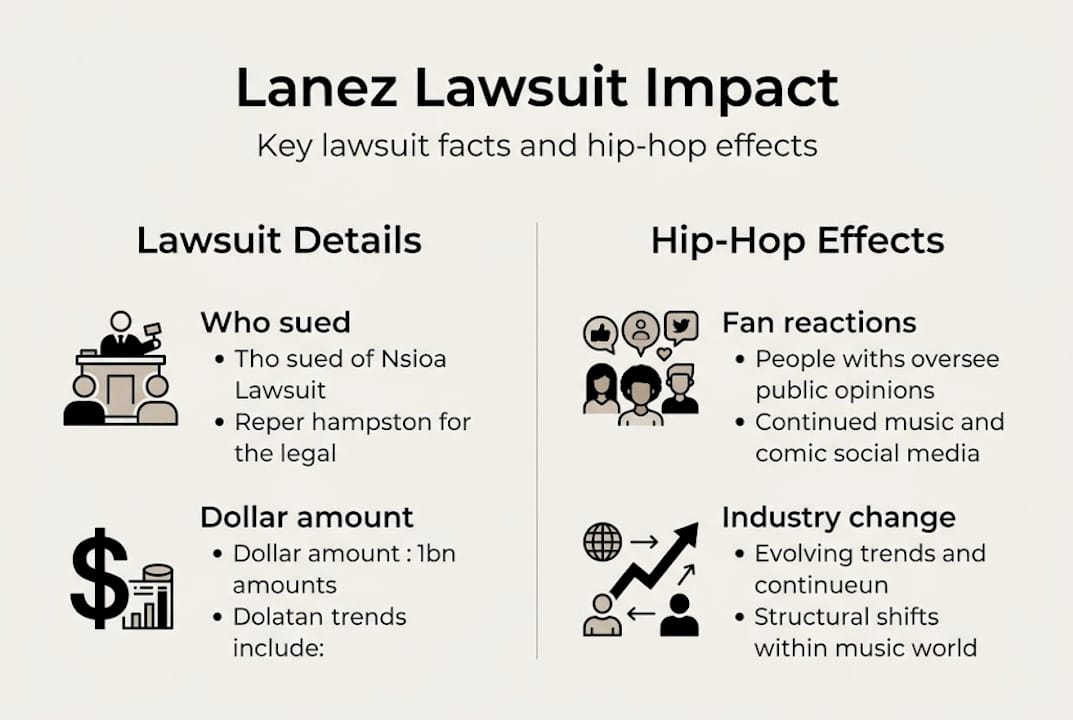
Key stat: The California Supreme Court’s February 2026 decision not to review Lanez’s case means his 10-year sentence stands as the legal baseline for everything that follows.
Ripple effects: The lawsuit’s impact on hip-hop culture and industry dynamics
Lanez’s personal story echoes far beyond his own career. Here’s what it means for the music and fans you care about.
When a high-profile artist files a landmark civil lawsuit from prison, the reverberations hit the entire industry. This is not just a story about one man. It is a story about how fame, legal systems, and public accountability intersect in the streaming era.
Here are the direct effects playing out across the industry right now:
- Artist advocacy conversations: Other artists and their teams are watching this case closely to understand what legal protections exist for incarcerated musicians.
- Label risk assessments: Record labels are quietly reassessing how they handle artists facing criminal charges, including contract clauses and release strategies.
- Fan community dynamics: Online fan bases are splitting between those who see Lanez as a victim of the system and those who view the lawsuit as a distraction from his conviction.
- Media coverage patterns: This case is teaching fans how legal stories get framed differently depending on the outlet and its audience.
- Legacy and catalog value: Controversy does not always kill streams. Some artists see catalog activity spike during legal news cycles.
Pro Tip: When you see breaking legal news about a hip-hop artist, check at least two or three different sources before forming an opinion. Legal stories are often simplified or distorted in the first 24 hours of coverage.
The case also connects to deeper cultural threads. Fans who grew up on 90s hip-hop influence know that legal drama has always been part of the genre’s story. Tupac, Biggie, and countless others navigated legal battles that became inseparable from their music. The difference today is speed. Social media compresses the timeline of public judgment in ways that did not exist before.

Looking at the best rap collaborations and how artists protect those relationships during controversy also reveals something important. Industry partnerships shift when legal risk enters the picture, and that has real consequences for music fans who care about what gets made and released.
Perspective: Why the real drama isn’t just about one artist
Step back from the headlines for a second and ask what this situation actually reveals about hip-hop culture in 2026.
Lanez’s $100 million lawsuit is a lens. It shows us how fame and legal systems collide in ways that produce spectacle, but also genuine questions about accountability and justice. The hip-hop industry has always operated in spaces where law, street credibility, and public image overlap in complicated ways. What is different now is that hip-hop and culture change is happening faster than the legal system can process it.
Celebrity legal battles used to play out mostly in courtrooms and tabloids. Now they play out in real time across every platform, with fans acting as amateur legal analysts, character witnesses, and publicists simultaneously. That changes the stakes for everyone involved.
The uncomfortable truth is that cases like Lanez’s force the industry to confront questions it would rather avoid. Who gets protected? Who gets believed? How does a conviction shape an artist’s legacy when their fan base refuses to accept it? These are not easy questions, and they do not have clean answers. But they are worth asking every time a story this big breaks.
Explore more hip-hop stories and insights
Want to see where legal drama meets music legacy? These resources give you the bigger picture.
If the Tory Lanez case has you thinking about how hip-hop culture handles controversy, accountability, and legacy, there is a lot more to explore. Understanding the origins of hip-hop culture gives you the foundation to read these modern stories with more clarity and context.
At Stangr The Man, we cover hip-hop news with the perspective of someone who lives inside the culture, not just reports on it. From hip-hop trends in 2026 to the deeper conversation about hip-hop’s influence on identity and society, the site is built for fans who want more than surface-level takes. Dive in and see what the culture is really saying right now.
Frequently asked questions
Why did Tory Lanez sue the California prison system for $100 million?
Lanez alleges prison mistreatment and safety violations by prison staff, which his legal team argues caused significant harm that justifies the $100 million claim.
How does this lawsuit affect Tory Lanez’s music career?
The lawsuit keeps Lanez visible in the public conversation, and as his conviction shapes his reputation, the civil suit adds another chapter that fans and industry insiders are actively debating.

What was Lanez convicted of before this lawsuit?
Lanez was convicted of assault with a semiautomatic firearm for the 2020 shooting of Megan Thee Stallion and received a 10-year sentence that the California Supreme Court declined to review in February 2026.
Are such lawsuits common in the music industry?
Lawsuits against prison systems by celebrities are rare, and a $100 million claim of this scale from an incarcerated artist is virtually unprecedented in the music world.
Recommended
- Why 90s Hip Hop Became The Most Influential Music Era Ever – Stevie The Manager aka Stangr The Man
- Top 10 Best Rap Collaborations: When Legends Unite for Iconic Tracks – Stevie The Manager aka Stangr The Man
- Tory Lanez Appeal Hearing Developments: A Deep Dive into the Legal Battle – Stevie The Manager aka Stangr The Man
- The Game Net Worth 2025: The Real Story Behind His Fortune – Stevie The Manager aka Stangr The Man

No Comments