
Top artist promotion strategies: real-world hip-hop examples
TL;DR:
- Building a consistent singles-first release schedule is crucial for indie artists to maintain algorithmic visibility and grow audiences organically. Combining steady campaigns with targeted boosts accelerates streaming growth and algorithmic reach, especially around key promotional moments. Implementing segmented, staggered releases for multiple projects prevents audience overlap and maximizes promotional effectiveness.
Getting your music heard in 2026 is harder than it has ever been. Over 100,000 tracks hit streaming platforms every single day, and the hip-hop genre alone accounts for a massive slice of that volume. Raw talent still matters, but without a smart promotion strategy, even the best bars get buried. The artists and promoters winning right now are not leaving their visibility to chance. They are building repeatable systems, using data to make decisions, and applying battle-tested tactics from real-world case studies. This breakdown gives you exactly that.

Table of Contents
- Release cadence: The singles-first system
- Compounded campaigns: Batched and boosted promotion
- Segmentation and staggered strategies for scaling
- Cross-channel tactics: Combining digital, influencer, and playlisting
- Physical activation: Creative real-world participation
- Our view: Why systems beat one-time stunts in hip-hop promotion
- Next steps: Resources for mastering hip-hop promotion
- Frequently asked questions
Key Takeaways
| Point | Details |
|---|---|
| Singles-first wins | Consistent single releases keep you visible on streaming platforms and playlists. |
| Composite campaigns compound | Layering steady engagement with tactical boosts results in faster, stronger signal to algorithms. |
| Segment to scale | Segmenting and staggering releases maximize reach without splitting audiences. |
| Multi-channel impact | Combining digital ads, influencer marketing, and playlist pitching drives rapid listener growth. |
| Real-world stunts create buzz | Physical activations add irreplaceable anticipation and local narrative to digital campaigns. |
Release cadence: The singles-first system
The foundational question every indie rapper faces early on is this: drop an album or keep releasing singles? The data is clear. A singles-first release strategy works better for independent artists, especially when you commit to a steady cadence of roughly one single every 6 to 8 weeks. Berklee’s research backs this up, emphasizing that consistent, spaced-out releases keep you in the algorithm’s eye and maximize your chances of landing playlist features on Spotify, Apple Music, and Amazon Music.
Why does it work so well? Streaming algorithms prioritize momentum over volume. When you release a song, the platform watches how listeners engage with it in the first 24 to 72 hours. A strong engagement signal within that window can push your track to Discover Weekly, Release Radar, or editorial-curated playlists. When you go quiet for months working on an album, that momentum dies. Then you launch an album and hope one big release moment carries the whole project. It rarely does without an existing audience already locked in.
Russ is the most cited example of this principle in practice. He flooded the market with consistent solo releases over years, building a dedicated audience without waiting for a label co-sign or a traditional album rollout. Billboard documented how this approach let him bypass mainstream gatekeeping entirely.
“Flood the market. Don’t wait for anyone to put you on. Build the audience one release at a time and make them come to you.”
Here is how a singles-first system should look in practice:
- Plan your release calendar one to two quarters in advance
- Space each single 6 to 8 weeks apart to allow full promotional cycles
- Use each release window to pitch to playlists, press, and influencers
- Build the album narrative in the background while singles do the visibility work
- Track performance data from each release to inform the next one
Building your music marketing workflow around this cadence makes the whole process feel less chaotic and more like running a business.
Pro Tip: Batch your content creation. Record and mix three to four singles in one session, then schedule them strategically. This gives you breathing room to focus on promotion instead of constantly rushing to create new material.

Learning to properly release as an indie artist means understanding that your release schedule is a marketing tool just as much as the music itself.
Compounded campaigns: Batched and boosted promotion
Once you have a steady release schedule running, the next level is combining that baseline activity with targeted campaign boosts at key moments. Think of it like compounding interest. The baseline (monthly promotion plan) builds steady, algorithmic trust. The boost (a concentrated campaign spike) creates a velocity signal that platforms respond to with increased reach.
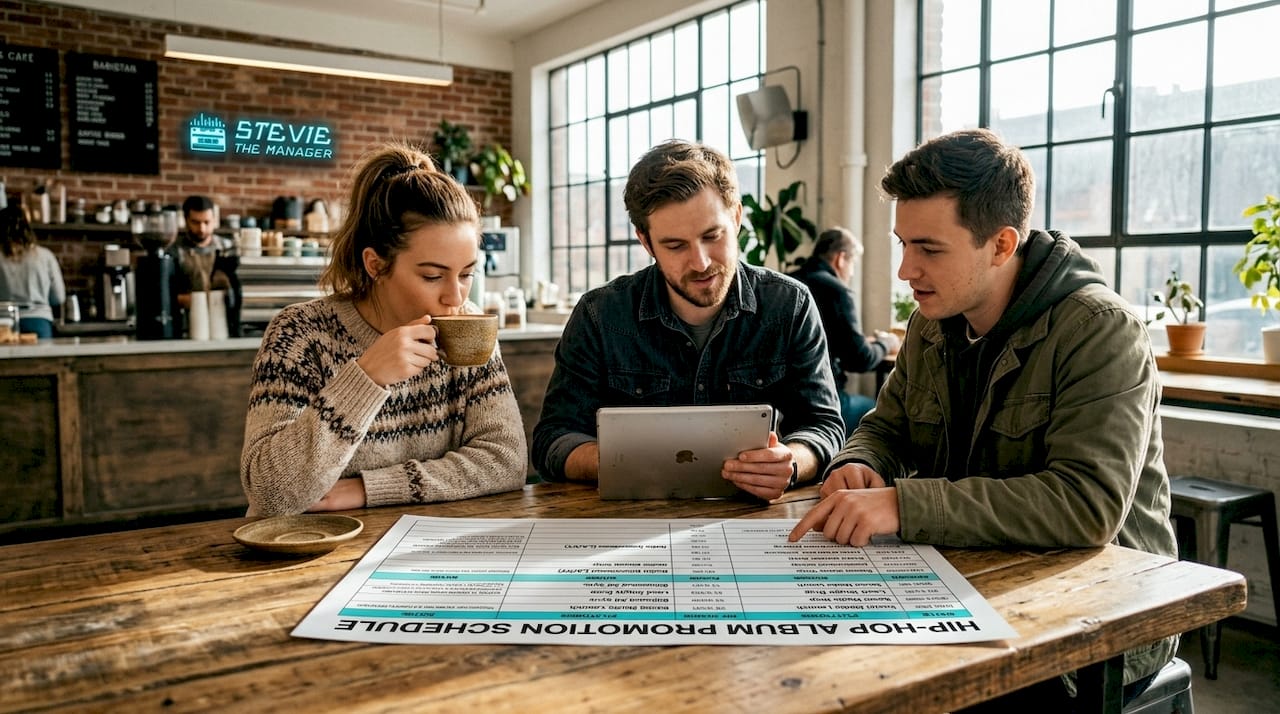
A case study from Chartlex shows exactly how this math plays out for a rapper’s debut album launch. When you combine a sustained monthly plan with a focused promotional boost, total streams compound faster than either method alone. The algorithm sees both consistent baseline engagement and a sudden velocity spike, which triggers broader discovery recommendations.
The numbers from this approach are concrete and compelling. Artists using the combined monthly plus boost method achieved 46,270 streams in just 40 days during the campaign window. That kind of early traction signals credibility to both algorithms and potential fans discovering you for the first time.
Here is a simplified view of how stream performance compares across these three scenarios:
| Strategy | 40-Day Stream Result | Playlist Placements | Algorithmic Reach |
|---|---|---|---|
| Monthly plan only | ~18,000 streams | Low | Moderate |
| Boost only | ~22,000 streams | Moderate | Low (fades fast) |
| Monthly + Boost combined | ~46,270 streams | High | Strong |
The table above makes the case on its own. Neither approach alone reaches what both together can achieve. The monthly plan builds the foundation. The boost ignites the spike that algorithms reward with wider distribution.
Pro Tip: Time your campaign boosts around high-impact moments. A music video drop, a major collab announcement, or a press feature are all perfect triggers for a concentrated promotional push. This is how you amplify an already existing story instead of trying to manufacture one from scratch.
Following your album promotion workflow with this compounding strategy built into the timeline gives every release a structural advantage from day one.
Segmentation and staggered strategies for scaling
For collectives, indie labels, and any artist juggling multiple projects, the challenge shifts from “how do I get more streams?” to “how do I promote multiple artists without cannibalizing my own audience?” The answer is segmentation and staggered releases.
A Chartlex label scaling case study lays out a methodology for running parallel campaigns for multiple hip-hop artists simultaneously. The key principles are audience segmentation by sub-genre, staggered release timing, and active monitoring using Spotify for Artists dashboards. The benchmark the case study targets is less than 12% audience crossover between artists on the same roster. When overlap stays below that threshold, you are building genuinely separate listener bases rather than recycling the same fans from project to project.

This matters more than most artists realize. If you release a trap project and a boom bap project in the same week with no segmentation, you split your attention, dilute your promotional budget, and confuse the algorithms about who each artist is targeting. Staggering those drops by three to four weeks and running geo-targeted campaigns for each sub-genre protects both releases and grows the total audience pool.
Practical segmentation tips for indie labels and collectives:
- Separate each artist’s Spotify for Artists dashboard and review audience demographics independently
- Identify which audiences overlap and which are distinct before scheduling any release
- Use sub-genre hashtags, playlist pitches, and influencer partners that match each artist’s specific sound
- Stagger major releases by at least three to four weeks to allow each full promotional cycle to run
- Set a campaign budget per artist rather than pooling resources, which creates cleaner performance data
Understanding innovative album rollouts helps you think creatively about how to structure these staggered timelines in ways that build anticipation for each project individually.
The news workflow boosting reach strategy also plays well here, using editorial content and hip-hop news coverage to create separate narrative threads for each artist on your roster.
Cross-channel tactics: Combining digital, influencer, and playlisting
Layering your digital tools, influencer relationships, and playlist pitching creates exponential audience growth instead of linear gains. One channel working alone is predictable. Three or four channels working together at the same time is where real breakout moments happen.
MPT Agency’s campaign for indie rapper LOE Shimmy is a strong real-world reference point. Their multi-channel rollout combined creative visual direction, influencer marketing, targeted paid advertising, playlist pitching, and platform optimization across YouTube, Spotify, and Instagram. The results were measurable and significant: over 5 million advertising impressions and a gain of 748,000+ Spotify monthly listeners over the campaign period.
For most indie artists, a campaign at that scale requires a team or agency. But the tactical framework scales down to a solo or small-team operation. Here are the core pillars you need to address:
- Creative visuals: High-quality cover art, lyric videos, and short-form clips for Reels and TikTok create a visual identity that ads and influencers can amplify
- Influencer partnerships: Even micro-influencers with 5,000 to 50,000 followers in your niche deliver stronger conversion rates than mega-influencers who do not specialize in your genre
- Paid targeted advertising: Instagram and YouTube ads with tight audience targeting (age, location, genre preference) put your music in front of people who are already predisposed to like it
- Playlist pitching: Submit to independent curators three to four weeks before your release date and use Spotify’s internal pitch tool for editorial consideration
Connecting your hip-hop marketing strategies across all of these channels at once is what separates a “release” from an actual “campaign.” Understanding rap industry trends keeps you informed about which platforms and channels are gaining traction and which ones are losing relevance so your budget goes where the attention actually is.

Physical activation: Creative real-world participation
Digital dominates the modern promotion landscape, but physical activations still create a category of buzz that no algorithm can fully replicate. When you do something real in the world tied to your music, it generates press, social content, and word-of-mouth that feels organic because it is.
Drake’s “Iceman” rollout is one of the best recent examples of this. His team created an interactive physical experience in Toronto tied to his album timing, using an ice sculpture element that invited fan participation and generated significant press coverage before the album even dropped. The lesson for indie artists is not that you need a Drake-level budget. The lesson is that one well-executed physical moment creates a story, and stories travel further than ads.
“One creative real-world activation generates content that fans share organically, press that money cannot buy, and a cultural moment your audience remembers long after the album cycle ends.”
Indie-level physical activations that actually work include:
- Pop-up performances at skate parks, barber shops, or local venues tied to a single release date
- City murals featuring album art or a QR code linking to the release, positioned in high-traffic neighborhood spots
- Scavenger hunts where clues drop on social media and lead fans to a physical location to win merch or an advance listen
- Listening parties at community spaces that create a local event story with photo and video content built in
A complete hip-hop album rollout guide helps you integrate physical moments like these into your overall campaign timeline so nothing feels disconnected or improvised.
Our view: Why systems beat one-time stunts in hip-hop promotion
Every strategy covered in this article works best when it is repeatable, not when it is random. And that is the point most artists miss.
The hip-hop space rewards consistency because every major platform is built to favor it. Spotify’s algorithm does not hand you a Discover Weekly placement because you dropped something cool one time. It recognizes patterns of engagement. YouTube surfaces your videos to new audiences when there is a behavioral history to model from. Instagram’s feed rewards accounts that post and engage regularly. One viral moment feels amazing, but a system that generates multiple smaller wins every quarter compounds into something a single stunt never can.
This is where the real divide between artists who grow and artists who stall becomes visible. Artists who release as indie hip-hop artists with a documented workflow and quarterly planning cycles outperform those who release whenever inspiration strikes, almost without exception. Not because they are more talented. Because the system makes their talent visible to more people more often.
The data-driven side of this matters equally. Running a campaign without reviewing your Spotify for Artists dashboard, your Instagram insights, or your ad performance reports means you are spending money and energy without feedback. Every campaign should teach you something about your audience that you apply to the next one. This iterative process is how you survive trends instead of becoming one.

Pro Tip: Set a monthly data review session. Pull streaming numbers, social engagement rates, and ad performance. Look for patterns. What content drove saves? What release time performed better? That data is your next campaign’s blueprint.
The artists who build lasting careers in rap are not the ones who had the biggest single launch moment. They are the ones who built and optimized the machine that keeps delivering results.
Next steps: Resources for mastering hip-hop promotion
The strategies above are not theoretical. They are drawn from real case studies, documented artist journeys, and platform-backed research. The next step is putting them into practice in a structured way.
Start with your album launch plan to map out a full 8-week promotional campaign with every release. Then dig deeper into marketing strategies for hip-hop artists to layer your channels and tools into a coordinated system. When you are ready to put everything together and build momentum from scratch or restart it, the full guide on how to promote rap music in 2026 covers the current toolkit in detail. At Stangr The Man and Lit Nightz Records, we believe that knowledge applied consistently is what separates artists who break through from those who wait for a lucky break that never comes.
Frequently asked questions
What is the most effective promotion strategy for a new hip-hop artist?
A singles-first release strategy with steady drops every 6 to 8 weeks and consistent social engagement is proven most effective for independent hip-hop artists looking to grow without major label backing.
How can I scale promotion for more than one artist or project?
Segment audiences by sub-genre, stagger release dates by three to four weeks, and track listener overlap with Spotify for Artists, keeping crossover below 12% per the Chartlex benchmark to avoid audience cannibalization.
What are examples of impactful physical marketing in hip-hop?
Drake’s interactive Toronto rollout featuring a physical ice sculpture experience created massive anticipation and earned press coverage that amplified the release before it even dropped.
What role do influencers and digital ads play in artist promotion today?
Influencer partnerships and targeted ads across Instagram, YouTube, and Spotify drove 5M+ advertising impressions and 748,000 new Spotify monthly listeners in the LOE Shimmy case study, demonstrating the compounding effect of multi-channel campaigns.
Recommended
- Innovative Album Rollouts: A Deep Dive into the Most Impactful Hip Hop Marketing Campaigns – Stevie The Manager aka Stangr The Man
- Social media in rap: how platforms shape music and fans
- Hip-Hop Album Release Guide: Build Your Brand and Drop Hits
- Music marketing workflow for hip-hop artists in 2026

No Comments