

Top 5 Rap Beefs of 2026: The Essential Fan Guide
TL;DR:
- Sharp social media virality and fan involvement dominate rap beefs in 2026.
- Major conflicts like Nicki Minaj versus SZA highlight online-driven culture shifts.
- Regional pride and streaming strategies are fueling global and industry-wide rivalries.
Every year, hip-hop fans face the same problem: too many beefs, too much noise, and not enough signal. In 2026, that problem has exploded. Social media turns a single tweet into a full-blown war overnight, regional tensions are resurging, streaming charts have become battlegrounds, and Canadian artists are stepping into the global arena like never before. Knowing which feuds actually matter, which ones are pushing the culture forward, and which ones are pure clout chasing requires some serious filtering. We broke it all down so you do not have to.

Table of Contents
- How we ranked the year’s most heated rap beefs
- Beef #1: Nicki Minaj vs. SZA – Social media takes center stage
- Beef #2: Global showdown – West Coast vs. East Coast revisited
- Beef #3: Streaming wars – Rappers battle for chart dominance
- Beef #4: International intrigue – Canadian rappers join global drama
- Why 2026’s rap beefs reflect more than music
- Explore hip-hop culture beyond the drama
- Frequently asked questions
Key Takeaways
| Point | Details |
|---|---|
| Social media amplifies drama | Platforms rapidly escalate rap beefs and engage fans in real time. |
| Streaming shapes rivalry | Artists use streaming statistics to fuel competitive disputes and chart battles. |
| Canada gains global influence | Canadian rappers are increasingly central in international hip-hop feuds. |
| Classic rivalries evolve | West Coast vs. East Coast feuds reinvent themselves with new stars and sounds. |
| Rap beefs push cultural boundaries | These conflicts reflect broader shifts and bring innovation to hip-hop in 2026. |
How we ranked the year’s most heated rap beefs
Not every beef deserves your attention. We used a specific set of criteria to separate the feuds that genuinely move the culture from the ones that fizzle out in 48 hours. Here is what we looked at:
- Social media virality – How fast did the conflict spread across X (formerly Twitter), Instagram, and TikTok? Did it generate memes, trending hashtags, and fan-driven content?
- Lyrical confrontation – Are actual bars being thrown, or is this just vague subtweets? Real diss tracks carry far more weight.
- Cultural relevance – Does the beef touch on real issues in hip-hop, like identity, regional pride, or industry politics?
- Involvement of major figures – A feud between established names carries more cultural gravity than one between rising acts.
- Longevity and escalation – Did the conflict grow over time, or was it a one-week story? Sustained beefs shape the culture.
Social media is pivotal in escalating rap rivalries in 2026, acting as both the match and the gasoline. Platforms reward conflict with visibility, which means artists now have a direct incentive to keep beefs alive.
Pro Tip: Follow the hashtags, not just the artists. Fan communities often break beef developments faster than major media outlets do.
The future of rap is being shaped right now by how these conflicts play out publicly. Pay attention to the hip-hop trends 2026 to understand the bigger picture behind each feud.
Beef #1: Nicki Minaj vs. SZA – Social media takes center stage
If one feud defined the first half of 2026, it is this one. The Nicki Minaj and SZA situation did not start in a studio. It started online, escalated online, and has been fueled almost entirely by fan communities amplifying every post, comment, and cryptic lyric. That is what makes it the most viral beef of the year.
Here is a quick breakdown of the key moments:
- The initial spark: Indirect comments on social media that fans decoded as shots fired
- The diss track era begins: Both artists dropped loosely veiled references in new releases
- Fan armies activated: Both Barbz and SZA’s fanbase flooded timelines with support and counter-attacks
- Mainstream media picks it up: Entertainment outlets amplified every development, creating a feedback loop
- The cultural conversation shifts: The feud opened a broader debate about women’s spaces in hip-hop
The social media feud between Nicki and SZA exemplifies exactly how modern rap beef escalates: no handshakes, no face-to-face confrontation, just platforms doing the heavy lifting.

“When two of the most powerful women in rap go at it, the conversation stops being just about music. It becomes about territory, legacy, and who controls the narrative.”
What makes this feud significant is what it says about social media in rap as a power tool. Both artists understand that the platforms are the stage now. Every post is a performance.
Beef #2: Global showdown – West Coast vs. East Coast revisited
The coast wars never actually died. They just went quiet for a while. In 2026, a new generation of artists is reigniting that flame, and the results are some of the most energetic rap content we have heard in years.
| Factor | West Coast | East Coast |
|—|—|—|
| Key artists | New Compton voices | Bronx and Brooklyn new wave |
| Sound signature | Laid-back but aggressive | Hard-hitting, lyrically dense |
| Streaming impact | Dominating West Coast playlists | Pulling strong East Coast numbers |
| Cultural stance | Legacy defense | Hungry challenger energy |
The core flashpoints in 2026 include:
- Cross-coast collaborations that fell apart publicly
- Competing album rollouts that overlapped intentionally
- Regional pride being weaponized in lyrics and interviews
- Streaming numbers being used to declare dominance
The West Coast vs. East Coast rivalry remains one of the most foundational conflicts in rap history, and 2026 is giving it a modern remix. New faces are stepping up with new tools, but the underlying energy is the same: regional identity as armor and weapon.
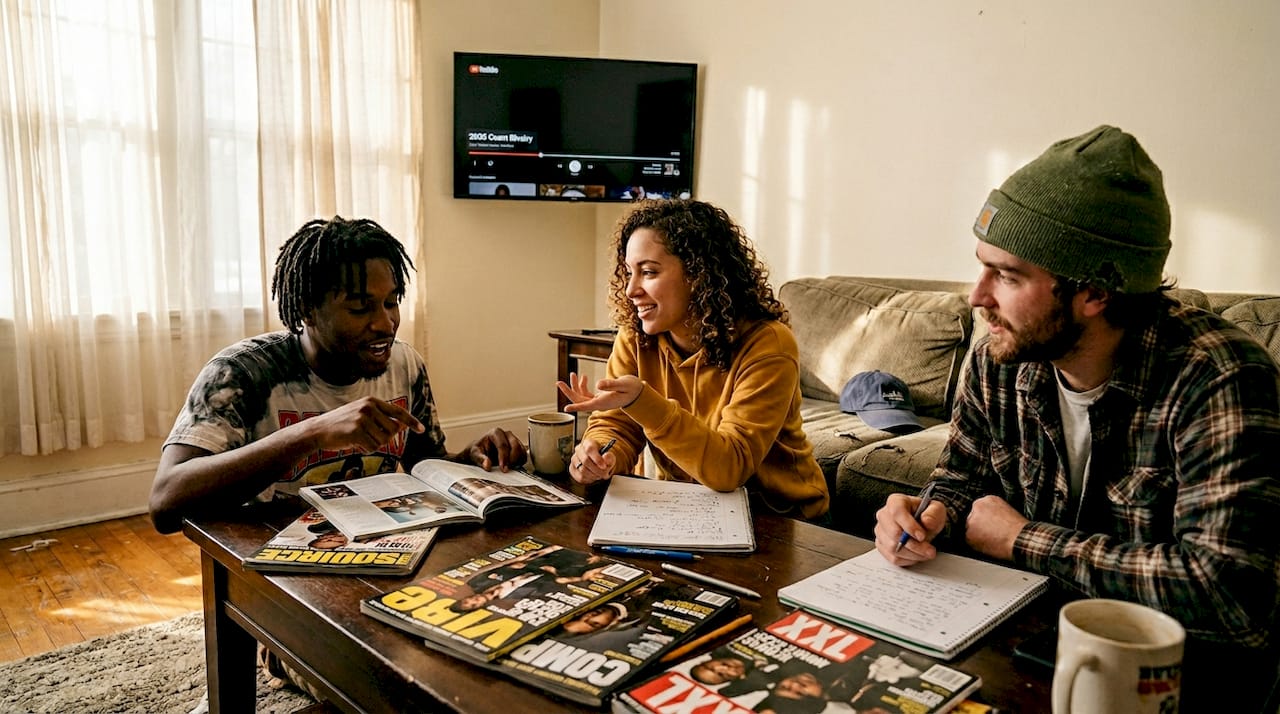
If you want to understand how artists are sharpening their craft within these conflicts, look into rap battles techniques to see how the art form fuels the fire.
Beef #3: Streaming wars – Rappers battle for chart dominance
Forget waiting for Grammys. In 2026, the charts are the arena. Artists are deploying coordinated streaming strategies, bundle deals, and release timing to knock rivals off the top spot, and they are calling each other out publicly when the numbers do not add up.
| Artist | Strategy used | Chart outcome |
|---|---|---|
| Major label rapper | Bundle with merch | Debuted at #1, disputed |
| Independent artist | Fan mobilization campaign | Held top 5 for 3 weeks |
| Canadian crossover act | Cross-platform push | Broke regional streaming records |
Here is how the streaming beef typically unfolds:
- Artist drops a record and it debuts at a certain position
- Rival or fan base questions the authenticity of the numbers
- Social media turns chart positions into a public argument
- Artists respond in interviews or on tracks
Streaming has drastically changed the dynamics of rap beefs. It used to be about who had the harder punchline. Now it is also about who has the bigger Spotify monthly listener count. Current rap controversies are directly influencing industry rankings, reshaping what chart success even means in this era.
The smartest artists are using these moments to promote deeper cuts in their catalog. Check out how best rap collaborations factor into streaming surges when beef drives fans back to older material.

Beef #4: International intrigue – Canadian rappers join global drama
Canada has officially arrived as a major force in global rap, and with that comes conflict. In 2026, Canadian artists are no longer just participating in beefs. They are starting them, shaping them, and winning them.
Here is what is driving Canadian rap’s rise in international beef culture:
- Global platform access: Canadian artists are building massive audiences on the same platforms as their American counterparts
- Cross-border tension: Comparisons with American artists have created real competitive friction
- Distinct identity: Canadian rappers are leaning into their identity rather than mimicking American sounds
- Strategic media moves: Press runs, interviews, and social media moments are being used with precision
Canadian rappers are increasingly central to global rap controversies in 2026, proving that geography is no longer a ceiling. Vancouver, Toronto, and Montreal are producing artists who compete on the world stage without apology.
Pro Tip: Watch how Canadian artists engage with American media. The tone of those interactions often reveals whether a beef is brewing beneath the surface before it goes public.
The culture shifts in 2026 are creating space for voices outside the traditional American centers of rap power, and Canadian artists are filling that space aggressively and unapologetically.
Why 2026’s rap beefs reflect more than music
Here is the take that most coverage misses: rap beefs in 2026 are not just celebrity drama. They are mirrors. Every feud reflects something real about who controls culture, who gets to define success, and who gets to claim space in a global conversation that is increasingly fast-moving and unforgiving.
Fans are no longer passive observers. When you share a diss track, vote in a poll, or flood a comment section, you are an active participant in shaping how these conflicts land. That is real cultural power, and the artists know it.
Social media does not just broadcast the beef. It manufactures momentum. A single viral moment can elevate a conflict from industry whisper to global headline within hours. That speed changes the stakes for everyone involved.
The deeper point is this: healthy rap rivalry, when it stays rooted in artistry, pushes the music forward. The hip-hop cultural impact of competitive energy has always driven innovation. The best eras of rap were defined by artists refusing to let each other get comfortable. 2026 is no different. The medium is just louder now.
Explore hip-hop culture beyond the drama
Beefs are compelling, but they are only one layer of what makes hip-hop the most powerful genre on the planet. If you want to go deeper, the real foundation is the culture itself.
At stangrtheman.com, we cover hip-hop from the roots up. Start with hip-hop culture origins to understand where all of this energy actually comes from. Then check out the full breakdown of 2026 hip-hop trends to stay ahead of where the culture is moving next. Whether you are tracking beefs or building your knowledge base, we have the content that keeps you connected to what matters in rap right now.

Frequently asked questions
Which rap beef has garnered the most media attention in 2026?
Nicki Minaj vs. SZA has seen explosive coverage across social platforms and entertainment news sites, making it the most visible feud of the year by a significant margin.
How do streaming platforms impact rap beefs?
Streaming changed rap feud dynamics by turning chart positions into public proof of dominance, giving artists and fans a new way to score every exchange beyond just lyrical content.
Why are Canadian rappers getting more involved in global rap conflicts?
Canadian artists are expanding their reach and using international beefs to increase their global visibility in 2026, proving that Canadian rap has the cultural weight to compete anywhere.
What role does social media play in rap rivalries?
Social media shapes fan experience by accelerating conflicts, amplifying diss tracks, and turning fans into real-time participants rather than passive audiences watching from a distance.
Are rap beefs healthy for hip-hop culture?
When grounded in artistry rather than personal destruction, beefs introduce innovation and sustain the competitive spirit that has always driven hip-hop forward.
Recommended
- Rap Battles: A Deep Dive into the Culture and Techniques Behind the Mic – Stevie The Manager aka Stangr The Man
- The Best Rap Music of 2025 So Far – Stevie The Manager aka Stangr The Man
- The Unforgettable Top 100 Best Rap Songs of all Time: A Timeless Journey – Stevie The Manager aka Stangr The Man
- Essential elements of a rap album: lyrics to legacy

No Comments