
Social media in rap: how platforms shape music and fans
TL;DR:
- Social media allows artists to directly reach fans and generate viral buzz without traditional gatekeepers.
- Fan engagement on platforms like TikTok and Instagram fosters loyalty and shapes music and promotion strategies.
- Algorithms and social buzz drive discovery and chart success, making digital communities crucial in modern rap.
Hip-hop no longer needs a radio station to blow up. 27.3% of U.S. music consumption is hip-hop and R&B, and platforms like TikTok and Spotify have handed the keys of discovery directly to fans and artists. The old model, where labels controlled every release and radio DJs decided what got heard, is fading fast. Today, a 30-second clip can launch a career overnight. In this guide, you will learn how social media reshaped rap promotion, why fan engagement is now a core part of an artist’s strategy, and how discovery actually works in 2026.

Table of Contents
- How social media changed rap music promotion
- Fan engagement and community: Rap in the social age
- How discovery works: Algorithms, playlists, and social buzz
- Rap marketing strategies in the social media era
- Our take: Why social media’s role in rap is deeper than hype
- Next steps: Dive deeper into hip-hop and rap culture
- Frequently asked questions
Key Takeaways
| Point | Details |
|---|---|
| Rap music leads in digital streaming | Rap and hip-hop dominate TikTok and Spotify, reshaping how music is discovered and promoted. |
| Social media drives artist growth | Platforms give rappers direct access to fans for instant feedback, promotion, and community building. |
| Algorithms and playlists shape discovery | Playlist placement and algorithmic boosts can propel rap tracks to viral success faster than traditional channels. |
| Engagement matters more than ever | Active fan interaction through comments, challenges, and live streams determines artist visibility and longevity. |
How social media changed rap music promotion
Not long ago, getting your rap single heard meant pitching to radio stations, landing a magazine feature, or hoping a label executive picked up the phone. That world still exists, but it is no longer the only path. Social media flipped the script by giving artists direct access to millions of potential fans without a single gatekeeping middleman.
The shift is most visible on TikTok. Over 60% of TikTok’s most-played songs are rap or hip-hop, and 38% of fans discover music through social platforms. That is not a coincidence. Rappers learned quickly that a catchy hook paired with a viral challenge can generate more buzz in 48 hours than a month-long traditional promo campaign.
Here is how modern rap promotion typically unfolds on social media:
- Teaser drops: Short clips of unreleased tracks posted on Instagram Reels or TikTok to build anticipation
- Viral challenges: A dance or lip-sync challenge tied to a song’s hook that fans recreate and share
- Influencer seeding: Sending tracks to content creators before release so they use the song organically
- Spotify playlist pitching: Getting placed on algorithmic or editorial playlists to capture streaming momentum
- Live countdown events: Instagram or YouTube live streams the night before a drop to build real-time hype
These tactics work because they are participatory. Fans are not just watching; they are creating content around the music. That user-generated content becomes free advertising that spreads faster than any paid campaign.
Pro Tip: Do not wait until release day to start promoting. Start seeding content 2 to 3 weeks before a drop. Build curiosity, not just awareness. The future of rap belongs to artists who treat promotion as a slow burn, not a single moment.
The way streaming’s impact on rap has grown shows that platforms reward consistency and engagement, not just quality. Artists who understand this are running innovative rap rollouts that treat every week leading up to a release as part of the campaign itself.

Fan engagement and community: Rap in the social age
Promotion gets people to click play. Engagement keeps them coming back. The difference between a one-hit wonder and a lasting rap career often comes down to how well an artist builds a real community around their music.
Social media made that community-building possible at a scale that was unimaginable before. Artists can now respond to fans in real time through comments, DMs, and live streams. That two-way conversation creates loyalty that no billboard or TV spot ever could.
“38% of hip-hop fans discover music via social media, making genuine engagement the most underrated marketing tool in rap.”
The platforms doing the most for hip-hop fan engagement right now include:
- Instagram: Stories, polls, and Q&A stickers let artists gauge fan reactions before and after releases
- TikTok: Duets and stitch features allow fans to literally remix an artist’s content
- Twitter/X: Real-time commentary, beef, and announcements keep fans locked in daily
- Discord: Emerging as a space for dedicated fan communities to organize and discuss music deeply
Here is a quick comparison of how social media fan engagement stacks up against the old model:
| Feature | Traditional fan clubs | Social media engagement |
|---|---|---|
| Speed of interaction | Days to weeks | Seconds to minutes |
| Cost to artist | High (newsletters, merch) | Low to free |
| Fan reach | Local or mailing list | Global |
| Fan influence on artist | Minimal | Direct (comments shape decisions) |
| Community feel | Structured, formal | Organic, spontaneous |
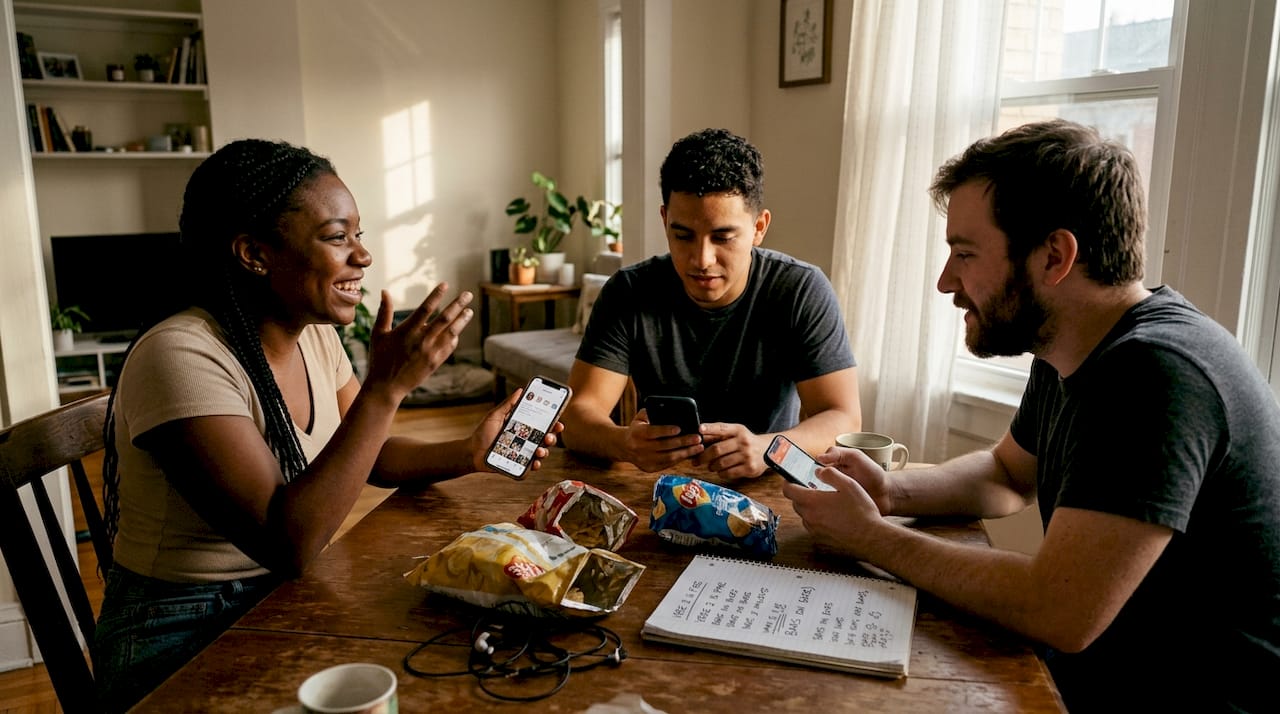
The hip-hop community that forms around an artist on social media is not passive. Fans debate lyrics, create theories about albums, and even pressure artists to drop projects sooner. That feedback loop is powerful. It means artists who listen to their audience can make smarter decisions about timing, content, and direction.
This dynamic is also reshaping representation in the genre. Female rappers have used social platforms to build massive fanbases and bypass traditional industry gatekeepers who historically limited their visibility. Social media is genuinely democratizing who gets to be heard.
How discovery works: Algorithms, playlists, and social buzz
Understanding how a song goes from unknown to everywhere is one of the most valuable things any rap fan or artist can know. It is not magic. It is a system, and that system is mostly driven by algorithms.
32% of Spotify’s global streams are rap and hip-hop, and TikTok’s viral engine pushes the genre further every month. These numbers reflect how deeply algorithms favor content that generates fast engagement.
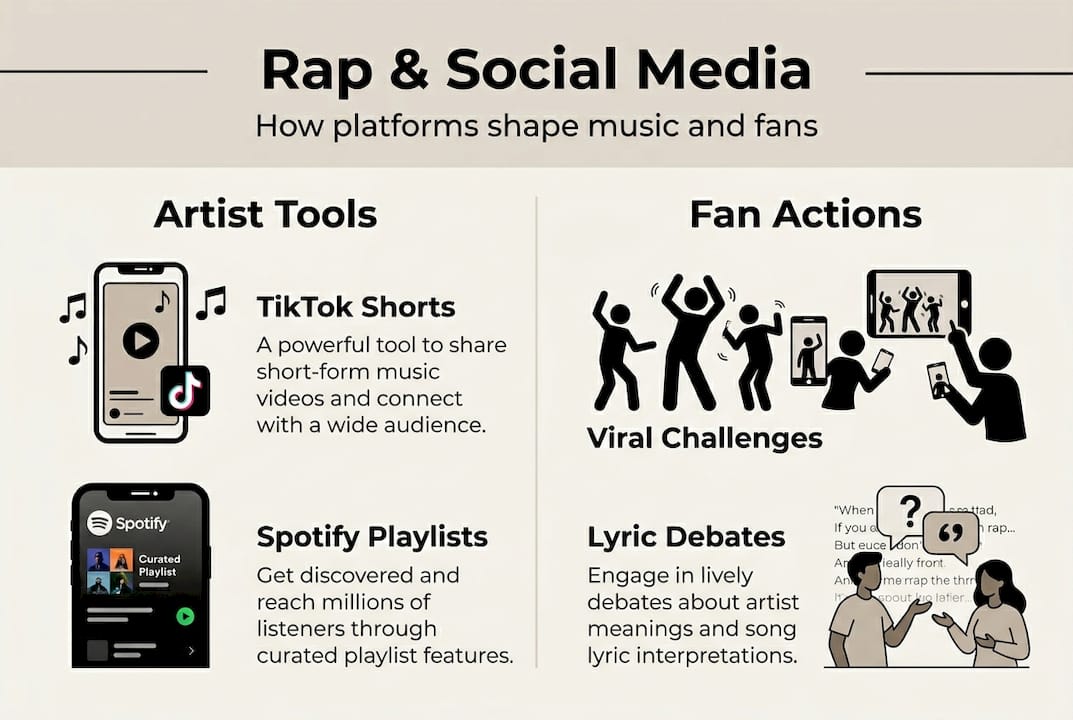
Here is a breakdown of how discovery flows in 2026:
| Platform | Discovery mechanism | Key trigger |
|---|---|---|
| TikTok | For You Page algorithm | Video saves and shares |
| Spotify | Algorithmic playlists (Discover Weekly) | Streams and saves |
| Reels algorithm | Watch time and shares | |
| YouTube | Suggested videos | Click-through rate and watch time |
| Twitter/X | Trending topics | Retweets and replies |
The step-by-step path a song typically takes to go viral looks like this:
- Seed content is posted: An artist or fan posts a short clip using the track
- Early engagement spikes: Friends, followers, and micro-communities share and interact
- Algorithm picks it up: High early engagement signals the platform to push it to wider audiences
- Influencers and creators jump in: Bigger accounts use the sound, multiplying reach exponentially
- Playlist placement follows: Editors and algorithms add the track to curated playlists
- Mainstream discovery: Radio, press, and label attention follow the organic momentum
The Billboard rap representation shift over the last decade mirrors this exact pattern. Songs that blow up on TikTok now regularly chart before they ever touch radio. The algorithm is the new A&R. Understanding how streaming and rap intersect helps fans appreciate why certain songs dominate and others disappear.

Rap marketing strategies in the social media era
Knowing the platforms is one thing. Knowing how to use them strategically is what separates artists who build careers from those who chase trends and burn out.
The most effective rap marketing in 2026 is built on three pillars: consistency, authenticity, and cross-platform storytelling. Rap and hip-hop’s dominance on TikTok and Spotify did not happen by accident. It is the result of artists and teams who treat social media like a full-time job.
Here are the top strategies working right now:
- Build a content calendar: Plan posts around release dates, anniversaries, and cultural moments. Randomness kills momentum.
- Tell a story across platforms: Use TikTok for raw, behind-the-scenes content. Use Instagram for polished visuals. Use Twitter/X for personality and real-time takes.
- Partner with micro-influencers: Creators with 10,000 to 100,000 followers often have more engaged audiences than mega-influencers. Their endorsement feels genuine.
- Engage, do not just broadcast: Reply to comments. Repost fan content. Ask questions. The algorithm rewards accounts that create conversation.
- Analyze your data: Platform analytics show you what content resonates, what time your audience is active, and where your listeners are located. Ignore this at your own risk.
The biggest pitfall artists fall into is chasing every trend without a clear identity. If your brand shifts every week to match whatever is trending, fans never know who you actually are. Consistency in voice and aesthetic builds trust faster than any viral moment.
Pro Tip: Focus on one platform first and master it before spreading thin across five. A strong presence on TikTok will naturally pull followers to your other channels.
Learning how to master hip-hop news workflow and get featured in hip-hop news can amplify your social strategy significantly. Press and social media work best together. Staying on top of hip-hop trends 2026 also helps artists position their content within larger cultural conversations.
Our take: Why social media’s role in rap is deeper than hype
Most conversations about social media and rap focus on virality. Get a challenge going, blow up, profit. But that framing misses something much bigger.
Social media is not just a promotional channel. It is a creative ecosystem. The instant feedback loop between artists and fans is actively shaping the music itself. Rappers hear which hooks resonate in comment sections before an album even drops. They adjust their sound, their rollout, and sometimes their entire direction based on what their community responds to.
That is new. That is genuinely unprecedented in music history. And it is why old-school gatekeepers, labels, radio programmers, and magazine editors, are struggling to stay relevant. The culture shifts in hip-hop happening right now are not driven by boardrooms. They are driven by digital communities that move faster than any institution can.
The artists who will define the next decade of rap are the ones who understand this. Not just as a marketing truth, but as a creative one. Social media gives rap its pulse in real time. That is not hype. That is the new architecture of the genre.

Next steps: Dive deeper into hip-hop and rap culture
If this breakdown sparked something in you, whether you are an artist trying to figure out your next move or a fan who wants to understand the industry better, there is a lot more to explore.
Start with a solid rap album launch plan if you are thinking about releasing music. It breaks down an 8-week promotional workflow that any independent artist can follow. If you want the bigger picture, the hip hop culture guide covers the origins, elements, and cultural impact of the genre in full detail. And if you are serious about building a presence, the rap marketing strategies guide lays out exactly what works in 2026 and why. Stangrtheman.com is built for people who take rap seriously.
Frequently asked questions
How do rappers go viral on social media?
Most rappers combine viral challenges, influencer partnerships, and short-form video content to trigger platform algorithms. Over 60% of TikTok’s top songs are rap or hip-hop, which shows how well the genre performs when content is built for sharing.
Why is fan engagement important for rap artists?
Engagement builds loyal communities that stream, share, and advocate for an artist long after a release cycle ends. Since 38% of hip-hop fans find new music through social media, staying active and responsive is directly tied to growth.
Which social platforms are most impactful for rap music in 2026?
TikTok, Spotify, and Instagram lead the pack for rap discovery and promotion. 32% of Spotify’s global streams and TikTok’s viral dominance make both platforms essential for any serious rap marketing strategy.
How do algorithms influence rap music success?
Algorithms prioritize content with fast, high engagement and push it to broader audiences through playlists and suggested feeds. 32% of Spotify streams being rap shows how playlist and algorithm placement directly translates into genre-wide dominance.
Recommended
- Unveiling the Evolution: The Future of Rap in the Social Media Era – Stevie The Manager aka Stangr The Man
- The Rise of Female Rappers: How They’re Shaping the Future of Hip-Hop – Stevie The Manager aka Stangr The Man
- What is rap marketing? Strategies, tactics, and wins
- What is hip-hop fan engagement and how it works in 2026

No Comments