

Kanye West’s International Comeback Tour Explained
TL;DR:
- Kanye West’s 2026 tour demonstrates a stark contrast between his commercial success and institutional rejection across different countries. Despite record-breaking attendance and chart performance, bans and cancellations highlight the political and social risks of touring controversial artists internationally. This duality underscores the complexities artists face when balancing global popularity with varying moral and legal standards.
Kanye West’s 2026 international comeback tour is defined by a striking contradiction: record-breaking commercial success in some markets and outright bans in others. The tour, built around his album Bully, launched in Istanbul after the UK and France refused him entry, making it one of the most geopolitically fractured concert tours in hip-hop history. With sold-out SoFi Stadium shows grossing $33 million in Los Angeles and a globe-shaped stage designed to hold 120,000 fans in Turkey, the scale of ambition is undeniable. What you are witnessing is not just a comeback concert. It is a stress test of how far commercial power can carry a deeply polarizing artist across international borders.

What are the key dates and locations of Kanye West’s 2026 comeback tour?
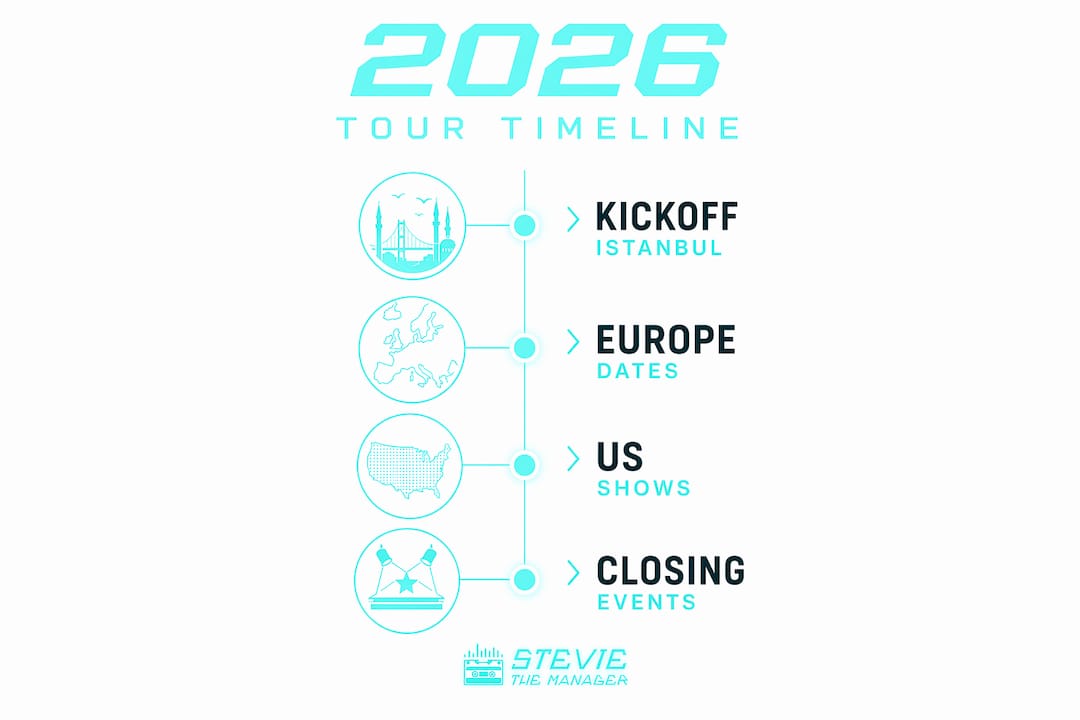
Kanye West’s international comeback tour kicked off on May 30, 2026, at Istanbul’s Atatürk Olympic Stadium, with an attendance target of 120,000 fans. That figure would surpass the prior world record of 98,000 for a single concert. By late May, 75,000 tickets had already sold, signaling that demand in markets without political restrictions remains exceptionally strong.
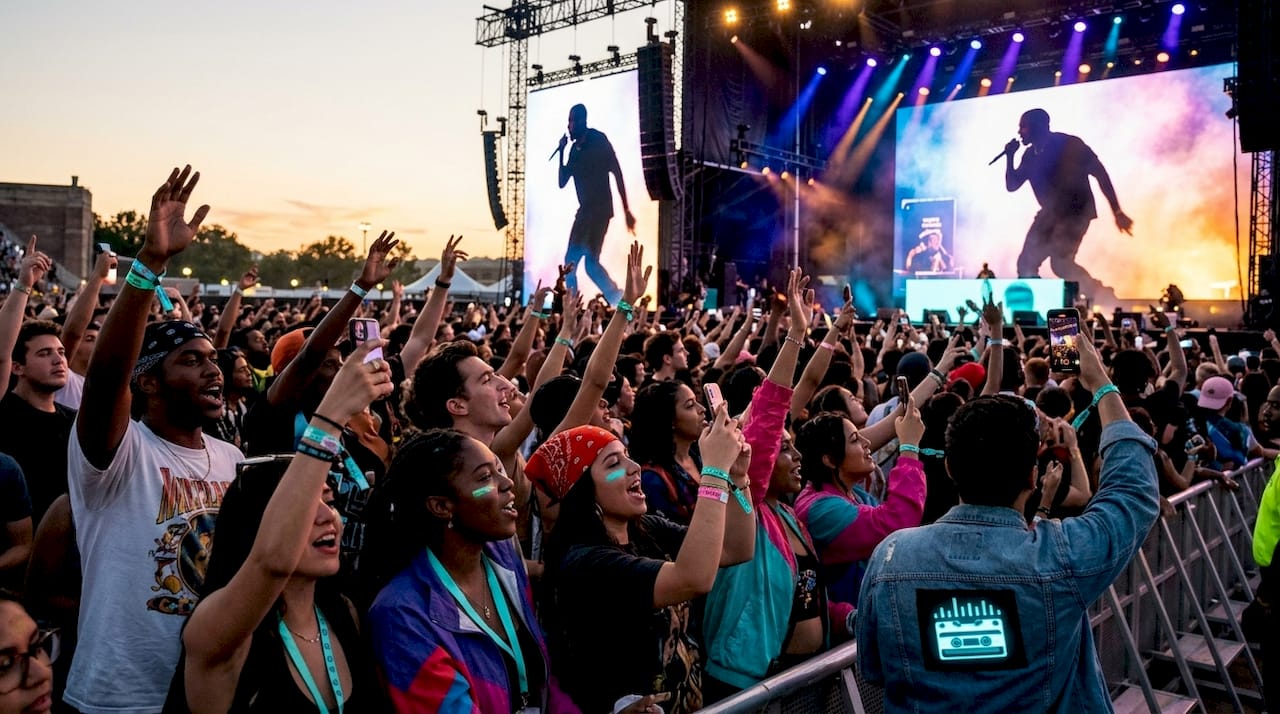
The production scale at Istanbul was unlike anything the 2026 concert calendar has seen. A globe-shaped stage required 40 truckloads of equipment and 10 days to assemble, with 360-degree sound systems, drone shows, and laser displays designed to maximize spectacle over intimacy. A separate festival area accommodated 30,000 additional attendees. This is large-scale production used as a rebranding tool, not just a concert backdrop.
After Istanbul, the remaining European dates include:
- Arnhem, Netherlands — June 6 and June 8
- Tirana, Albania — July 11
- Reggio Emilia, Italy — July 18
- Prague, Czech Republic — July 25
Ticket pricing varies significantly across these markets. Istanbul tickets ranged from approximately $120 to $790, while Arnhem tickets fell between $219 and $451. That pricing spread reflects both local purchasing power and the premium placed on scarcity in markets where the tour is actually permitted to operate.
Pro Tip: If you are planning to attend a European date, check official ticket platforms early. Secondary market prices for the Arnhem shows have already climbed well above face value due to the limited number of permitted stops.
How have Kanye West’s controversies affected his international tour?
The UK Home Office banned Kanye West from entering the country on the grounds that his presence was “not conducive to the public good.” This is a broad discretionary power that does not require a criminal conviction. The threshold is conduct that risks fostering hatred or inciting inter-community violence, and West’s public antisemitic remarks since 2022 provided the basis for that determination.
The practical fallout extended well beyond London. Cancellations hit multiple countries across Europe:
- United Kingdom — Wireless Festival shows canceled, refunds issued
- France — Entry denied, shows canceled
- Poland — Canceled amid political pressure
- Switzerland — Canceled following sponsor and venue concerns
Sponsors pulled out of major events connected to West, including the Wireless Festival, where brand partners distanced themselves before the visa ban was even formalized. This pattern illustrates how sponsor risk moves faster than legal processes when an artist’s public conduct becomes a liability.
“Legal exclusions such as the UK’s ban on Kanye West illustrate the balance governments try to strike between free expression and protecting vulnerable communities from hate speech and violence incitement.” — The Conversation
The contrast between US and European reception is stark. In Los Angeles, West sold out SoFi Stadium twice with minimal institutional resistance. In Europe, the same artist faced government-level intervention. This is not simply a cultural difference. It reflects different legal frameworks for what constitutes harmful public conduct and different thresholds for when governments intervene in entertainment.

What has been the commercial impact of Kanye West’s comeback?
Bully debuted at No. 2 on the Billboard 200 with 152,000 equivalent album units in April 2026, including 56,000 in pure sales. That chart position, landing just behind BTS’s Arirang, confirms that a significant portion of the music-buying public separated the art from the artist’s public conduct. Chart success at that level sustains booking incentives for large venues and mainstream partners, even when reputational risks are obvious.
The SoFi Stadium shows in early April told a similar story. Two sold-out nights grossed $33 million, with Lauryn Hill appearing as a guest. The earth and dome visuals used during those shows set a visual standard that the Istanbul production then scaled up further. Guest appearances from artists of Hill’s stature signal that at least some of West’s industry relationships remain intact, which matters for tour continuity.
The tale of two comebacks framing captures this tension precisely. In the US, commercial acclaim is driving the narrative. In Europe, political and social resistance is defining it. Both are true simultaneously, and that duality is what makes this tour historically unusual rather than simply controversial.
Pro Tip: Pay attention to streaming numbers alongside chart positions. Bully’s 152,000 equivalent units include a significant streaming component, which means passive listeners are contributing to commercial success even among people who would not buy a ticket.
The advanced stage design choices also carry a strategic logic. Spectacle-driven production maximizes media coverage and social sharing, which extends the reach of each show far beyond the audience physically present. For an artist attempting to rebuild visibility, that amplification effect is worth the logistical cost.
How does touring amid controversy affect international artists?
Kanye West’s 2026 experience functions as a case study in the operational fragility of large-scale tours for polarizing artists. The risks are layered across at least four distinct categories:
- Visa and entry law — Countries apply different legal thresholds for entry bans. The UK’s “not conducive to the public good” standard is broad and discretionary. France, Poland, and Switzerland each applied their own frameworks, producing similar outcomes through different legal routes.
- Sponsor withdrawal — Brand partners assess reputational exposure continuously. When public pressure reaches a threshold, sponsors exit before venues or governments act, removing financial support that often underwrites production costs.
- Venue and permit risk — Local governments can deny permits or pressure venues to cancel bookings independently of national visa decisions. This creates a second layer of operational risk even in countries that have not issued formal bans.
- Tour continuity — Each cancellation disrupts routing, crew contracts, and production logistics. A tour designed around 15 stops that loses 6 does not simply shrink. It restructures entirely, affecting every remaining date.
The legal threshold for entry bans does not require criminal conviction. Governments evaluate character and conduct against a societal risk standard, which means an artist’s public statements carry legal weight in ways that most tour managers do not plan for. West’s situation is not unique in kind, but it is extreme in scale, making it a reference point for how the industry should model risk for controversial artists going forward.

For fans following comparable hip-hop tours, the pattern is consistent: chart success can temporarily outpace backlash, but sustained controversy eventually forces cancellations. The question for any polarizing artist is not whether the breaking point exists, but when it arrives.
Key takeaways
Kanye West’s 2026 comeback tour proves that commercial power and political access are entirely separate currencies, and an artist can hold one while being denied the other.
| Point | Details |
|---|---|
| Istanbul as the anchor | The May 30 kickoff targeted 120,000 attendees, making it the tour’s defining moment after European bans. |
| Bully’s chart performance | A No. 2 Billboard 200 debut with 152,000 units shows strong commercial demand despite public controversy. |
| UK and European bans | Visa refusals in the UK, France, Poland, and Switzerland cut the European leg significantly. |
| SoFi Stadium benchmark | Two LA shows grossed $33 million, confirming US commercial viability and setting the production standard. |
| Sponsor and legal risk | Brand withdrawals and entry bans operate on different timelines but both threaten tour continuity. |
The uncomfortable truth about art, controversy, and access
By Stephanos G
What strikes me most about this tour is not the bans or the record-breaking attendance targets. It is the fact that both are happening at the same time, and neither cancels the other out. West is simultaneously one of the most commercially viable artists on the planet and one of the most institutionally rejected. That combination has no real precedent in hip-hop at this scale.
The fan community is split in ways that do not map neatly onto political lines. Some fans who find his public conduct indefensible still attended the SoFi shows. Some who have no objection to his statements skipped the tour entirely out of indifference to the music. The idea that controversy uniformly drives fans away is simply not supported by the data here.
What I think the industry is slow to reckon with is the geographic fragmentation of moral authority. The US and Europe are applying fundamentally different standards to the same artist, and that gap is widening. For hip-hop culture specifically, which has always operated across borders and built global audiences, that fragmentation creates a structural problem that goes well beyond Kanye West. Artists, labels, and promoters need frameworks for navigating it. Right now, most are improvising.
— Stephanos G
Stay connected to hip-hop culture with Lit Nightz News

Kanye West’s 2026 tour is one chapter in a much longer story about how hip-hop shapes culture, commerce, and public conversation globally. At Lit Nightz Records & Lit Nightz News, we cover the full picture, from hip-hop’s cultural origins and foundational elements to the trends reshaping the genre in 2026. Whether you want context on why this tour matters or a deeper read on hip-hop’s broader influence, the resources are there. Lit Nightz News exists to give hip-hop fans the analysis that goes beyond headlines. Check out the full 2026 tour announcement coverage and keep coming back for updates as the European dates unfold.

FAQ
What is Kanye West’s 2026 comeback tour?
Kanye West’s 2026 international comeback tour is a large-scale concert series built around his album Bully, launching in Istanbul after bans in the UK and France. It includes stops in the Netherlands, Albania, Italy, and Prague following the May 30 kickoff.
Why was Kanye West banned from the UK?
The UK Home Office denied West entry on the grounds that his presence was not conducive to the public good, citing his public conduct and the risk of fostering hatred. This discretionary power does not require a criminal conviction.
How did Bully perform on the charts?
Bully debuted at No. 2 on the Billboard 200 with 152,000 equivalent album units in April 2026, including 56,000 in pure sales, placing it just behind BTS’s Arirang.
How much did the SoFi Stadium shows gross?
The two sold-out SoFi Stadium shows in Los Angeles grossed $33 million combined, with Lauryn Hill appearing as a guest performer.
What countries canceled Kanye West’s tour dates?
The UK, France, Poland, and Switzerland all canceled or blocked shows, with the UK and France issuing formal entry bans and other countries responding to political pressure and sponsor withdrawals.
Recommended
- Why Global Impact of 54 Characters Here
- Kanye West Net Worth 2025: The Shocking Truth Behind the Billion Dollar Debate – Stevie The Manager aka Stangr The Man
- Clipse Reunion: Hip-Hop Legends Return After 16-Year Hiatus – Stevie The Manager aka Stangr The Man
- Kanye West Admits to Copying Drake’s Flow: A Deep Dive into Their Musical Relationship – Stevie The Manager aka Stangr The Man

No Comments