

How visuals shape storytelling and success in rap music
TL;DR:
- Rap music videos attract significantly more YouTube engagement than pop, boosting artist visibility and income.
- Visual elements like cinematic techniques, symbolic motifs, and authentic urban settings are essential to rap’s cultural storytelling.
- Effective visuals build an artist’s identity, enhance narrative, and serve as powerful business tools for virality and monetization.
Rap music videos receive 35% more YouTube engagement than pop, yet most conversations about hip-hop still circle back to lyrics, flow, and bars. That gap tells a story most fans miss. The visual side of rap has quietly become one of the most powerful forces in music culture, shaping how artists build identity, connect with fans, and break through to mainstream success. From the streets of Compton to the rooftops of Vancouver, the imagery behind the music does heavy lifting that words alone simply cannot. This guide breaks down exactly how rap visuals work, why they matter, and what artists and fans can learn from them.

Table of Contents
- How visuals evolved in rap culture
- Techniques that set rap visuals apart
- Visuals as a tool for storytelling and identity
- Promotion, virality, and business impact of rap visuals
- Why visuals are the untold driver of rap’s cultural dominance
- Explore more of the visual side of hip-hop
- Frequently asked questions
Key Takeaways
| Point | Details |
|---|---|
| Visuals drive engagement | Rap music videos generate more fan interaction and sharing than any other genre. |
| Iconic techniques | Unique camera moves, color styles, and symbolism define rap’s visual language. |
| Storytelling power | Imagery in rap deepens storytelling, builds identity, and connects artists to fans. |
| Business impact | Strong visuals translate into more views, monetization, and career opportunities. |
How visuals evolved in rap culture
Rap did not always look the way it does now. Early hip-hop videos from the late 1980s were stripped down, almost raw. A crew on a corner, a boom box, maybe a simple stage setup. The budget was low and the production reflected that. But even then, the visual language was communicating something real about community, struggle, and identity.
The shift started gaining momentum in the 1990s. Directors like Hype Williams came onto the scene and changed everything. He brought a cinematic eye to rap that nobody had seen before. His work used fisheye lenses, bold color palettes, slow-motion choreography, and symbolic motifs to create atmosphere and emotion. Suddenly, a rap video was not just a promotional clip. It was a short film with a visual identity all its own.
Missy Elliott pushed it even further. Her videos were theatrical, surreal, and completely original. She used costume, movement, and set design to build a world around her music that fans could not look away from. These artists proved that the visual component was not secondary to the music. It was part of the music.
Here is a quick look at how landmark eras shaped rap video history:
| Era | Visual style | Key innovation |
|---|---|---|
| Late 1980s | Raw, street-level footage | Authenticity over production |
| Mid 1990s | Cinematic, high-contrast | Fisheye lens, color grading |
| Early 2000s | Luxury and excess | Choreography, brand placement |
| 2010s | Narrative-driven | Short film storytelling |
| 2020s | Social-first, lo-fi hybrid | Vertical video, meme culture |
“The visual revolution in rap was not accidental. It was the result of artists and directors treating music videos as a legitimate art form with its own grammar and rules.”
Today, understanding the importance of rap music videos means recognizing that the evolution never stopped. Every generation of artists pushes the visual language forward, borrowing from film, fashion, and digital culture to stay relevant and powerful.
Key visual elements that defined this evolution include:
- Urban backdrops that ground the story in a specific place and culture
- Choreographed movement that turns performance into visual poetry
- Lighting choices that shift mood from gritty to glamorous
- Wardrobe as character, not just style
Techniques that set rap visuals apart
Knowing the history is one thing. Understanding the actual toolkit is where things get practical for fans and creators alike. Rap visuals have developed a signature set of techniques that you simply do not see used the same way in pop, rock, or country videos.

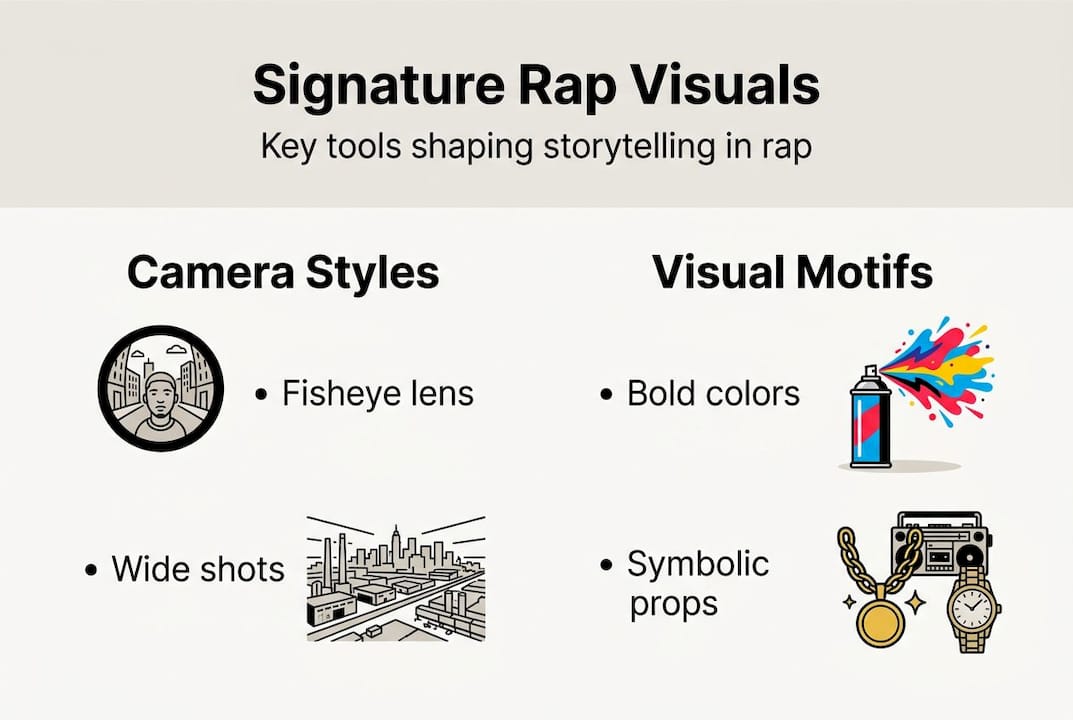
The fisheye lens, widescreen formats, bold colors, high-contrast lighting, and symbolic motifs are the building blocks of the cinematic atmosphere that defines the genre. Each one serves a specific narrative purpose.
Here is how rap visuals compare to other popular genres:
| Technique | Rap | Pop | Rock |
|---|---|---|---|
| Fisheye lens | Common | Rare | Rare |
| Symbolic motifs | Heavy use | Occasional | Occasional |
| Urban backdrops | Core element | Sometimes | Rarely |
| High-contrast lighting | Standard | Moderate | High |
| Narrative storyline | Frequent | Mixed | Mixed |
The five signature visual moves you will spot in iconic rap videos are:
- The fisheye flex — Distorted wide-angle shots that make spaces feel larger and more intense
- Color branding — Artists using consistent color palettes across videos to build a recognizable visual identity
- Slow-motion moments — Used to emphasize power, emotion, or a key lyrical beat
- Environmental storytelling — Shooting in real neighborhoods, housing projects, or local landmarks to anchor the narrative
- Symbolic props — Objects that carry meaning beyond their surface value, like chains, books, or flags
The influence of hip hop style on these techniques goes beyond aesthetics. Each choice communicates something about who the artist is and where they come from. A director choosing to shoot in a specific neighborhood is not just picking a backdrop. They are making a statement about authenticity and roots.
Pro Tip: If you are a visual artist working in rap, lean into symbolic motifs that connect to the artist’s actual story. Generic imagery reads as hollow. Specific, personal symbols create the kind of visual depth that fans remember long after the video ends.
Visuals as a tool for storytelling and identity
Here is where things get genuinely powerful. Rap visuals do not just support the music. They extend it, deepen it, and sometimes redefine it entirely.
Kendrick Lamar’s “Alright” video is one of the clearest examples. The song is about resilience in the face of systemic pressure. The video amplifies that message with imagery of Black joy, police tension, and community solidarity. Without the visual layer, the song still hits. With it, the song becomes a cultural document.
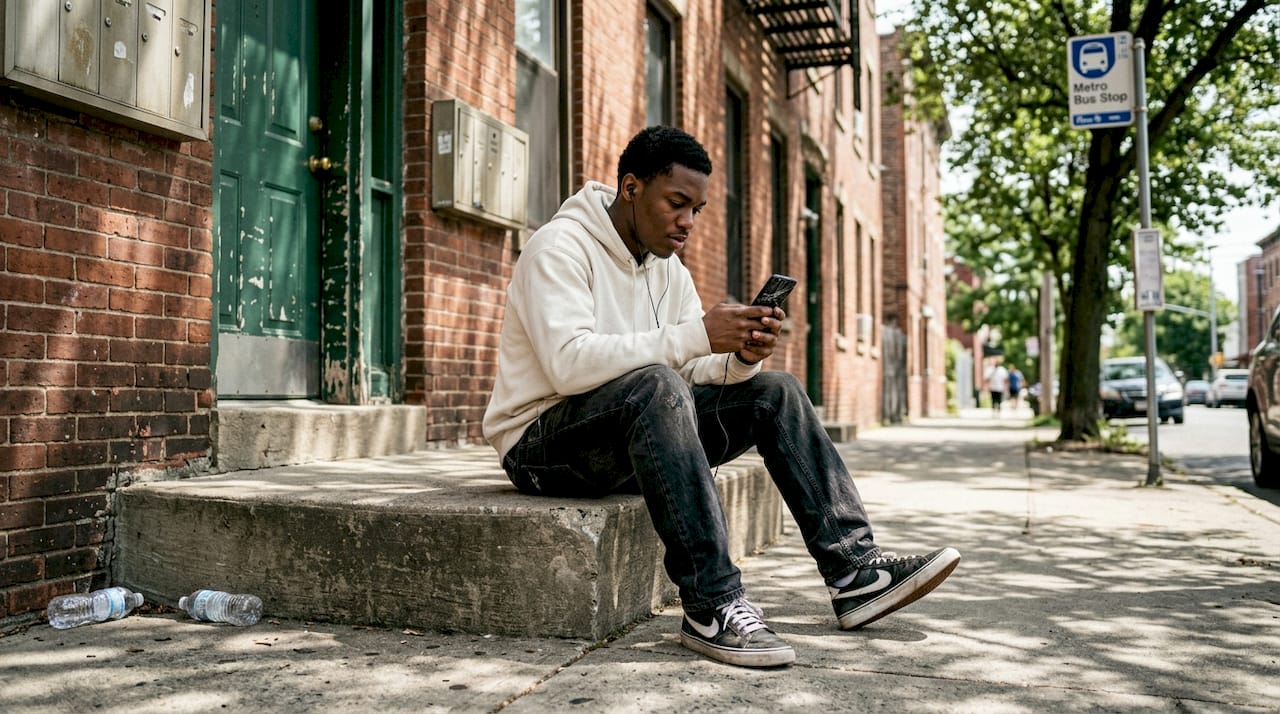
Identity is another massive function of rap visuals. Wardrobe choices, neighborhood scenes, and symbolic props all work together to tell the audience who this artist is before a single bar lands. Think about how Drake’s videos consistently feature Toronto landmarks. That is not accidental. It is identity construction in real time.
Four storytelling techniques that are unique to rap visuals:
- Place as character — The location is not just background. It participates in the narrative.
- Wardrobe continuity — Consistent clothing choices across a project signal a unified artistic era
- Visual callbacks — Repeating imagery across multiple videos to build a larger story arc
- Direct camera address — Artists speaking directly into the lens to create intimacy and confrontation
The connection between hip-hop fashion symbolism and visual storytelling runs deep. What an artist wears in a video is rarely random. It signals allegiance, aspiration, or a deliberate rejection of mainstream norms.

Social media has also changed how these visual stories reach audiences. Social media’s impact on rap visuals means that a single frame from a video can become a meme, a conversation starter, or a cultural moment that outlives the song itself.
Pro Tip: Emerging video directors should prioritize shooting in locations that reflect the artist’s actual reality. Authenticity in setting creates an emotional truth that audiences feel immediately, even if they cannot articulate why.
Promotion, virality, and business impact of rap visuals
All of this artistry connects directly to money, reach, and career longevity. Visuals are not just creative expression. They are a business strategy.
Rap videos outperform pop by 35% on YouTube engagement, which means more views, more shares, more algorithm love, and more monetization. That gap is not small. It represents millions of dollars in ad revenue, brand partnership opportunities, and streaming-driven income.
When a rap video goes viral, the ripple effects hit fast. Chart positions rise. Streaming numbers spike. Tour ticket demand increases. Brand deals follow. The visual moment becomes the entry point for a whole new audience who might never have found the artist through audio alone.
Three proven ways artists can leverage visuals for engagement and monetization:
- Tease before release — Short vertical clips pulled from the video, posted to Instagram Reels and TikTok, build anticipation and drive traffic to the full release
- Behind-the-scenes content — Raw footage from the shoot creates a second wave of content that humanizes the artist and extends the video’s lifespan
- Visual consistency across a project — When singles share a visual language, they function as a campaign rather than isolated releases, building cumulative momentum
Smart music marketing strategies treat the video as the centerpiece of a release campaign, not an afterthought. The most successful innovative album rollouts in recent years have used visuals to create anticipation, spark conversation, and reward loyal fans with layers of meaning.
Why visuals are the untold driver of rap’s cultural dominance
Here is the take that most industry conversations skip over. Lyrics built rap’s credibility. Visuals built its empire.
You can love a song without understanding every word. You cannot ignore a striking image. Rap’s visual language crosses borders, languages, and cultural contexts in a way that even the most brilliant wordplay cannot always manage. When a kid in Tokyo or Lagos or Berlin sees a rap video, they are not just hearing music. They are absorbing a complete aesthetic world.
The mainstream narrative credits rap’s global rise to its lyrical innovation, and that matters. But the cultural shifts in hip-hop that moved the genre from subculture to dominant force were driven just as much by how rap looked as by how it sounded. The fashion, the color, the cinematic ambition, all of it traveled faster and further than words ever could.

Visuals gave rap a face. And that face became one of the most recognized and imitated aesthetics in global popular culture. That is not a side effect of the music. That is a parallel achievement that deserves its own recognition.
Explore more of the visual side of hip-hop
If this breakdown sparked something in you, whether you are a fan trying to understand the culture more deeply or a creator looking to sharpen your visual craft, there is a lot more to explore.

At Stangr The Man, we dig into the stories, history, and mechanics behind hip-hop culture because we believe fans and artists deserve more than surface-level content. Start with what is hip hop culture to ground yourself in the roots of the movement. Then check out the practical guide on how to create your own music videos without a massive budget. The visual side of rap is wide open for those ready to step into it with intention.
Frequently asked questions
Why are visuals so important in rap compared to other music genres?
Rap videos attract 35% more YouTube engagement than pop, giving artists a stronger platform for fan connection, viral reach, and monetization compared to other genres.
What are signature visual techniques in hip-hop music videos?
Signature techniques include fisheye lenses, bold colors, symbolic motifs, and high-contrast lighting, all used to build cinematic atmosphere and reinforce the artist’s identity.
Can visuals help upcoming rap artists get noticed?
Absolutely. Music videos amplify branding and social sharing, giving new artists a way to build audience and generate income through YouTube monetization and platform algorithms.
How do visuals tell a rapper’s personal story?
Visuals show identity through location, wardrobe, and symbolic props, communicating layers of personal narrative that lyrics alone cannot fully express to a global audience.
Recommended
- Unveiling the Masterpieces: Exploring Rap’s Most Captivating Narratives – Stevie The Manager aka Stangr The Man
- Rap storytelling explained: origins, techniques, impact
- Top 10 Best Rap Collaborations: When Legends Unite for Iconic Tracks – Stevie The Manager aka Stangr The Man
- Rap Battles: A Deep Dive into the Culture and Techniques Behind the Mic – Stevie The Manager aka Stangr The Man

No Comments