How to Promote Your Music: Independent Artist Playbook
The three highest-leverage moves you can make right now are claiming your artist profiles on Spotify for Artists, Apple Music for Artists, and YouTube for Artists; centralizing all your traffic through a smart link (Feature.fm or Linkfire style); and posting context-first short-form video using your own audio. Do those three things before anything else. Everything downstream, from playlist pitching to paid ads, depends on having these foundations locked in.
Your 24–72 hour quick-start checklist:
- 24 hours: Claim Spotify for Artists, Apple Music for Artists, and YouTube for Artists. Set up a smart link landing page and point all your social bios to it.
- 72 hours: Film 3–5 short-form clips using your current or upcoming track. Post one per day on TikTok and Instagram Reels using your own audio. Drop a pre-save or streaming link in every caption.
- 1 week: Start building an email capture form on your smart link page. Offer something real in exchange (an exclusive track, early access, a lyric sheet). Begin researching 10–15 independent playlist curators in your genre.
Why these three? Claimed profiles unlock editorial pitching and analytics you cannot access otherwise. A smart link gives you one URL to track and optimize across every channel. Short-form video is where 47% of listeners discover new music before they ever open a streaming app.

Quick-action CTA to copy: “New music out now. Stream, save, and follow the link in bio for early access to what’s coming next.”
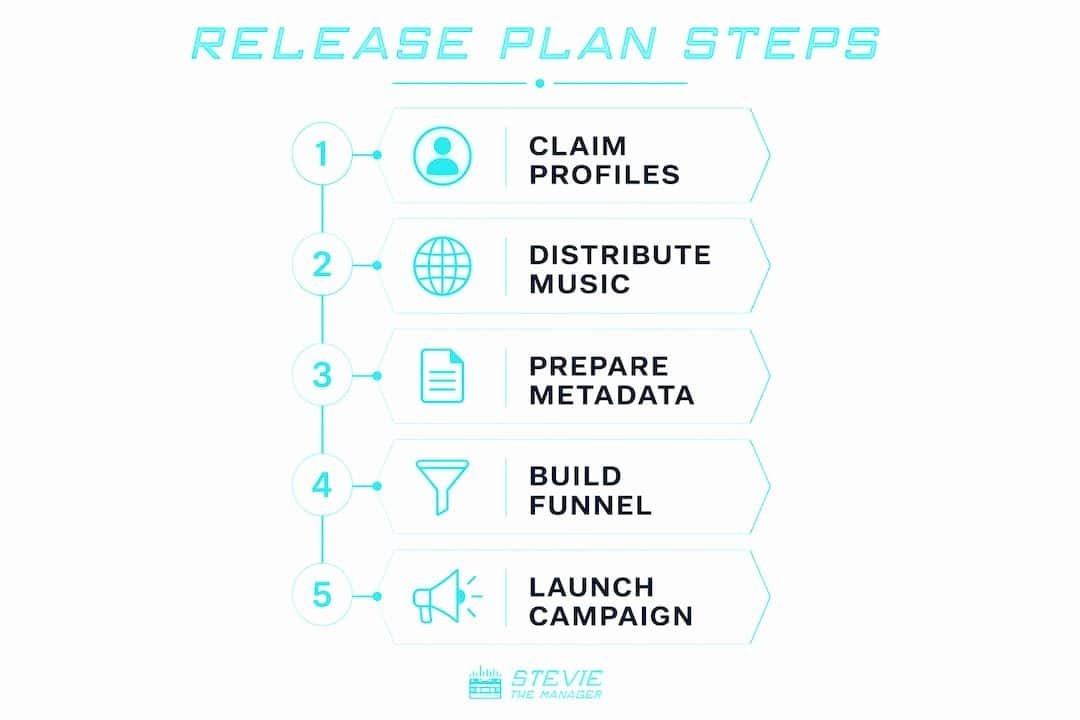
Table of Contents
- How do you set up your artist profiles and distribution the right way?
- How to build a release plan and conversion funnel that actually works
- What short-form content actually drives discovery in 2026?
- How do you pitch playlists, curators, and influencers effectively?
- What paid promotion actually converts for independent artists?
- How do you own your audience and build direct revenue streams?
- Which metrics actually tell you if your promotion is working?
- Why virality is not a strategy: the system that actually builds careers
- Your 30-day, week-by-week promotion checklist
- How cross-promotion and collaboration with other artists multiply your reach
- How to use music blogs and online publications for real exposure
- How live performances and virtual concerts drive music promotion
- How to build a real community on social media beyond posting content
- How to optimize your metadata and streaming SEO for better discoverability
- Key Takeaways
- The long view on independent music promotion
- Lit Nightz News has a practical release guide built for independent artists
- FAQ
- Useful sources and tools for deeper implementation
How do you set up your artist profiles and distribution the right way?
Claiming your profiles is not optional. Spotify for Artists, Apple Music for Artists, and YouTube for Artists each unlock features that are invisible to unclaimed profiles: editorial playlist submission, profile artwork, bio editing, analytics, and direct fan messaging tools. Without claimed status, you cannot pitch Spotify’s editorial team at all. That alone is reason enough to do it today.
Distribution basics: UPC, ISRC, and release timing
Every track you release needs two codes: a UPC (Universal Product Code) for the release as a whole and an ISRC (International Standard Recording Code) for each individual track. These codes are how streaming platforms identify your music, pay royalties, and track streams. Most distributors generate them automatically, but confirm this before you upload.
For distribution, Ditto Music and DistroKid are two of the most widely used options for independent artists. Ditto charges an annual flat fee and lets you keep 100% of royalties. DistroKid charges a yearly subscription and also passes through 100% of earnings. The right choice depends on your release volume and whether you want label-tier features like team accounts or publishing administration.
Plan your release date at least four weeks out. You need that runway to submit to Spotify’s editorial team (minimum 7 days before release, ideally 2–3 weeks), create content, and coordinate outreach. Artists who finish a track and distribute it the same day are skipping the entire pre-release window where most of the promotional leverage lives.
Required assets before you upload
- High-resolution cover art (3000×3000 px minimum, no explicit text violations)
- A finalized audio master (WAV or FLAC, not MP3)
- A short artist bio (100 words and 250 words versions)
- Social profile links and a website or smart link URL
- Genre, mood, and language metadata filled in completely
Pro Tip: The metadata fields most artists skip are “mood” and “similar artists.” Spotify’s algorithm uses these tags when building algorithmic playlists like Discover Weekly and Radio. Fill every field, not just the required ones. A well-tagged track has a measurably better chance of algorithmic placement than an identical track with sparse metadata.

How to build a release plan and conversion funnel that actually works
A release without a timeline is just an upload. The goal of a release plan is to coordinate every channel, from content to curator pitching to paid ads, so they all push in the same direction during the same window.
8-week release timeline
- Week 8: Finalize master, cover art, and EPK. Choose distributor and schedule release date. Set up smart link landing page with email capture.
- Week 6: Upload to distributor. Submit to Spotify editorial via Spotify for Artists dashboard. Begin curator research list.
- Week 4: Start teaser content (studio clips, lyric moments, BTS). Begin curator and influencer outreach. Pitch music blogs with your EPK.
- Week 2: Ramp up content frequency. Send pre-save or pre-release email to your list. Confirm any press placements or features.
- Week 1: Post daily. Activate your network (collaborators, producers, local DJs). Run a small paid test on your best-performing organic clip.
- Day of release: Push your audience to one action (stream + save). Send your email list. Post across all platforms. Coordinate any cross-posts with collaborators.
- Post-release (weeks 1–4): Keep posting content around the track. Follow up with curators who did not respond. Analyze data and double down on what is working.
Budget ranges by campaign goal
| Campaign Goal | Typical Budget | Expected Outcome | Required Assets |
|---|---|---|---|
| Discovery (awareness) | $5–$15/day | Reach new listeners, increase profile visits | Short-form clip, smart link |
| Conversion (saves/emails) | $5–$15/day | Collect first-party data, grow email list | Landing page, lead magnet |
| Ticket/merch presale | $20–$50/day | Direct revenue, high-intent audience | Product page, retargeting pixel |
Launch day checklist
- Smart link live and tested on mobile
- Email blast sent to your list
- All social posts scheduled or ready to publish
- Collaborators and supporters notified directly
- Spotify editorial submission confirmed (submitted weeks earlier)
- One paid ad running on your best organic clip
A recommended release cadence for independent artists is a new single every 4–6 weeks. That pace keeps you in algorithmic feeds without burning out your content machine or dropping quality.
What short-form content actually drives discovery in 2026?
Raw, behind-the-scenes footage consistently outperforms polished promotional videos on TikTok, Instagram Reels, and YouTube Shorts. The algorithm rewards content that holds attention and triggers saves and shares, and authentic moments do that better than produced ads. An in-car preview of your hook, a reaction to hearing your own mix for the first time, a 15-second verse breakdown in the studio — these travel.
Content types that convert
- Studio BTS: Recording process, beat selection, vocal takes
- Lyric moments: On-screen text synced to your strongest bar or hook
- Performance clips: Live or staged delivery, close-up and raw
- Challenges and prompts: Ask followers to use your sound or respond to a question
- Social proof posts: A strong comment, a share milestone, a fan reaction
The 20–30 rule is worth building into every release: create 20–30 short-form video assets per track so the platform algorithm has enough creative variations to find a high-performing one. One shoot of two hours can produce a week’s worth of content if you clip it intentionally.

Pro Tip: Always use your own audio as the native sound when posting on TikTok and Reels. When you upload a clip with your track as the native audio, every creator who uses that sound links back to your profile. That compounding effect is free distribution. Never post a clip with a trending sound over your own music if the goal is discovery.
For a deeper look at how to build a music marketing workflow around these content types, Lit Nightz News has a dedicated guide for hip-hop artists.
How do you pitch playlists, curators, and influencers effectively?
Playlist placement is still one of the highest-leverage moves in independent music. But most artists pitch wrong: too late, too generic, or only to Spotify’s editorial team.

Spotify editorial vs. independent curators
Spotify’s editorial submission is free and takes five minutes inside your Spotify for Artists dashboard. Submit at least 7 days before your release date, ideally 2–3 weeks out. Miss that window and you cannot submit for that release. The pitch should include the song’s story, genre, mood, and any notable context. Be specific, not promotional.
Independent curators are a different game. They often have smaller but more engaged, genre-specific audiences. A placement on a 5,000-follower hip-hop playlist with high listener engagement can outperform a placement on a 50,000-follower general playlist where listeners skip constantly.
How to research curators before pitching
- Search Spotify for playlists in your exact subgenre (not just “hip-hop” — try “underground rap,” “boom bap 2026,” “conscious hip-hop”).
- Check the curator’s follower count and the playlist’s track count. Avoid playlists with 2,000+ tracks — your song will get buried.
- Look for playlists that update regularly. A stale playlist with no new additions is a dead end.
- Find the curator’s contact info through their Spotify profile, Instagram, or a platform like SubmitHub.
Pitch template (email or DM)
Subject: [Your Name] — [Song Title] | [Genre] | [Release Date]
Hi [Curator Name], I came across [Playlist Name] and noticed it features [specific artist or style]. My new track “[Song Title]” fits that lane — it’s [one sentence describing the sound and mood]. Released [date], streaming everywhere. Here’s the link: [URL]. No pressure either way, and thanks for what you do for the genre.
What to avoid: Mass-blast tools, generic “please add my song” messages, pitching after the release date, and pitching playlists that don’t match your genre. One specific, human pitch beats fifty copy-paste submissions.
Measure a placement’s quality by listener behavior, not follower count. Saves, repeat listens, and follower conversions from playlist listeners are the signals that matter. Vanity stream counts from bot-heavy playlists do nothing for your algorithmic standing.
What paid promotion actually converts for independent artists?
Most artists waste their first ad budget on boosted posts. A boosted post optimizes for engagement (likes, comments), which feels good but rarely translates into streams, saves, or email signups. True ROI comes from conversion-focused campaigns that send people to a landing page and ask for a specific action.

Run paid campaigns only after you have organic proof. If a clip is getting saves, shares, and profile visits without money behind it, that is your signal to amplify. Spending on content that has not proven itself organically is burning budget on a guess.
Ad test structure for independents
Start with $5–$15/day split across two or three creative variations. Test one variable at a time: hook (first 3 seconds), caption, or audience segment. Run each test for 3–5 days before drawing conclusions. The winning creative gets the remaining budget.
Key metrics to track:
- Cost Per Save (CPS): What you pay for each track save. Lower is better; early benchmarks for independents vary widely, but tracking the trend matters more than hitting a specific number.
- Cost Per Email: What you pay for each email signup from your landing page.
- Save-to-Follow Conversion: What percentage of people who save the track also follow your profile.
Pro Tip: Use conversion ads to collect first-party data, not to chase likes. An email address you own is worth more than a thousand passive followers on a platform that can change its algorithm overnight. Set up your Meta pixel on your smart link landing page before you run a single dollar in ads.
How do you own your audience and build direct revenue streams?
Smart links are the traffic hub of your entire promotion system. A Feature.fm or Linkfire-style landing page collects every click from every channel, lets you A/B test which store your fans prefer, and captures emails before sending them anywhere. Every bio link, every ad, every post should point to your smart link, not directly to Spotify.
Email and SMS capture flow
- Lead magnet options: An exclusive unreleased track, early access to a project, a discount on merch, a lyric sheet, or a behind-the-scenes video
- Capture point: A pop-up or form on your smart link page, triggered after a fan clicks through
- Follow-up sequence: A welcome email the same day, a release-day email, and a monthly update that feels personal, not promotional
Musicians with even 500 engaged email subscribers can generate more release-day streams than artists with 10,000 passive social followers. That gap is real, and it widens with every release.
Direct-to-fan monetization options
- Bandcamp: Direct sales of digital and physical music, merch, and name-your-price releases. Bandcamp pays artists a higher percentage than any streaming platform and gives you buyer data.
- Patreon or subscriptions: Monthly recurring revenue in exchange for exclusive content, early access, or direct access to you. Works best once you have a loyal core audience.
- Merch drops: Limited releases tied to a project create urgency and a collectible element. Printful and Printify integrate with most storefronts for print-on-demand.
- Ticket presales: Sell tickets directly to your email list before going public. Fans who buy early are your most committed supporters.
A basic CRM (even a spreadsheet to start) lets you track who opened your emails, who bought merch, and who attended shows. That segmentation tells you who to contact first for presales, who to send exclusive content to, and who needs re-engagement.

Which metrics actually tell you if your promotion is working?
Most artists track the wrong things. Follower count and stream totals are lagging indicators. The metrics that tell you whether your current campaign is working are earlier in the funnel.
Core KPIs to track
- Save rate: Saves divided by streams. A strong save rate signals the algorithm that listeners want to return.
- Completion rate: What percentage of listeners finish the track. Low completion rates hurt algorithmic placement.
- Follower conversion: How many playlist listeners or ad-driven listeners follow your profile.
- Playlist adds: How many independent playlists add your track after your outreach.
- Email opt-in rate: What percentage of smart link visitors give you their email.
- Cost Per Save and Cost Per Email: Your paid campaign efficiency metrics.
- Engagement rate: Comments, shares, and saves on social posts divided by reach.
Reporting cadence
Run weekly creative tests on short-form content. Review your paid campaign data every 3–5 days. Do a full monthly strategy review where you decide what to kill, what to optimize, and what to scale. Tools like Spotify for Artists, YouTube Studio, and Meta Ads Manager give you most of what you need. A simple Google Sheet tracking weekly KPIs across platforms is enough to spot trends without overcomplicating the process.
Why virality is not a strategy: the system that actually builds careers
Approximately 150,000 new tracks are uploaded to streaming platforms every single day. Waiting for a viral moment in that environment is not a plan. It is a lottery ticket.
The artists building durable careers are running a repeatable, multi-channel system where each channel feeds the next. Virality, when it happens, is a byproduct of that system, not the goal.
The owned, rented, and earned framework
| Channel Type | Examples | Role in the Funnel |
|---|---|---|
| Owned | Email list, SMS list, website | Direct fan relationship; highest conversion |
| Rented | Spotify, TikTok, Instagram, YouTube | Discovery and reach; algorithm-dependent |
| Earned | Press coverage, playlist placements, blog features | Credibility and social proof; amplifies other channels |
The workflow looks like this: short-form video on rented platforms drives discovery. Discovery converts to streams and profile follows. Playlist pitching adds passive streams and credibility. Press coverage and blog features create social proof that strengthens future pitches. Paid ads amplify the organic content that has already proven itself. All of it points back to the smart link, which captures emails and builds the owned audience that survives every algorithm change.
PR and editorial coverage act as credibility assets that make every other channel more effective. A blog feature or playlist placement gives curators and journalists a reason to take your next pitch seriously.
Your 30-day, week-by-week promotion checklist
-
Week 1: Claim Spotify for Artists, Apple Music for Artists, and YouTube for Artists. Set up your distributor account (Ditto Music or DistroKid). Create your smart link landing page with email capture. Draft your 100-word and 250-word artist bios. Build your content plan for the month.
-
Week 2: Film your 20–30 short-form video assets for the upcoming release. Post 3–5 times per week using your own audio. Begin curator research and build a list of 15–20 genre-specific playlists. Send your first 10 curator pitches using the template above. Reach out to 5 music blogs or publications with your EPK.
-
Week 3: Run a small paid test ($5–$15/day) on your best-performing organic clip. Set up your Meta pixel on your smart link page. Collect email and SMS signups with a lead magnet. Follow up with curators who have not responded. Review your content data and double down on the format that is working.
-
Week 4: Release day coordination: send your email list, post across all platforms, activate your network. Monitor your save rate and completion rate in Spotify for Artists. Keep posting content for 2–3 weeks after release. Do your first monthly strategy review. Plan your next release for 4–6 weeks out.
Pre-written DM pitch subject line: “[Your Name] — [Song Title] | [Genre] | Fits [Playlist Name]”
Social caption template: “[Hook line from the song or a question]. New track out now. Link in bio to stream and get early access to what’s next.”
How cross-promotion and collaboration with other artists multiply your reach
Collaboration is one of the most underused tools in independent music promotion. A feature, a joint release, or even a simple cross-post with another artist exposes your music to their entire audience without spending a dollar on ads.
The key is fit. Collaborating with an artist in a completely different genre can work, but the audience overlap has to make sense. A conscious rap artist collaborating with a trap producer reaches a different listener than two artists in the same lane. Both can work; the goal is to think about where the audiences actually intersect.
Beyond features, cross-promotion can be as simple as sharing each other’s content, co-hosting a live session, or building a joint playlist that includes both artists’ music. These low-effort moves create genuine exposure and build relationships that pay off over time. Local scenes are particularly good for this. Artists in the same city often share audiences, venues, and press contacts. Building those relationships early creates a network that amplifies every release.
How to use music blogs and online publications for real exposure
Press features and blog coverage build credibility that social media clips cannot replicate. A write-up in a respected music blog creates a credential that lives in search results for years and strengthens every future pitch you send to curators, labels, or booking agents.
Your Electronic Press Kit is the foundation. It needs a tight bio (both lengths), high-resolution press photos, your best streaming links, and any previous coverage or notable quotes. Keep it updated. A journalist who has to dig for basic information moves on to the next pitch.
Build your press list in order. Start with five small local or regional rap blogs. Then pitch mid-tier endemic outlets. Work up from there as your press trail grows. For hip-hop specifically, genre-focused publications and Substacks carry more weight with your core audience than general music blogs. Podcasts are also worth pursuing — a 45-minute conversation builds a depth of connection that no short-form clip can match.
For guidance on getting indie press placements and building a consistent outreach workflow, Lit Nightz News covers the hip-hop news workflow in detail.
How live performances and virtual concerts drive music promotion
Live performance has the highest conversion rate of any promotion channel for rap specifically. A person who watches you perform live, who feels the energy in the room, becomes a fan at a rate that no digital campaign touches. The problem is most independent artists treat shows as income events rather than marketing events. In the early stages, they are primarily the latter.
Every phone in the audience is a content team. A Tiny Desk-style performance clipped from a live show and posted to YouTube can travel further than a professionally shot music video. Fan-filmed footage that captures a genuine electric moment reaches people in ways paid content does not. The prerequisite is being undeniably great on stage.
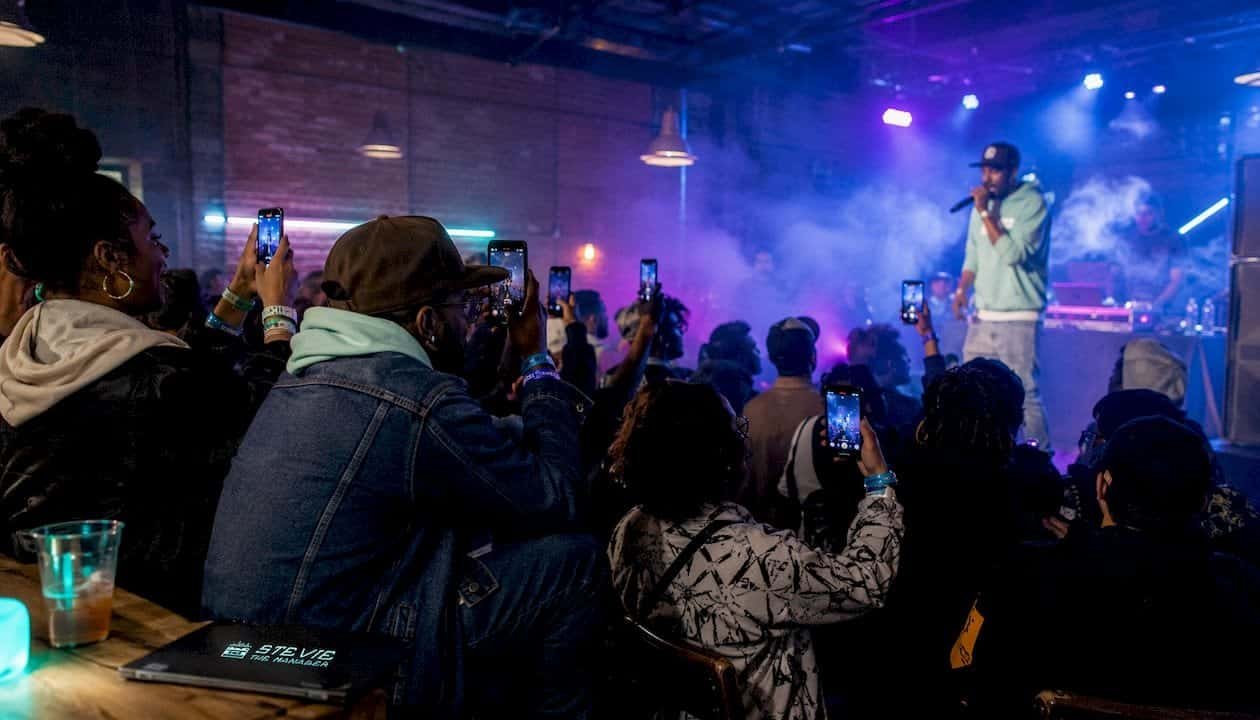
Start local. Build a reputation in your city before trying to expand nationally. Local audiences want to see one of their own succeed, and that community support creates the social proof that makes online promotion more credible. Virtual concerts and livestreams on YouTube, Instagram Live, or Twitch extend that reach to fans who cannot attend in person and create content assets you can clip and repurpose afterward.
How to build a real community on social media beyond posting content
Posting content is the floor, not the ceiling. The artists who build durable fanbases go further: they create spaces where fans interact with each other, not just with the artist.
Twitter/X Spaces and Instagram Live are the most direct tools for this. A weekly or bi-weekly live session where you play unreleased music, answer questions, or just talk about what you are working on builds a level of intimacy that no polished post can. Fans who show up consistently become advocates. They share your music because they feel connected to the story behind it.
Private fan groups on Discord or Facebook create a core community that generates its own energy. These are the people who will buy merch, attend shows, and tell their friends. Nurture them with exclusive content and direct access. The role of social media in music goes well beyond content distribution — it is relationship infrastructure.
Engagement also means responding. Reply to comments, reshare fan content, and acknowledge the people who show up for you. Artists who treat their comments section as a broadcast channel miss the compounding value of genuine two-way interaction.
How to optimize your metadata and streaming SEO for better discoverability
Streaming platforms are search engines. Listeners search for moods, activities, subgenres, and artist names. If your metadata is incomplete or generic, you are invisible to those searches.
On YouTube, title every video with the format: “Song Name – Artist Name (Genre/Year).” Write descriptions that include every keyword your listeners would use to find that sound: subgenre, mood, activity (workout, study, driving), and related artist names. Tags matter less than they used to, but they still contribute. A properly optimized YouTube video from two years ago can still surface in search results today, driving catalog streams indefinitely.
On Spotify, the metadata fields that affect algorithmic placement include genre, subgenre, mood, language, and the “similar artists” tag. Fill every one. Your artist bio should include natural-language descriptions of your sound that match how fans actually search. Avoid generic phrases like “unique sound” or “genre-defying” — use specific descriptors.
For artists focused on hip-hop discoverability, branded SEO content from QuickRapReview is a partner service worth exploring for building search-optimized content around your releases.
Playlist pitching also functions as a form of SEO. Landing on genre-specific playlists signals to Spotify’s algorithm what kind of listener your music is for, which improves Discover Weekly and Radio placements over time.
Key Takeaways
A repeatable, multi-channel promotion system beats any single tactic: claim your profiles, build a smart link, post context-first short-form video, capture emails, and measure saves over streams.
| Point | Details |
|---|---|
| Claim profiles first | Spotify for Artists, Apple Music for Artists, and YouTube for Artists unlock editorial pitching and analytics you cannot access otherwise. |
| Smart link is your hub | Point every channel to one landing page that captures emails and tracks where your listeners come from. |
| Short-form drives discovery | 47% of listeners discover music on short-form video first; post 3–5 times per week using your own audio. |
| Email outperforms followers | 500 engaged email subscribers can drive more release-day streams than 10,000 passive social followers. |
| Lit Nightz News resource | The Lit Nightz News release strategy guide covers the full album and single rollout framework for independent hip-hop artists. |
The long view on independent music promotion
The honest truth about promoting music independently is that the timeline is longer than most artists expect and shorter than most give up before reaching. Consistency over six months builds more than any single viral moment. The artists who are still releasing music two years from now, still posting content, still pitching curators, still building their email list — those are the ones whose catalogs start compounding.
What gets underestimated most is the relationship-building side of this. Curators, bloggers, collaborators, and fans who feel genuinely connected to your work become long-term advocates. That network does not appear overnight. It is built one honest interaction at a time, one release at a time, one show at a time.
Realistic expectations: in the first three months, you are building infrastructure and testing what resonates. In months four through twelve, you are iterating on what works and growing your owned audience. Year two is where the compounding starts to show. That is not a discouraging timeline. It is a real one. For independent artists navigating this process, the music industry survival guide at Lit Nightz News covers the resilience and long-term thinking that actually sustains a career.
Lit Nightz News has a practical release guide built for independent artists
Independent artists who want a structured, step-by-step framework for their next release do not need to piece it together from a dozen different sources. Lit Nightz News publishes in-depth guides specifically for hip-hop and rap artists building careers without label support.

The Rap Album Release Strategy guide covers the full rollout process: pre-release timeline, distribution setup, curator pitching, content planning, and post-release sustainment. It is written for independent artists who want a clear plan, not generic advice.
What you get from Lit Nightz News resources:
- Week-by-week release timelines you can follow immediately
- Curator pitch templates and outreach frameworks
- Content repurposing workflows for short-form video
- Guidance on building your email list and owned audience
- Coverage of the latest hip-hop industry trends and independent artist strategies
Read the full digital music promotion guide on Lit Nightz News to go deeper on any of the tactics covered here.
FAQ
What is the best way to promote a song as an independent artist?
The most effective approach combines claimed artist profiles, a smart link landing page for email capture, short-form video using your own audio, and a Spotify editorial submission at least 7 days before release. Running these channels simultaneously, rather than one at a time, produces compounding results.
How do I attract more listeners to my music?
Post context-first short-form content on TikTok and Instagram Reels using your own audio 3–5 times per week, pitch genre-specific independent playlist curators, and build an email list so you can reach fans directly on release day without depending on algorithms.
How do I make my music go viral?
Virality is a byproduct of a consistent system, not a goal you can engineer directly. Content that tells the story behind the song, documents the creative process, or captures a genuine moment tends to travel further than content that simply asks for streams. Build the system; the moments come from the system.
How much should an independent artist spend on music promotion?
Start with $5–$15/day on paid ads, but only after a piece of organic content has already shown traction. Spend on proven creative, not on guesses. Most of the highest-leverage tactics, including Spotify editorial submission, curator pitching, and short-form content, cost nothing but time.
Which platforms matter most for promoting hip-hop music?
TikTok and Instagram Reels drive discovery, YouTube builds long-term catalog streams through search, Spotify handles passive algorithmic streams, and Bandcamp supports direct-to-fan sales. For hip-hop specifically, AudioMack is an underused platform with a community built specifically around rap and R&B audiences.
Useful sources and tools for deeper implementation
These resources cover platform documentation, distribution guidance, and promotion frameworks referenced throughout this article.
| Resource | Type | What It Covers |
|---|---|---|
| Spotify for Artists | Platform help center | Profile setup, editorial submission, analytics |
| Apple Music for Artists | Platform help center | Profile claiming, analytics, Shazam data |
| YouTube for Artists | Platform help center | Channel verification, analytics, Content ID |
| Ditto Music | Distribution platform | Music distribution, UPC/ISRC, royalty collection |
| DistroKid | Distribution platform | Fast distribution, team accounts, publishing admin |
| Feature.fm | Smart link tool | Landing pages, pre-save campaigns, email capture |
| Linkfire | Smart link tool | Smart links, audience insights, campaign tracking |
| Bandcamp | Direct-to-fan sales | Digital/physical sales, fan data, merch |
| Lit Nightz News — Release Strategy | Guide | Full rap album and single release framework |
| QuickRapReview — Content Strategy | Partner service | 30-day content strategy for hip-hop artists |
Recommended
- Music Industry Survival Tips for Independent Artists 2026
- How to Share Music News: A Practical 2026 Guide
- The Role of Social Media in Music: 2026 Artist Guide
- Rap album promotion workflow: 8-week launch plan

No Comments