
Top 6 Best Plugins for Rap Vocals Alternatives 2026
Getting professional sounding rap vocals at home often means choosing between expensive plugins or complex setups that do not fit small spaces or tight budgets. Many solutions overlook practical issues like room acoustics, affordable gear sequencing, and real-world workflow tips, leaving independent artists with messy results or wasted spending. This comparison clarifies which music artist promotion tools and services speed up vocal quality gains, address budget limitations, and support hands-on producers ready to bypass traditional plugin routes.
Table of Contents
- Home Studio Setup for Rappers: Build It Right
- Sauceware Audio
- MicDrop by Soundlabs AI
- RoEx Audio Tools
- Vocs AI
- Vocalist.ai
- Comparing Home Recording and Vocal Production Guides
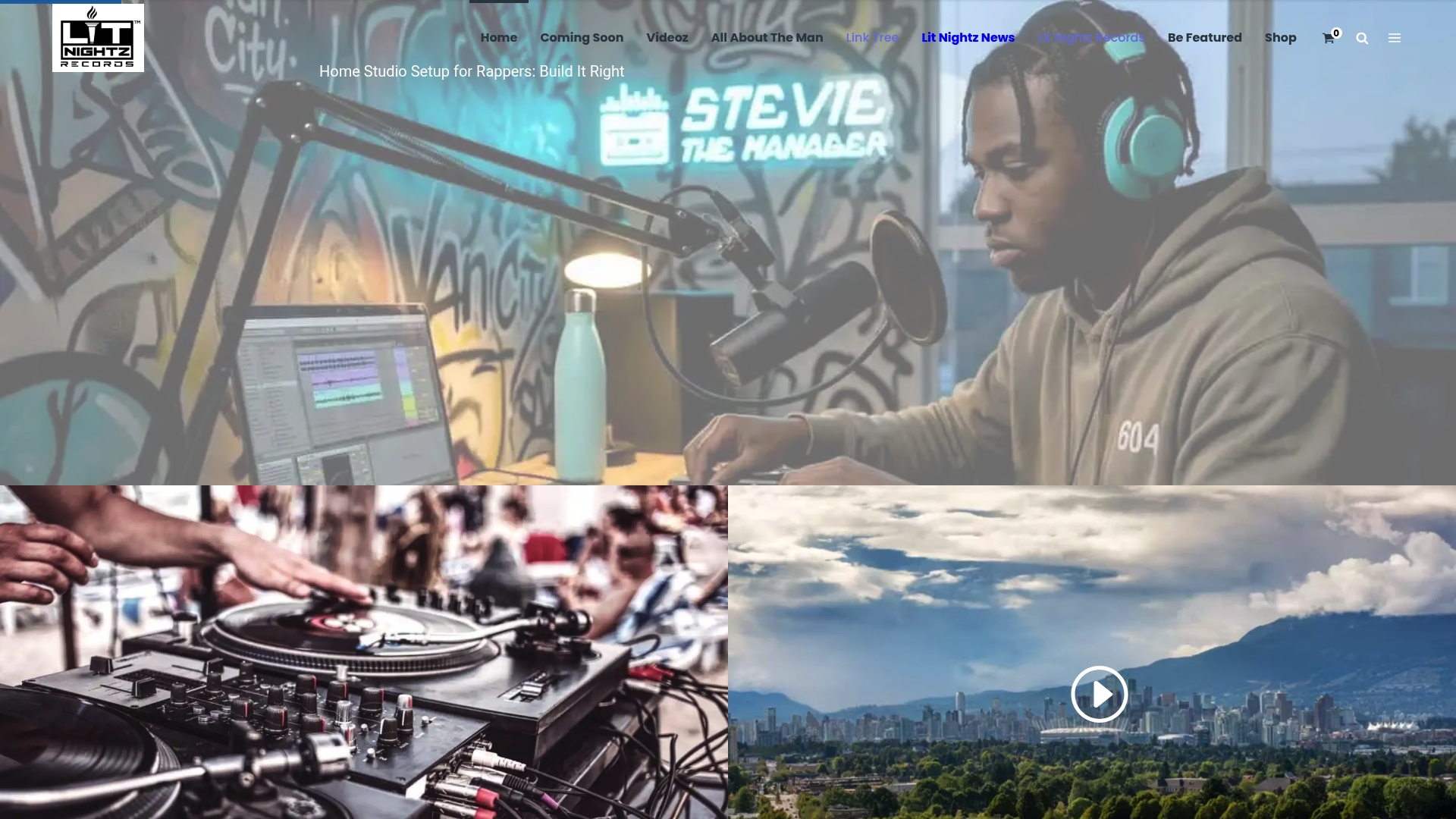
Home Studio Setup for Rappers: Build It Right

At a Glance
Approximately $200 gets you a basic, fully functional home studio setup that covers a DAW, interface, headphones, and a mic. The guide emphasizes gear selection, room treatment, and a stepwise build sequence aimed at newcomers on tight budgets.
The author frames recommendations around practical results in small spaces. Expect actionable priorities that favor acoustic fixes and workflow over chasing expensive microphones.
Core Features
- Step-by-step build sequence that lays out the order to buy and install gear so you do not waste money on redundant purchases.
- Budget gear recommendations for a DAW, audio interface, microphones, and headphones tailored to rap vocal tracking.
- Acoustic treatment guidance focused on small rooms and DIY solutions that improve recordings more than swapping mics.
- Workflow tips for better vocal takes, mic placement, and quick mix moves to get usable results fast.
Key Differentiator
The guide centers on integrating affordable gear with acoustic treatment and a clear build order to produce the biggest sonic gains for the least cash. That stepwise approach targets the common mistake of buying gear without fixing room problems first.
Pros
- Practical advice on assembling a functional setup without guesswork. The purchase order reduces wasted spending and speeds the path to recordable vocal tracks.
- Heavy focus on room acoustics rather than gear fetish. The guide explains where absorption and diffusion matter and gives cheap, reliable DIY fixes.
- Opens up options for apartment setups. It explains how to get usable isolation and flattering reflections in tight spaces.
- Clear purchase order and priority list that helps new artists allocate limited funds where they change the sound most.
- Encourages DIY options that often outperform more expensive microphone swaps when the room is untreated.
Cons
- The material skews toward budget and beginner setups and does not dive into professional console workflows or large room acoustics.
Who It’s For
Solo rappers and home producers who need a realistic, low-cost path to recordable vocals. It matches artists starting with limited funds who want to learn practical acoustics, mic technique, and workflow rather than chase studio gear specs.
Producers in small apartments will find the most value. Engineers seeking high-end studio design will want a more technical reference.
Unique Value Proposition
A working studio for roughly $200 reframes the upfront economics of recording. Instead of stalling until you can afford expensive gear, the guide lets you assemble a recording chain that captures usable vocal tracks and supports iterative improvement.
That economic framing changes choices. You prioritize acoustic patches and a usable interface first and upgrade microphones later when the room and workflow are already delivering results.
Real World Use Case
A rapper in a Vancouver apartment follows the step sequence, buys the suggested interface and mic, builds a couple of DIY panels, and stops chasing tonal problems in the mix. The result is clearer vocal takes and fewer retakes during sessions.

The guide pairs the technical steps with workflow tips so a single artist can record, comp, and rough mix without outside help.
Pricing
The guide estimates a basic home studio at approximately $200 for a DAW, headphones, interface, and microphone with DIY acoustics. Suggested upgrades are presented progressively so you can expand spend as your needs grow.
Website: https://stangrtheman.com
Sauceware Audio
At a Glance
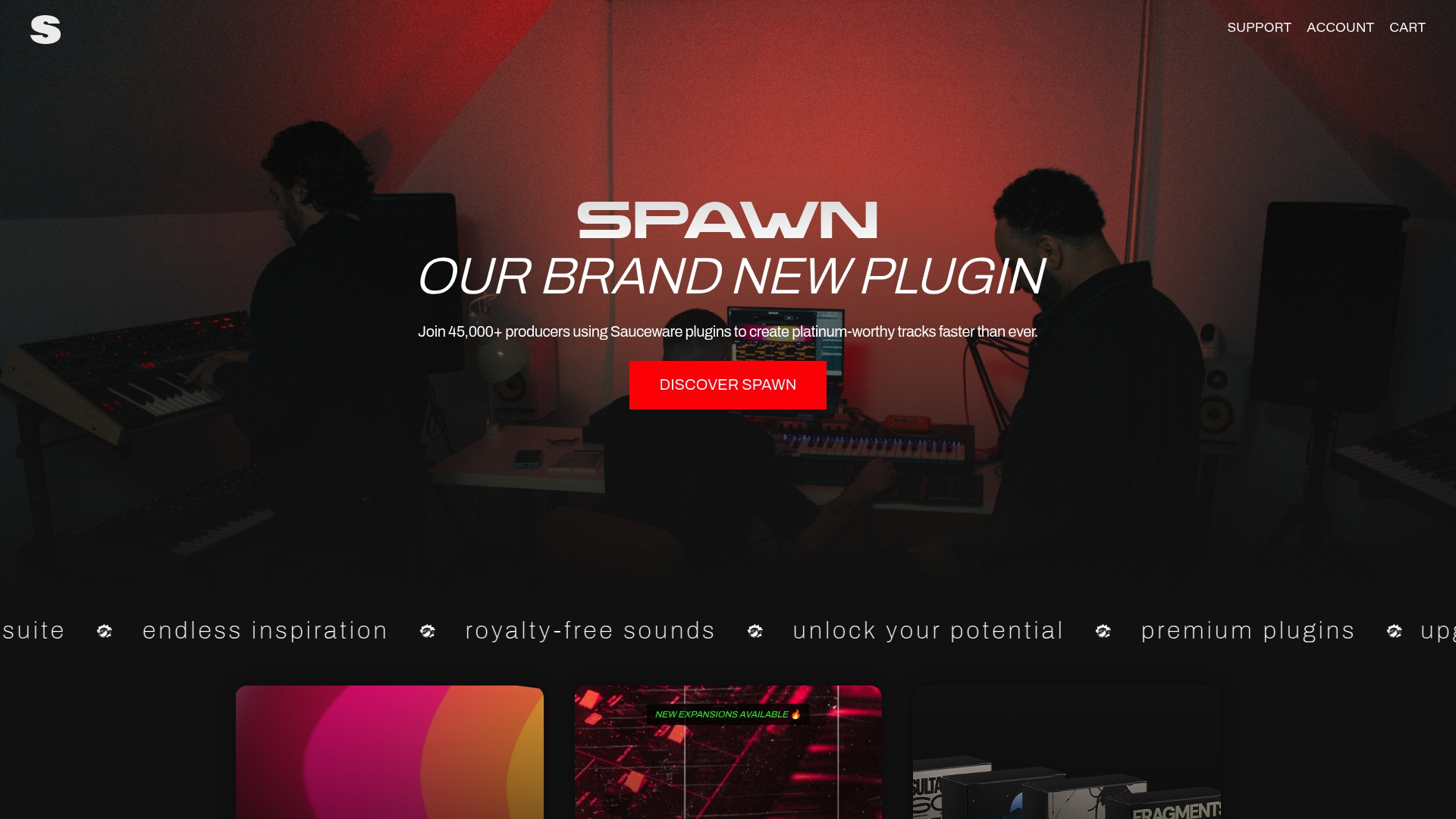
Sauceware Audio reports a community of over 45,000 producers and was founded in 2020 by platinum producer My Best Friend Jacob. The company focuses on plugins and sample packs tailored to rap and modern urban production workflows.
Their catalog centers on quick, polished results with flagship tools like Spawn, Scorch, and Trifecta that aim to speed beatmaking sessions.
Core Features
- Spawn, Scorch, and Trifecta — industry-style plugins built for fast sound generation and manipulation.
- Extensive royalty-free libraries covering drums, MIDI, loops, and one-shots for immediate use in sessions.
- Built-in chord generators and effects plus broad DAW compatibility including Ableton, FL Studio, and Logic.
These features prioritize rapid workflow over deep modular routing, letting you sketch ideas and finish beats without extensive setup.
Key Differentiator
Built by established producers for rap and hip-hop, Sauceware combines hands-on production presets with curated sample content that mirrors current charts. That producer-led approach tunes presets and libraries to patterns producers actually use in commercial sessions rather than academic sound design.
Pros
- High-quality modern sounds tailored for rap and hip-hop production that cut through mixes quickly when layered correctly.
- Plugins and sample packs are designed to speed creative decisions, letting you generate usable parts in minutes instead of hours.
- Royalty-free licensing across sounds and MIDI removes clearance headaches for artists and small labels.
- Active community resources and tutorials help shorten the learning curve and share presets and project templates.
- Development led by industry insiders brings collaboration-grade sound choices and artist-tested presets into the product line.
Cons
- Independent third-party reviews are limited, so performance claims are largely vendor-reported and require your own verification.
- The breadth of plugins and packs can overwhelm newcomers who prefer a single, minimal toolchain.
- Refund rules exclude some products; for example, the Spawn plugin is not covered under the general refund policy.
- Some advanced users may find fewer deep editing options compared with modular synths or highly modular effect suites.
When It May Not Fit
If you need extensive independent validation before purchasing, Sauceware’s limited third-party coverage makes buying riskier. If you demand granular modular control or advanced routing, these tools favor immediacy over deep signal-path customization. Also, buyers seeking universal refunds should check product-level terms.
Who It’s For
Rap and hip-hop producers, beatmakers, and small studios that prioritize speed and contemporary sound. Producers who want ready-to-use kits and artist-tested presets will get immediate value. Not ideal for engineers needing extreme modulation depth or enterprise licensing terms.

Real World Use Case
A beatmaker uses Spawn during a session to generate unique textures and melodic motifs, grabs a drum kit from a Sauceware pack, and finishes an arrangement while the artist records a first pass the same day. The workflow cuts arrangement time and delivers radio-ready elements fast.
Pricing
Pricing varies by item: plugins generally range from $45 to $99, sample packs from $25 to $58, and bundle options are offered for multi-product savings. Prices depend on the specific product and promotional periods.
Website: https://saucewareaudio.com
MicDrop by Soundlabs AI

At a Glance
Over 80 studio-grade models power MicDrop, letting you morph vocals and instruments in real time inside your DAW. The plugin is optimized for Apple Silicon and low latency setups, making it practical for tracking and live performance workflows.
Core Features
- Real-time voice and instrument transformation for tracking, performance, and creative sound design.
- MIDI input to reshape melodies and trigger harmonies from controllers or MIDI lanes.
- Instant vocal correction and enhancement tools for quick fixes at the session.
- Compatibility with major DAWs like Logic Pro, Ableton, FL Studio, and Pro Tools via AU and VST3.
- Packs and sound libraries that expand creative options without additional hardware.
Key Differentiator
MicDrop centers on AI-driven, studio-ready morphing with a large model library that the vendor describes as ethically trained. That focus on DAW integration and MIDI-driven transformation positions it more as a creative production tool than a simple pitch corrector, aimed at producers who want performable, in-session vocal manipulation.
Pros
- Powerful real-time morphing lets you audition extreme vocal textures while recording rather than in post, speeding iteration during a session.
- The model library gives variety; swapping a model for harmonies or vocal character takes seconds, which helps when chasing a specific tone.
- MIDI control tightens integration with existing workflows so producers can program harmonies or automate morph targets from the piano roll.
- Low latency and Apple Silicon optimization reduce buffer juggling and allow tracking with effects engaged, not after the fact.
- Software-only deployment removes the need for extra hardware during remote sessions or mobile rigs.
Cons
- Requires a compatibility and system requirements check; older machines or unsupported DAWs will not run smoothly.
- There is limited third-party review coverage available, so independent user experiences are sparse online.
- The subscription model may not appeal to casual hobbyists who prefer one-time purchases for occasional use.
When It May Not Fit
If your studio runs legacy hardware or a nonstandard DAW workflow, MicDrop’s real-time demands could force buffer increases or plugin freezes. Also, teams seeking wide independent benchmarks will find little third-party data to validate the marketing claims.
Who It’s For
Producers, vocalists, and sound designers who record in DAWs and want immediate, playable vocal transformations. Ideal for artists who perform parts with effects engaged and for teams that rely on MIDI-driven sound design during production.

Real World Use Case
A producer loads MicDrop on a vocal buss during a session, uses MIDI to trigger a three-voice harmony model, and records multiple takes with the harmonized output live. They fix sibilance and tone on the fly, then export stems already processed for faster mixing.
Pricing
Subscription plans start at $9.99/month for MicDrop Monthly and $14.99/month for MicDrop Unlimited. The vendor also offers one-time purchases for individual packs and model licenses, plus a 7-day free demo to test latency and compatibility.
Website: https://soundlabs.ai
RoEx Audio Tools
At a Glance
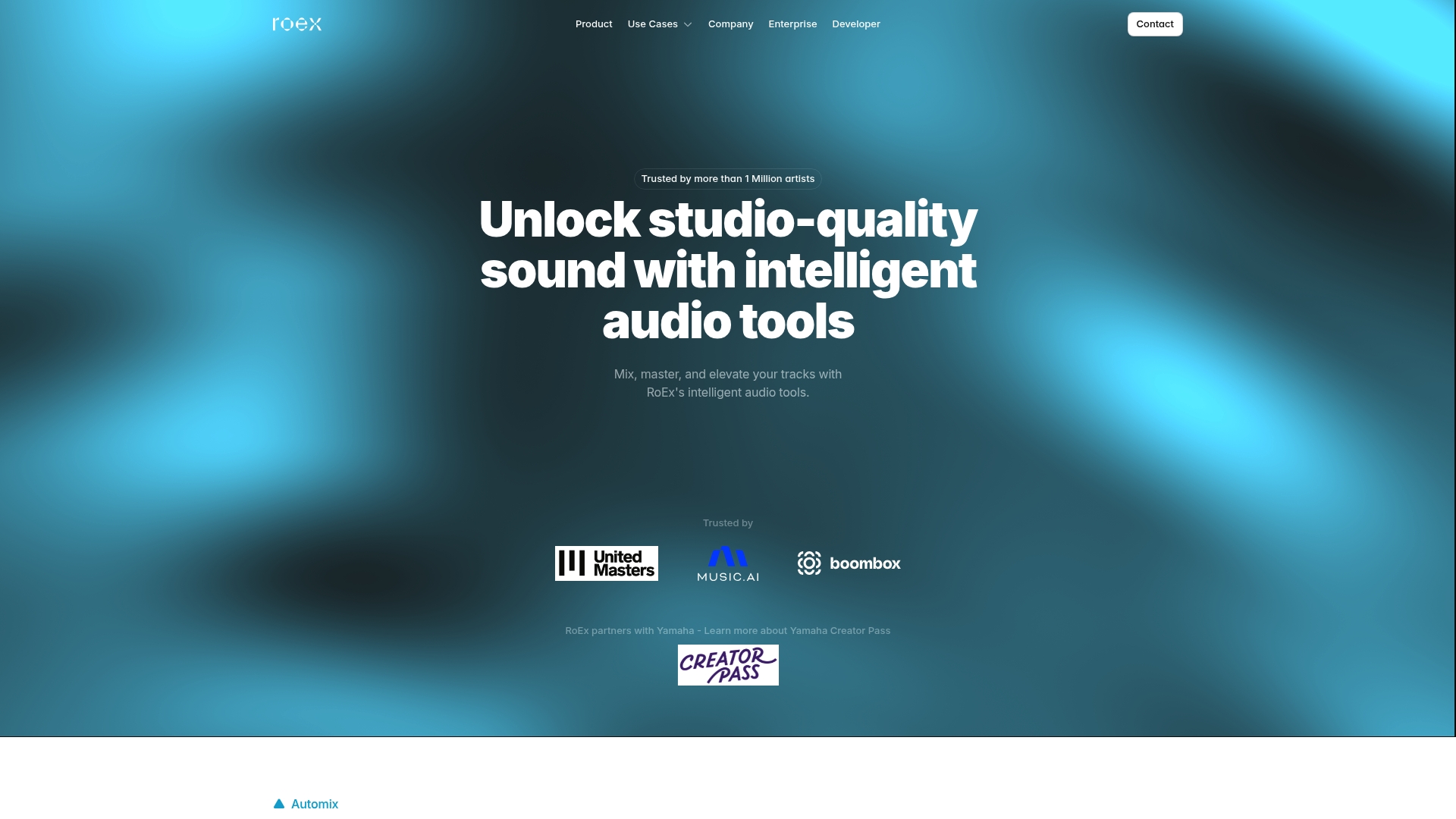
RoEx reports processing more than 6.5 million tracks worldwide, a figure the vendor highlights in marketing materials. Their workflow pairs quick, studio-style Automix sessions with Mix Check Studio analysis while promising users retain ownership of their audio files.
Core Features
- Automix for automated mixing and mastering that targets release-ready loudness and balance.
- Mix Check Studio for AI driven analysis and feedback on clarity, balance, and perceived issues.
- DAW integration options aimed at Ableton Live, Bitwig, and similar production hosts.
- Offline SDK and API for embedding processing into custom platforms.
- Clear user ownership rights for uploaded audio.
Key Differentiator
RoEx combines fast automixed results with written and visual analysis rather than only delivering a finished master. That dual approach helps you spot mix problems quickly while producing a release-ready file, and it keeps ownership rights with the creator rather than using files to train models.
Pros
- Fast turnaround. Automix gets a usable mix without deep manual setup, which speeds demos and release schedules.
- Actionable analysis. Mix Check Studio surfaces specific mix issues so you can fix problems before mastering.
- No training on user music is the vendor claim, which protects artists worried about model reuse and rights.
- Integrates into existing workflows. Ableton Live and Bitwig users report smoother handoffs compared with manual export and upload loops.
- Offline SDK and API support lets small services or labels add RoEx processing to their platforms.
Cons
- Fewer hands on controls than full DAW plugins, making detailed tone shaping harder for advanced engineers.
- Some product pages and feature details appear sparse, suggesting incomplete documentation or placeholders.
- Pricing strategy mixes subscriptions and per download credits, which may add up if you move many tracks to final delivery.
- Users seeking highly custom routing or creative plugin chains will find the automated path limiting.
When It May Not Fit
If you need per channel automation, custom bus routing, or fine grained plugin chains inside your DAW, RoEx’s automated flow will feel restrictive. Turn to RoEx for speed and consistency, not for manual console style mixing.
If your studio relies on plugin recall, external control surfaces, or proprietary mastering chains, the limited on screen controls and incomplete documentation may interrupt that work pattern.
Who It’s For
Independent musicians, bedroom producers, and small studios who want fast, professional sounding mixes without hiring an engineer. Also useful for artists who must keep ownership clear while outsourcing polishing steps.

Real World Use Case
A bedroom electronic producer runs stems through Automix to get a balanced starting master, then opens Mix Check Studio to identify masking in the mids. After two quick passes the track is loudness matched and ready for distribution while the producer retains full ownership.
Pricing
Start mixing for free and pay only for downloads. Options include Free, Pay As You Go from $5.99 per download credit, and Pro subscription at $14.99/month for ongoing access and discounted credits.
Website: https://roexaudio.com
Vocs AI
At a Glance
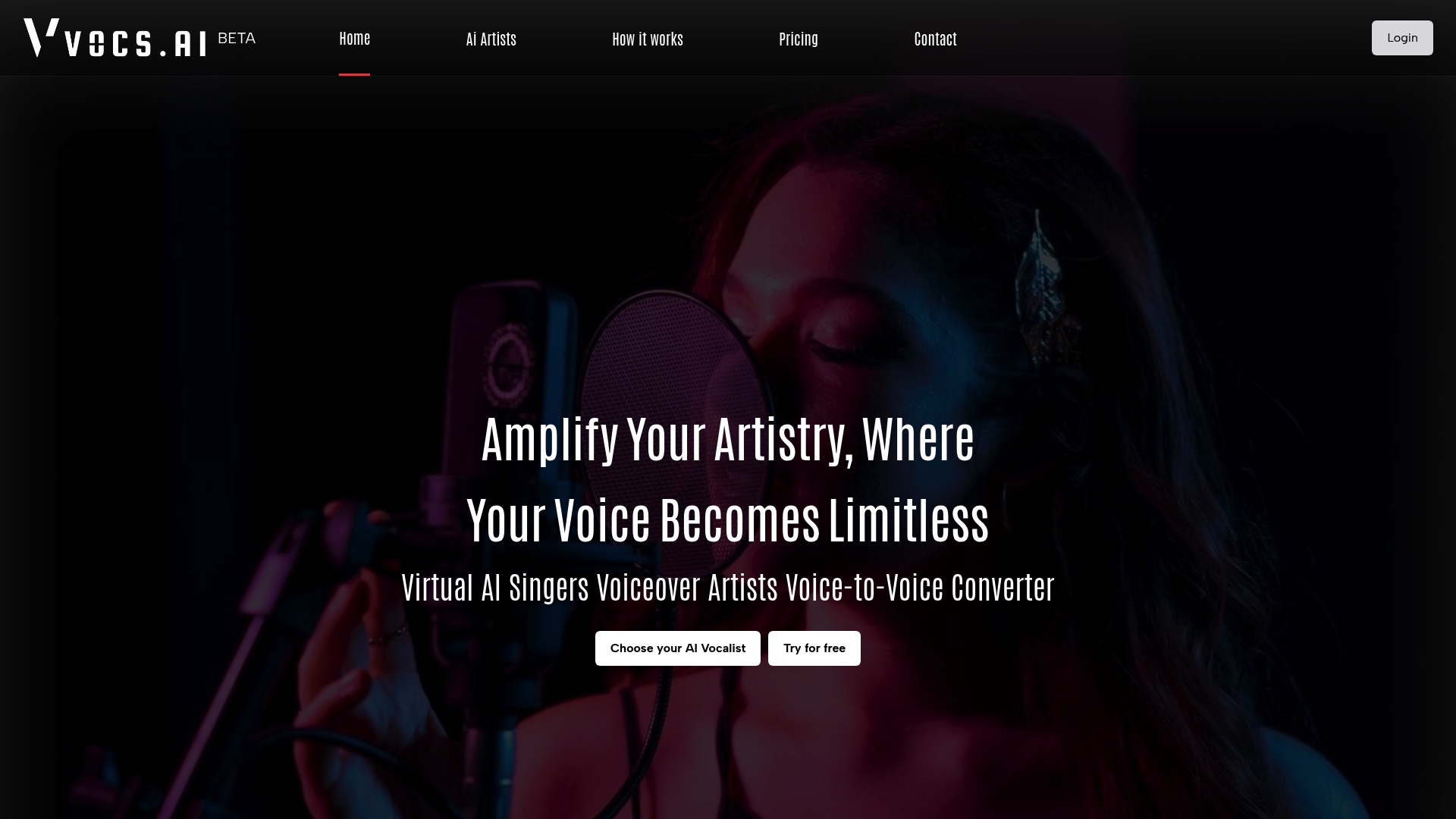
Vocs AI advertises more than 20 AI artists you can convert a clean acapella into while adjusting pitch, tone, and emotional delivery. The vendor also positions the product as a beta platform that lets creators download AI vocals for commercial use.
Core Features
- Upload clean acapella vocals in WAV or MP3 and run a single conversion pass.
- AI artists selection with singers, rappers, narrators, and character voices to pick distinct timbres.
- Controls for pitch, tone, and emotion so you can shape phrasing and attitude before export.
- Downloadable AI converted vocals cleared for commercial use plus a library of royalty-free music and loops.
Key Differentiator
The company highlights user-controlled emotion and sound customization as the core differentiator. That emphasis means you are not just swapping timbre; you can nudge a performance from deadpan to aggressive or from intimate to bold without re-recording.
Pros
- Easy conversion workflow speeds experimentation. You upload a vocal, pick an artist, tweak delivery, and download a result that can slot into a session quickly.
- The emotional control above helps producers test multiple artistic directions without booking singers for every pass.
- Includes royalty-free backing tracks and loops, which saves time sourcing stems for demos and rough mixes.
- Multiple voice styles lower the cost of A/B testing vocal arrangements compared with hiring several session singers.
- No complex setup reported in the product description, so you can get started without infrastructure changes.
Cons
- Public feedback skews mixed to negative with repeated reports of service outages and reliability problems.
- Several users complain about poor customer support and difficulty cancelling subscriptions, which raises billing risk for long projects.
- Limited transparent user reviews make it hard to verify consistency across genres and dense mixes.
- Beta-stage tooling means features and quality can shift rapidly between sessions.
When It May Not Fit
If you need rock-solid uptime for deadline-driven releases, this product’s reliability concerns make it a risky choice. Teams that require responsive customer support or clear recurring billing procedures will find the current feedback problematic. If you want fully vetted public reviews, there are few available.
Who It’s For
Musicians, producers, and content creators who want rapid voice prototyping and are comfortable testing beta software. Also useful for voiceover artists exploring alternate takes or producers who need many vocal variations fast and cheaply.
Real World Use Case
A producer on a tight deadline uses Vocs AI to audition three vocal personalities for a hook without hiring singers. The team drops each converted vocal into their session, chooses the strongest performance, and files stems to mix the same day.
Pricing
Not applicable. The product data lists pricing as informational only and does not provide tier or per-use rates.
Website: https://vocs.ai
Vocalist.ai
At a Glance
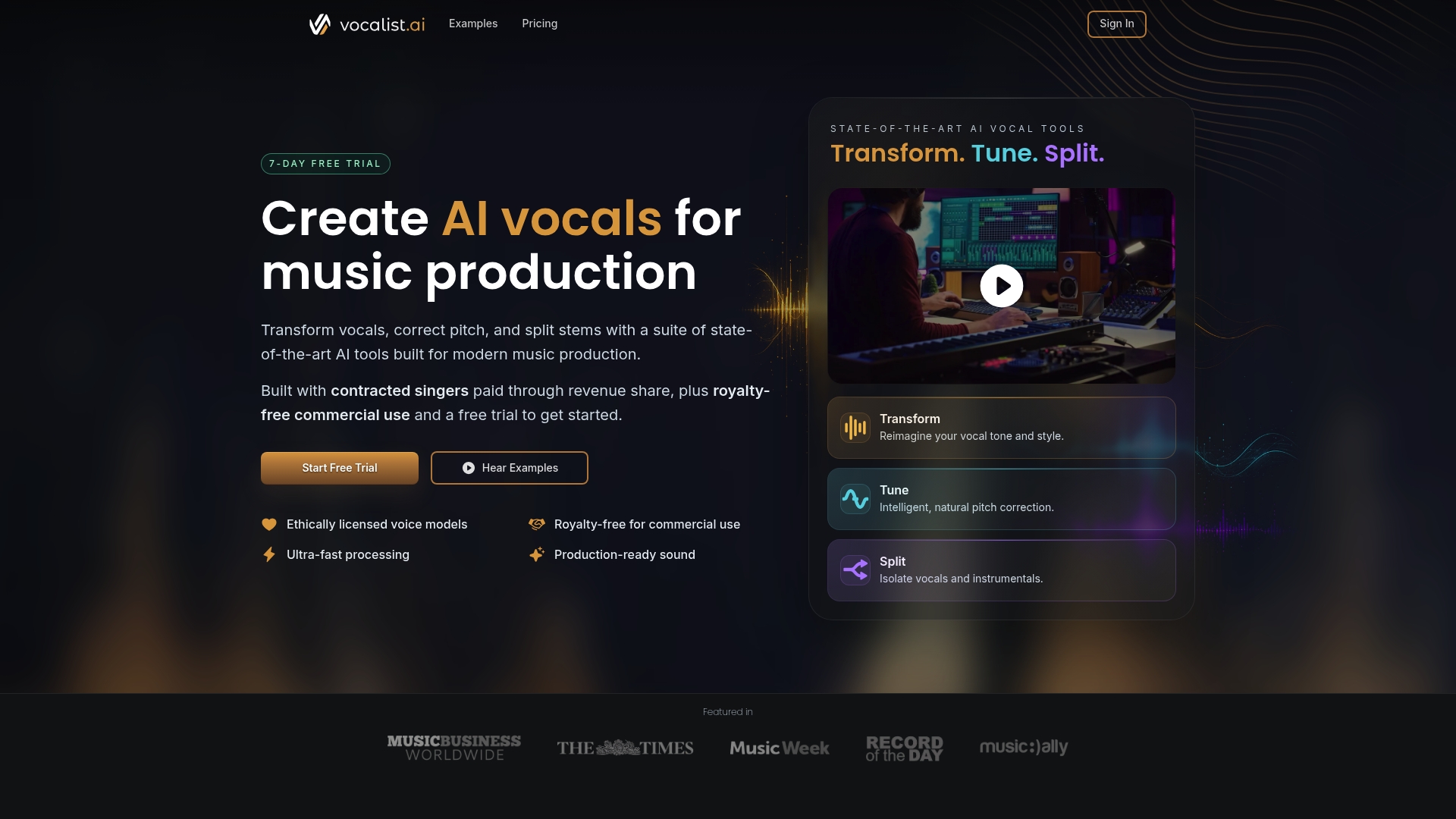
Outputs are licensed royalty-free for commercial release, and Vocalist.ai advertises that its voice models were trained with contracted singers who participate in revenue sharing and were certified as Fairly Trained. This ethical training claim is central to the product’s positioning.
The service also emphasizes ultra-fast GPU processing and the ability to turn a phone voice note into a production-ready vocal, which makes rapid iteration possible during writing sessions.
Core Features
- AI vocal transformation to change tone and style while keeping lyrical timing intact.
- Intelligent pitch correction that aims for natural tuning rather than robotic quantize.
- Stem splitting to extract vocals or instrumentals for remixing and sampling.
- Fast cloud processing with GPU acceleration for quick turnarounds.
- A royalty-free commercial use license for generated outputs.
Key Differentiator
The vendor frames its ethical stance as the key differentiator: contracted singers were used in model training and take part in revenue sharing. That training claim is the product’s main credibility lever for producers worried about licensing or artist consent.
Pros
- Built around ethically sourced voice models, which simplifies clearance questions when you plan a commercial release.
- Royalty-free outputs remove a common legal headache for indie producers and remixers preparing releases.
- Fast processing cuts iteration time; you can test vocal ideas between takes without waiting hours.
- The toolset covers multiple steps in the vocal chain from tone reshaping to stem separation, so you can handle prototypes without routing between several services.
- Subscription plans include rollover credits and permit unlimited transformations on higher tiers, which helps teams who need burst capacity.
Cons
- Input quality matters. Buyer reviews report that noisy or heavily processed inputs can produce artifacts, so clean dry takes work best.
- Some advanced controls introduce audible artifacts when overused; experienced tweaking and A B testing are required to avoid noticeable glitches.
- The product is cloud-only. There is no offline or standalone desktop application listed, which matters if you need local processing.
When It May Not Fit
If your workflow requires a DAW-native plugin or offline processing during travel, Vocalist.ai’s cloud-first model will slow you down. Producers who routinely work with noisy field recordings or layered harmonies will likely see inconsistent results from the service.
Also note that the free trial carries limits on commercial use, so you cannot release transformed vocals commercially until you move to a paid plan.
Who It’s For
Music producers, songwriters, remixers, and audio engineers who need quick, legally clear vocal transforms and stem splits for demos and releases. It suits creators who prefer cloud tools and who can deliver clean dry vocal stems for the best results.
Real World Use Case
A producer records a scratch vocal on a phone, uploads it, and uses Vocalist.ai to test three different singer styles in under an hour. After choosing the preferred tone, they split stems for a remix and release the final without extra clearance steps thanks to the royalty-free output.
Pricing
Plans start at $4.79 per month for the Starter plan and go up to $11.99 per month for the Elite plan, billed annually, with a 7-day free trial. Higher tiers add rollover credits and expanded transformation allowances.
Website: https://vocalist.ai
Comparing Home Recording and Vocal Production Guides
When selecting a resource for building a home studio or enhancing vocal production workflows, various options provide tailored benefits. Evaluating stangrtheman.com, Sauceware Audio, and RoEx Audio Tools reveals critical considerations for different user needs and goals.
Cost Efficiency and Usability in Home Studio Planning
stangrtheman.com offers a streamlined, step-by-step guide for constructing a home studio setup within a $200 budget. Its clear prioritization of room acoustics over premium gear ensures practical results for rappers and producers launching their creative spaces. Comparatively, RoEx Audio Tools simplifies audio refinement through its automated mixing solutions with fewer manual adjustments, allowing independent artists to achieve balanced audio without expert intervention. However, it may lack the same instructional depth for hardware procurement and acoustics.
Advanced Assistance for Rappers in Vocal Design
Sauceware Audio delivers solutions for rapid sound generation with plugins like Spawn and curated sample packs. While stangrtheman.com focuses on preconfiguration and ready-to-use setups, Sauceware Audio supports experienced users who already own the fundamental studio infrastructure and demand immediate results to expand their sound library. This distinction illustrates Sauceware’s niche appeal to intermediate and professional beatmakers.
Best Fit for Specific Use Cases
- Choose stangrtheman.com if you’re a solo rapper or home producer seeking to assemble a functional studio from scratch with clear instructions and an apartment-compatible strategy.
- Opt for Sauceware Audio if you prioritize curated samples and modern plugins designed to streamline the creation of chart-ready beats.
- Select RoEx Audio Tools for its efficient mixing and mastering automation, ideal for independent artists aiming to finalize their music efficiently.
Our Pick
For aspiring rappers constructing their initial home studio, stangrtheman.com stands out due to its guidance, affordability, and focus on foundational basics over costly equipment upgrades. However, those with an established infrastructure may explore Sauceware Audio for project-ready features.
Music Artist Promotion Platforms Comparison
Which platform offers the ideal balance of creative tools and accessible support for music promotion?
| Platform | Core Feature | Key Differentiator | Best For | Notable Limitation |
|---|---|---|---|---|
| Lit Nightz Records & Lit Nightz News | Comprehensive music promotion and distribution | Real-world use cases and practical roadmaps | Solo rappers and home producers | Beginner-focused content may lack depth for pros |
| Sauceware Audio | Plugins and sample packs for modern rap production | Developed by industry insiders for chart-ready presets | Producers seeking speed | Limited independent review coverage |
| MicDrop by Soundlabs AI | Real-time voice and instrument morphing | AI models optimized for MIDI workflows | Performative producers | Subscription model may deter casual users |
| RoEx Audio Tools | Automated track mixing | Keeps user rights intact throughout the process | Independent musicians | Limited manual mix control options |
| Vocalist.ai | AI-transformed vocals with ethical licensing | Voice models with artist participation | Music producers needing quick results | Online-only solution limits offline capability |
Unlock Your Best Rap Vocal Sound with Lit Nightz Records & Lit Nightz News
Finding the right plugin for rap vocals can feel overwhelming with so many options claiming to deliver studio-quality results. The article on the “Top 6 Best Plugins for Rap Vocals Alternatives 2026” highlights the challenge of balancing vocal clarity, tone shaping, and workflow simplicity—key pain points for aspiring artists wanting professional-sounding tracks without wasting time or money.
Lit Nightz Records & Lit Nightz News offers a space that connects you directly with insights and tools designed for rappers and hip-hop producers striving for real results. Explore practical techniques, artist stories, and industry news on our Rap / Hip Hop category to deepen your understanding of vocal production and plugin use.
Step up your craft today by visiting our Be Featured landing page. Gain exposure, master your vocal technique with proven strategies, and start turning your music ambitions into reality with actionable tips from seasoned artists like Stevie The Manager.
Also, discover community-driven content in the Rappers section where authentic voices share their journeys and solutions tailored just for you.
Frequently Asked Questions
How does Lit Nightz Records & Lit Nightz News enhance vocal production for rap artists?
Lit Nightz Records & Lit Nightz News provides a budget-friendly home studio setup, allowing artists to prioritize both gear and acoustic treatment. The guide emphasizes that you can build an effective vocal recording setup for approximately $200, focusing on affordable gear that produces great results. Start by selecting a cost-effective interface and microphone as recommended in the guide to establish a strong foundation for your recordings.
What is the difference between Lit Nightz Records & Lit Nightz News and Sauceware Audio?
Sauceware Audio offers high-quality modern sounds specifically tailored for fast beat-making and features royalty-free sample packs and plugins. While Sauceware is excellent for speed and polished results in beat production, Lit Nightz Records & Lit Nightz News focuses on establishing a functional home studio primarily for vocal recording, making it ideal for solo artists looking to improve their recording quality within a budget. Choose Lit Nightz Records & Lit Nightz News if your main goal is to build a personal recording environment on a tight budget.
Which platform is better for rapid vocal manipulation: MicDrop by Soundlabs AI or Lit Nightz Records & Lit Nightz News?
MicDrop by Soundlabs AI excels in real-time voice and instrument transformation with an extensive library, allowing for immediate effects during performance. Conversely, Lit Nightz Records & Lit Nightz News is designed for creating a suitable recording environment, focusing more on mic placement and acoustic treatment instead of live vocal effects. If you prioritize established recording techniques and room acoustics, Lit Nightz Records & Lit Nightz News will serve your needs more effectively.
Can I integrate Lit Nightz Records & Lit Nightz News with my existing DAW?
Yes, Lit Nightz Records & Lit Nightz News can easily integrate with various DAWs, offering a straightforward workflow for recording. The recommendations provided help you set up a budget-friendly studio that aligns with popular DAW requirements, enhancing usability and efficiency. This setup serves as an excellent starting point if you’re new to recording.
What features make Lit Nightz Records & Lit Nightz News suitable for beginners?
Lit Nightz Records & Lit Nightz News focuses on practical advice and a clear build order to create a complete home studio, making it particularly beneficial for beginners. The guide provides step-by-step instructions on aligning your purchases and emphasizes room treatment over expensive mic swaps, ensuring users get the best sonic results without overspending. This approach makes it simple for newcomers to build their sound as they learn.
Recommended
- How to Mix Rap Vocals Professionally: Pro Tips
- How to Record Rap Vocals at Home Like a Pro
- How Rap Technology is Revolutionizing the Hip-Hop Industry – Stevie The Manager aka Stangr The Man
- Top 4 Best Daw for Rap Music 2026 Alternatives

No Comments