

Album art’s role in shaping hip-hop identity
TL;DR:
- Album art in hip-hop serves as a powerful cultural declaration and identity marker.
- Designs reflect genre evolution, social messages, and artistic influences across eras.
- Authentic visuals, whether handmade or digitally crafted, deepen fan connection and cultural impact.
Most people credit the beat, the bars, or the artist’s persona when they think about what makes hip-hop powerful. But the cover staring back at you from a record shelf or a streaming thumbnail? That visual has been doing serious cultural work since hip-hop’s earliest days. Album art is not decoration. It is a declaration. From the raw street photography of the 1980s to the surreal digital maximalism of today, hip-hop’s visual language has shaped how the genre is perceived, respected, and remembered. This guide breaks down how album art became a cornerstone of hip-hop identity and what that means for fans, artists, and visual creators alike.

Table of Contents
- How album art defines hip-hop’s visual identity
- Key figures and movements in hip-hop album art
- Cultural meanings: How album art challenges and elevates
- How today’s artists and designers can maximize album art’s impact
- A fresh perspective on album art’s evolving role in hip-hop
- Elevate your hip-hop journey with our expert resources
- Frequently asked questions
Key Takeaways
| Point | Details |
|---|---|
| Visuals are vital | Album art is as crucial as music for expressing hip-hop’s identity and brand. |
| History shapes styles | Key figures and evolving art movements influence today’s album cover aesthetics. |
| Cultural impact | Bold album visuals challenge stereotypes and elevate hip-hop’s cultural influence. |
| Artists need strategy | Effective album art combines authentic storytelling with practical design tactics for lasting impact. |
How album art defines hip-hop’s visual identity
Album covers started as simple packaging. Then hip-hop got hold of the format and turned it into something else entirely. A statement. A flag. A story told before a single bar is heard. The cover became the first handshake between an artist and their audience, and in hip-hop, that handshake had to be real.
The 90s hip hop influence on visual culture was massive. Artists like Nas, Wu-Tang Clan, and Notorious B.I.G. used their covers to signal street credibility, community pride, and artistic ambition all at once. The imagery was not accidental. Every color choice, pose, and backdrop was a deliberate communication.
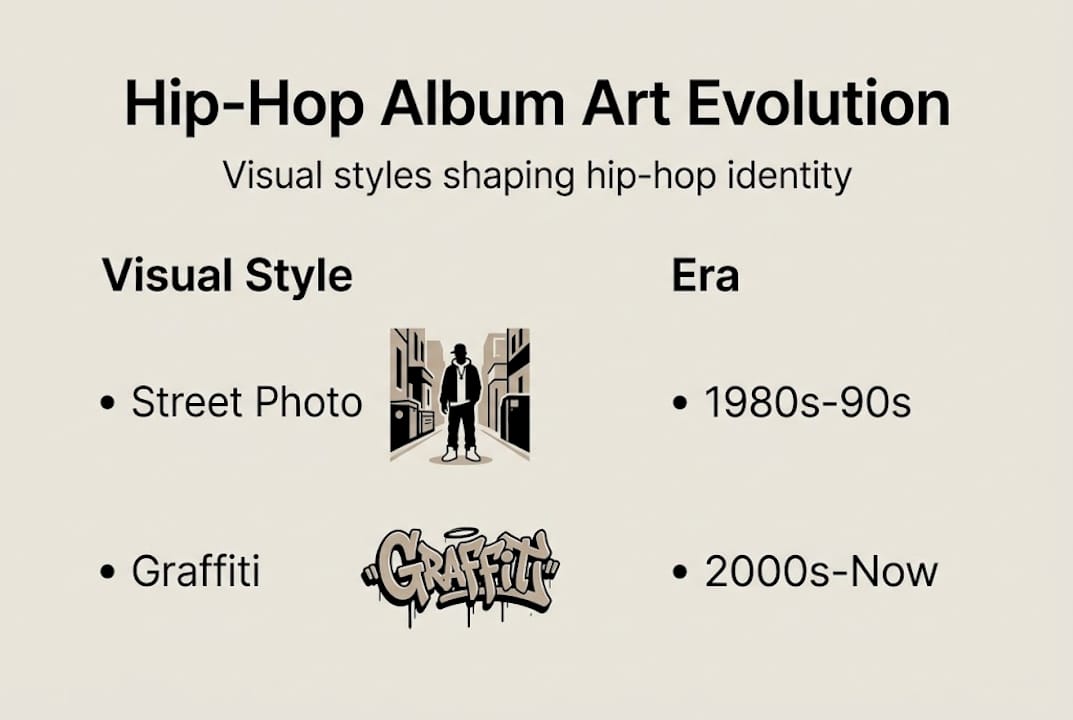
Visually, hip-hop has always pulled from a wide toolkit. Visual methodologies include urban street photography, graffiti integration, fine art intertextuality, 3D rendering, and hand-drawn illustrations, evolving from raw authenticity to surreal maximalism. That range tells you everything. Hip-hop did not settle for one visual lane. It borrowed, remixed, and reinvented across decades.
This connects directly to the 4 elements of hip hop culture: MCing, DJing, breakdancing, and graffiti. Album art is where graffiti culture and visual storytelling merged with the music itself, creating a fifth, unofficial element that fans and critics rarely name but always feel.
| Visual style | Era | Key characteristics |
|---|---|---|
| Street photography | 1980s to 1990s | Raw, documentary, urban realism |
| Graffiti integration | 1990s to 2000s | Bold lettering, murals, color blocking |
| Fine art references | 2000s to 2010s | Classical painting remixes, gallery aesthetics |
| Digital and 3D art | 2010s to present | Surrealism, maximalism, hyper-detailed renders |
| Hand-drawn illustration | Ongoing | Authentic, tactile, personal storytelling |
Pro Tip: If you are an artist or designer working on a cover, reach out to local muralists or graffiti artists in your city. Their work carries neighborhood-specific energy that no stock image can replicate. Authentic collaboration produces visuals that fans feel, not just see.
Album art also functions as a bridge between urban authenticity and high art. When Kendrick Lamar’s To Pimp a Butterfly cover placed Black men on the White House lawn, it was not just provocative. It was a visual argument. That is the power hip-hop has always known how to use.


Key figures and movements in hip-hop album art
Behind every iconic cover is a creative mind who understood both the music and the moment. A few names stand above the rest when mapping how hip-hop’s visual identity was built.
Cey Adams served as Def Jam’s creative director and shaped the visual identity of artists like the Beastie Boys and Public Enemy. Alex Steinweiss, though predating hip-hop, pioneered the very concept of album cover art in the 1940s, establishing the idea that packaging could be expressive rather than purely functional. Craig Dyer is a contemporary hip-hop illustrator who champions traditional techniques over AI-generated work, arguing that the human hand carries meaning that algorithms cannot replicate.
These three figures represent three different eras and philosophies, but they share one belief: visuals are not secondary to music. They are equal partners.
| Designer | Era | Style | Philosophy |
|---|---|---|---|
| Alex Steinweiss | 1940s to 1950s | Graphic design, illustration | Art as packaging’s purpose |
| Cey Adams | 1980s to 2000s | Street-informed, bold typography | Authenticity through urban visual language |
| Craig Dyer | 2010s to present | Hand-drawn illustration | Traditional craft over digital shortcuts |
The movements these figures represent also mirrored shifts in hip-hop music and fashion. When hip-hop went from boom-bap to gangsta rap, covers shifted from colorful graffiti murals to harder, more confrontational photography. When the genre embraced luxury and mainstream crossover in the 2000s, covers started incorporating fashion editorial aesthetics. You can trace the music’s evolution just by flipping through cover art across decades.
Innovative album rollouts have also changed how covers function. In the streaming era, a cover is often the first thing a potential fan sees on a playlist or algorithm recommendation. That thumbnail has milliseconds to make an impression. The pressure on visual design has never been higher.
Hip-hop fashion and album art have always fed each other too. A cover featuring a specific jacket or sneaker could move units of that product overnight. That is not coincidence. It is hip hop fashion influence operating in real time, with album art as the medium.
Cultural meanings: How album art challenges and elevates
Album art in hip-hop has never been just aesthetic. It carries weight. It speaks to power, identity, and resistance in ways that words sometimes cannot.
Hip-hop covers have long functioned as visual protest. Public Enemy’s covers used military imagery to challenge systemic racism. Kendrick’s work referenced classical paintings to demand that Black art be taken seriously in the same spaces as European masterpieces. This is not accidental symbolism. It is strategy.
“Hip-hop album art challenges class and cultural hierarchies by intertextually recoding fine art tropes in lyrics and visuals, elevating the genre from ‘lowbrow’ to a critical cultural force.”
This process of visual intertextuality, referencing fine art within hip-hop’s visual language, redefines the genre’s cultural status. It says: we know your canon, and we are rewriting it. That is a powerful act, and it happens on album covers before a single listener presses play.

The cultural impact of hip-hop extends far beyond music charts. Visual storytelling through album art has been central to that reach. Here are some of the major cultural messages that appear consistently across hip-hop covers:
- Community pride: Featuring neighborhoods, local landmarks, or community members as subjects
- Wealth and aspiration: Luxury imagery used as both celebration and critique of economic inequality
- Black excellence: Regal poses, African imagery, and references to historical figures
- Resistance and defiance: Confrontational stances, protest symbolism, and political iconography
- Spirituality and identity: Religious references, introspective portraiture, and symbolic color use
The influence of female rappers on album art’s cultural messaging has also been significant. Artists like Missy Elliott, Nicki Minaj, and Cardi B have used their covers to challenge beauty standards, reclaim sexuality on their own terms, and assert creative authority in a male-dominated space. Their visual choices expanded what hip-hop album art could say and who it could speak for.
How today’s artists and designers can maximize album art’s impact
Knowing the history is one thing. Applying it to your own creative work is where the real value lives. Whether you are an independent rapper putting out your first project or a visual artist building your portfolio, these steps can help you create album art that actually connects.
- Define your visual identity first. Before you open any design software, write down three words that describe your sound and your story. Your cover should express those words without using any of them.
- Research your visual references. Study covers from artists whose aesthetic aligns with yours. Note what techniques they use: color palettes, composition, typography choices. Build a mood board before you start creating.
- Choose your medium intentionally. Traditional illustration techniques are valued by many illustrators over AI-driven art because they carry a tactile authenticity that digital shortcuts often lack. Know why you are choosing the tools you use.
- Collaborate with someone who knows your world. A designer who has never been to a hip-hop show will produce something different from one who grew up in the culture. Shared context produces sharper visuals.
- Test before you finalize. Show your cover to five people who represent your core audience. Ask them what they feel, not what they think. Emotional response is the real metric.
- Consider how it looks at thumbnail size. Most fans will first see your cover as a tiny square on a streaming platform. If the image loses all its impact at that scale, redesign it.
Pro Tip: Run your cover by your most honest fans before release, not your most supportive ones. You need the people who will tell you the truth, not the ones who will hype anything you do.
Storytelling through visuals builds a stronger fan connection than almost any marketing tactic. When your cover tells a story, fans feel like they are being let in on something. That sense of access creates loyalty. Pair strong visuals with smart hip-hop marketing strategies and you have a release that builds real momentum. Visual consistency across your cover, your music video, and your social presence tells fans you are serious about your craft.

A fresh perspective on album art’s evolving role in hip-hop
Here is something most conversations about streaming miss: digital platforms have not made album art less important. They have made it more important. When your cover competes against thousands of thumbnails in a playlist, you have one second to earn a click. That is a higher-stakes visual test than any record store shelf ever was.
Conventional wisdom says streaming killed the album format, so covers do not matter as much. That thinking is wrong. Visual branding now drives discovery. A striking cover gets shared on social media, embedded in editorial playlists, and screenshot by fans. It becomes its own content.
Emerging tools like AI image generation are real, but they are a complement to authentic artistry, not a replacement. The artists and designers who will define hip-hop’s next visual era are the ones who use new technology to amplify their own vision, not to replace the creative thinking behind it.
Treat your album art as part of your cultural legacy. Stevie The Manager’s releases under Lit Nightz Records reflect that understanding. The music video relevance conversation applies here too: visuals are how your music lives beyond the speakers. Make them count.
Elevate your hip-hop journey with our expert resources
If this breakdown of album art’s power has you thinking differently about your own creative or promotional approach, there is more where this came from. At stangrtheman.com, we have built resources specifically for hip-hop artists and fans who want to go deeper on culture, branding, and music promotion.

Start with the origins of hip hop culture to ground your understanding of where the visual tradition comes from. Then work through the hip-hop album release guide to build a launch strategy that puts your art front and center. For ongoing promotional tactics, the music marketing strategies guide gives you a practical framework to grow your audience and make your visuals work harder for you.
Frequently asked questions
Why is album art so important in hip-hop culture?
Album art visually defines a rapper’s identity, communicates their message, and sets their work apart in a crowded musical landscape. Visual methodologies like street photography and graffiti integration have made covers a primary cultural statement in hip-hop.
Who are some legendary hip-hop album cover designers?
Cey Adams, Alex Steinweiss, and Craig Dyer are among the most influential for their innovative, style-defining contributions across different eras of the genre.
How does hip-hop album art challenge stereotypes?
By referencing famous fine art and breaking class hierarchies, hip-hop covers elevate the genre’s cultural standing. Intertextually recoding fine art tropes positions hip-hop as a serious cultural force rather than a lowbrow format.
Are traditional illustration techniques still relevant for album covers?
Absolutely. Craig Dyer emphasizes traditional illustration over AI-generated designs, and many fans and critics respond more deeply to hand-crafted work because it carries a human authenticity that algorithms cannot manufacture.

Recommended
- The Rise of Female Rappers: How They’re Shaping the Future of Hip-Hop – Stevie The Manager aka Stangr The Man
- Why 90s Hip Hop Became The Most Influential Music Era Ever – Stevie The Manager aka Stangr The Man
- The Hidden Story Behind Hip Hop Fashion: From Streets to High Fashion (NOV 2025) – Stevie The Manager aka Stangr The Man
- How Hip Hop Style is Shaping Fashion Trends in 2025 – Stevie The Manager aka Stangr The Man

No Comments