
Music Networking in 2026: Build Real Industry Connections
What is music networking and why does it matter?
Music networking is the intentional process of building professional and social relationships within the music industry to advance your career and access opportunities that cold outreach rarely delivers. Think of it as the infrastructure beneath every career milestone: the sync deal that came through a producer’s referral, the festival booking a promoter offered because they knew your name, the co-write that happened because two artists shared a rehearsal space.
The core idea is simple. You build genuine connections over time, and those connections compound. Each relationship you nurture expands your reach, your credibility, and your access to rooms you could not enter alone.
Here is what music networking actually looks like in practice:
- Getting recommended for a session because a sound engineer trusts your professionalism
- Landing a sync placement through a music supervisor who already knows your catalog
- Booking a festival slot because a promoter heard your name from someone they respect
- Finding a co-writer through a shared studio, not a cold DM
- Getting introduced to a manager because a mutual contact vouched for your work
The distinction between genuine connections and superficial contacts is everything. A contact list of 500 people who barely remember you produces nothing. Thirty people who trust you and think of you when opportunities arise can change your career trajectory.
Why networking drives music career growth
Most significant opportunities in music circulate through personal relationships before they ever reach public channels. The best management spots, sync placements, and festival bookings typically go to people inside trusted networks first. That is not gatekeeping. That is how trust-based industries have always worked.
The scale of competition makes this even more pressing. Over 200,000 tracks are uploaded to streaming platforms every single day. Talent is the baseline requirement, not the differentiator. What separates visible artists from buried ones is often the relationships they have built.
Key benefits of strong music industry connections include:
- Access to insider opportunities before they reach public listings
- Warm introductions that establish credibility instantly, unlike cold submissions
- Trusted endorsements that get your emails opened and your demos heard
- Long-term career support from people who have watched you grow and believe in your work
- Collaborative momentum that generates new projects, sessions, and creative directions
The rise of independent music has made this even more critical. Without a label handling introductions, independent artists build their own web of connections from scratch. That is not a disadvantage. It is an opportunity to build something more authentic and durable.
How to network in music: strategies that actually work
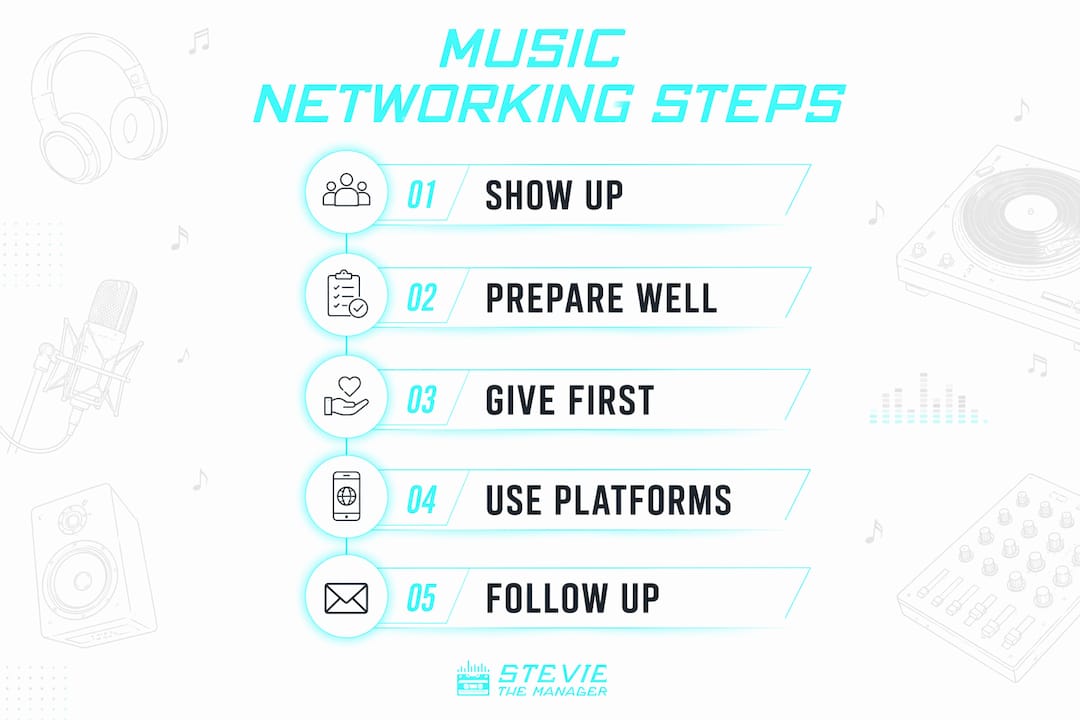
The most effective music networking strategies in 2026 are project-first, not relationship-first. Start by doing things, and the connections follow naturally.
Show up where music is actually happening
Local shows and open mics consistently outperform formal industry mixers for meeting useful people. The other bands on the bill, the sound engineer, the promoter who booked the night — these are people with real context in your scene. Seeing someone perform before you approach them gives you something genuine to say. “I caught your set last Thursday” opens a conversation. “I saw you on Instagram” does not.
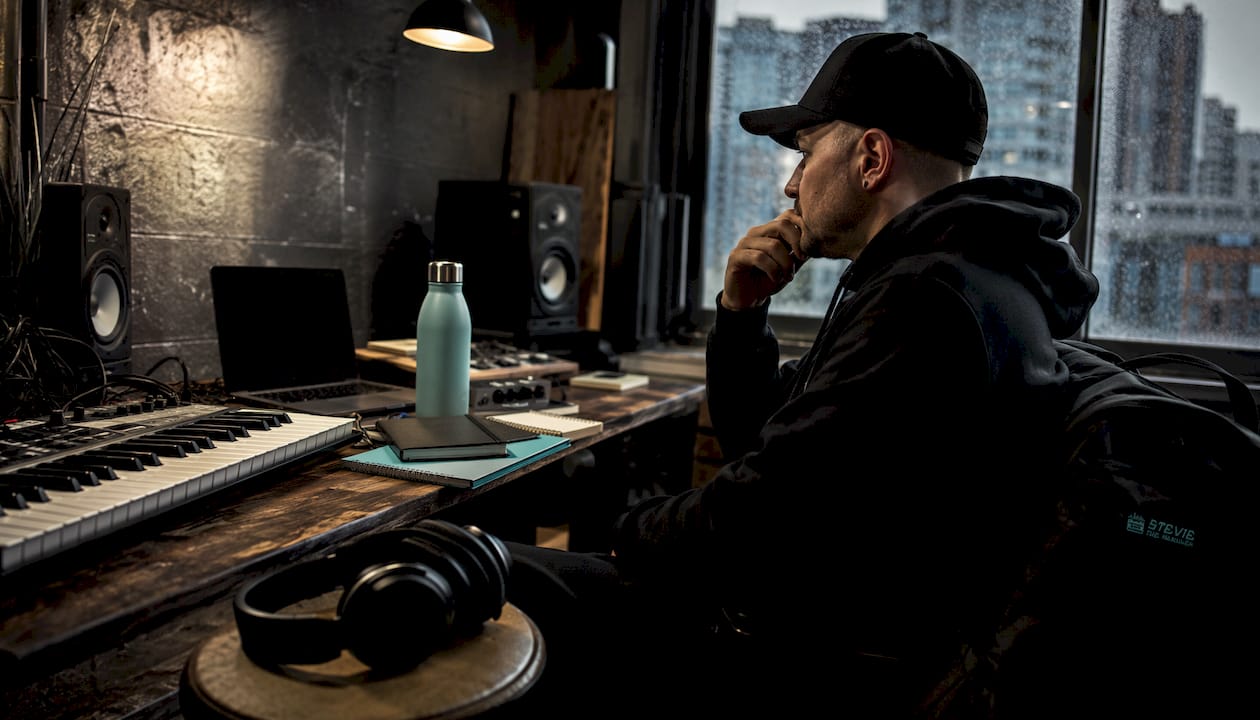
Recording studios and rehearsal spaces work the same way. Booking time in a shared facility puts you in physical proximity with other working musicians repeatedly, without any forced introduction ritual.
Prepare before every industry event
Targeting a few meaningful conversations at a conference outperforms collecting many business cards with no real engagement. Research who will attend, identify specific people you want to meet, and prepare genuine questions about their work. Listen more than you speak. Take notes right after each conversation.
Pro Tip: Follow up within 24 hours with a specific, low-friction message. Not “great to meet you” but “I’m recording a track in the next few weeks — would you be open to a quick conversation about playing on it?” Specificity converts interactions into actual collaborations. Vagueness leads to dead ends.
Give before you ask
The fastest way to become someone worth knowing is to be useful before you need anything. Share someone’s release because you genuinely like it. Show up for their event. Offer to play on a demo while you are still building the relationship. This is not transactional. It is how trust works in creative communities, and it is the foundation of authentic music collaboration.
Use digital platforms with intention
Social media supports networking best by sustaining relationships and sharing genuine engagement, not by cold outreach. Document your creative process on Instagram so people who meet you in real life can find you and see what you are building. Engage on LinkedIn by commenting substantively on industry posts, not just liking them. Join Discord servers for musicians in your genre and participate consistently, not only when you have something to promote.
The DM-to-response rate for strangers is low and declining. Where digital platforms genuinely work is deepening connections that already exist in the physical world.
Avoid the most common mistakes
- Pitching your music the moment you meet someone
- Treating every interaction as a transaction with an immediate goal
- Collecting contacts without any plan to follow up meaningfully
- Sending vague follow-up messages that give the conversation nowhere to go
- Only reaching out to people when you need a favor
Insider perspectives on music networking for emerging artists
The artists who are genuinely good at networking are not running a sales operation. They show up to things. They remember what someone was working on. They speak well of the people they meet. They follow up when it makes sense, not just when they need something.
Networking is most effective when treated as authentic community participation, showing up consistently, supporting others, and building a reputation for reliability. Each genuine connection expands your network in ways that compound over months and years, not days.
Professionalism is a networking asset that most emerging artists underestimate. Being easy to work with — flexible, communicative, prepared, and reliable — is what gets your name mentioned in rooms you are not in. Industry veterans consistently identify this as more valuable than aggressive self-promotion. If you show up late, miss credits, or go quiet after a session, people remember that too.
The project-first approach is the clearest path for independent artists. Releasing music, playing shows, contributing to other people’s recordings — each of these activities creates organic contact with musicians, engineers, promoters, and industry professionals. You do not need to engineer visibility if you are consistently producing work. The work circulates, and it brings people to you.
Pro Tip: Volunteer at events you genuinely care about. Working check-in, helping with merch, or assisting at a showcase puts you inside the room with a natural role. Connections form without any forced introduction, and you leave with real context on everyone you met.
For a deeper look at building your presence as an independent artist, Lit Nightz News covers independent artist career strategies that pair directly with the networking work you are doing now.
Key Takeaways
Music networking compounds over time: every genuine connection expands your reach, your credibility, and your access to opportunities that cold outreach cannot unlock.
| Point | Details |
|---|---|
| Define your approach | Music networking is intentional relationship-building, not contact collecting. |
| Volume is not the goal | 30 people who trust you outperform 500 contacts who barely know your name. |
| Project-first beats pitch-first | Releasing music and collaborating creates organic connections more effectively than cold introductions. |
| Follow up with specifics | A concrete ask converts a conversation into a collaboration; vague messages go nowhere. |
| Professionalism is currency | Being easy to work with gets your name mentioned in rooms you are not in. |
FAQ
What is networking in music?
Music networking is the intentional process of building professional and social contacts within the music industry to advance your career. It enables access to opportunities like sync deals, festival bookings, and collaborations that cold outreach rarely achieves.
Is it worth paying for a music networking event?
Paid events vary in value and should be evaluated against your specific goals. Free community platforms and local shows often produce stronger connections than expensive mixers, especially early in your career when you are still building something to talk about.
How do you follow up after meeting someone in the music industry?
Follow up within 24 hours with a specific, low-friction message that references your actual conversation. Ask about a concrete next step, like a session or a project, rather than sending a vague “great to meet you” note.
How does social media fit into music networking?
Social media works best for deepening existing connections, not creating new ones from scratch. Document your creative process, engage genuinely with peers, and use platforms like LinkedIn and Discord to stay visible to people who already know your work.
Recommended
- Music Industry Survival Tips for Independent Artists 2026
- Music marketing workflow for hip-hop artists in 2026
- Record Labels vs Independent Artists in 2026 Guide
- How to Share Music News: A Practical 2026 Guide

No Comments