

The Role of Merchandise in Music: 2026 Industry Guide
Merchandise is defined as the physical and digital products artists sell to fans as an extension of their artistic identity, and its role in music has grown from a side hustle into a core revenue engine. The role of merchandise in music now spans income generation, brand building, and fan loyalty in ways that streaming simply cannot replicate. Expanded rights revenue, which includes merchandise and live performance, grew 21.5% in 2025, outpacing recorded music. That number tells you everything about where the real money is moving.
What is the role of merchandise in music today?
Merchandise is no longer a bonus at the merch table. It is a primary income stream that rivals and often beats streaming revenue on a per-transaction basis. The industry term for this category is “artist merchandise,” and it covers everything from T-shirts and hoodies to vinyl, accessories, and digital collectibles.

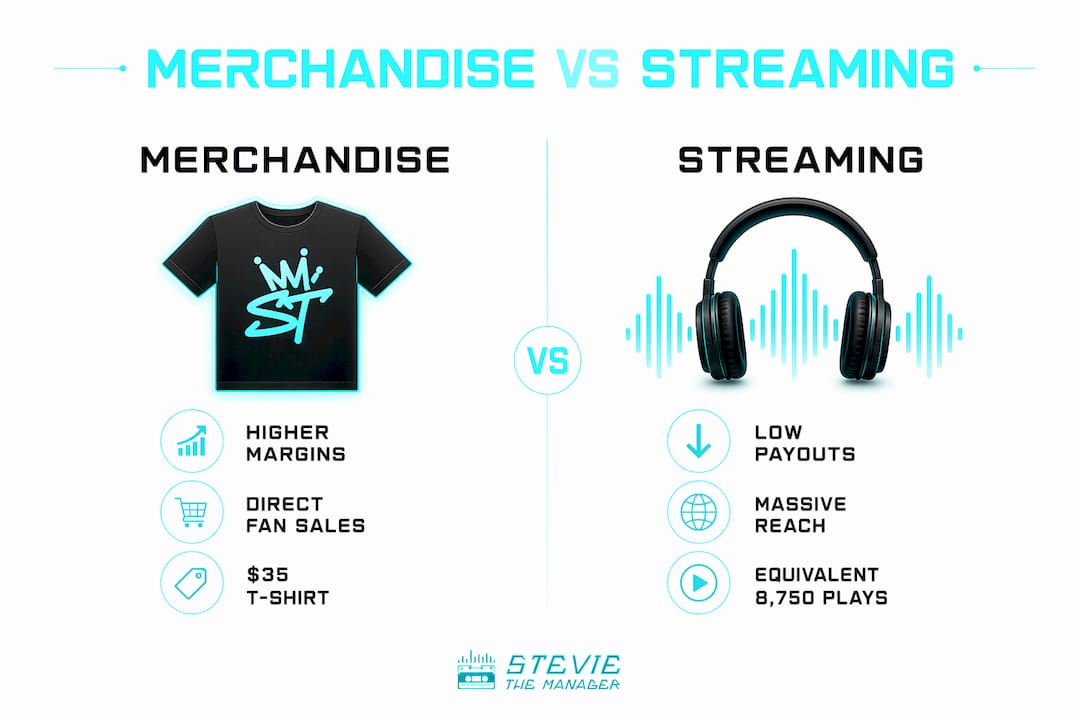
The math is stark. A single $35 T-shirt generates revenue equivalent to 8,750 Spotify streams. That comparison reframes the entire conversation about how artists should prioritize their income strategies. Streaming pays fractions of a cent per play. A well-priced piece of merch pays in full, upfront, with no algorithm involved.
Average merchandise revenue per head at live shows hit $10.29 in 2025, a 14% increase from 2024, with average item prices rising 9% in the same period. Fans are spending more per visit, and artists are capturing that value directly. This is not a trend. It is a structural shift in how music economics work.
How does merch revenue compare to streaming income?
Streaming democratized music access but compressed artist income to near zero per play. Merchandise flips that equation by giving artists direct margin control and a higher revenue ceiling per fan interaction.
The revenue gap between streaming and merchandise becomes clearest at live shows. Merch offsets rising touring costs without requiring artists to raise ticket prices, which protects fan relationships while stabilizing tour economics. Touring costs have climbed significantly in recent years, covering production, logistics, and crew. Merchandise absorbs that pressure in a way that ticket sales alone cannot.
Here is how the income comparison breaks down across key categories:
| Income source | Revenue per fan interaction | Artist margin control |
|---|---|---|
| Streaming | Fractions of a cent per stream | Very low |
| Digital downloads | Fixed price, platform cut | Moderate |
| Merchandise (standard) | $10–$35+ per item | High |
| Merchandise (limited drop) | $50–$200+ per item | Very high |
The table above shows why artists who treat merch as secondary are leaving significant money on the table. A focused merch strategy captures revenue that streaming structurally cannot deliver.
Pro Tip: Price your merch to reflect the quality of your brand, not just the cost of production. Fans who feel the value is fair spend more over time and return to future drops.
There is one critical caveat. Nearly 50% of fans find merch unaffordable, and 39% feel their fandom is being exploited. That data is a warning. Artists who price merch purely for margin without considering fan trust will erode the loyalty that makes merch valuable in the first place.
How merchandise shapes artist branding and fan identity
Merchandise has evolved from secondary income to a core element of artist lifestyle branding and identity building. A T-shirt is not just a T-shirt. It is a public declaration of affiliation, a wearable signal that says “I belong to this artist’s world.”
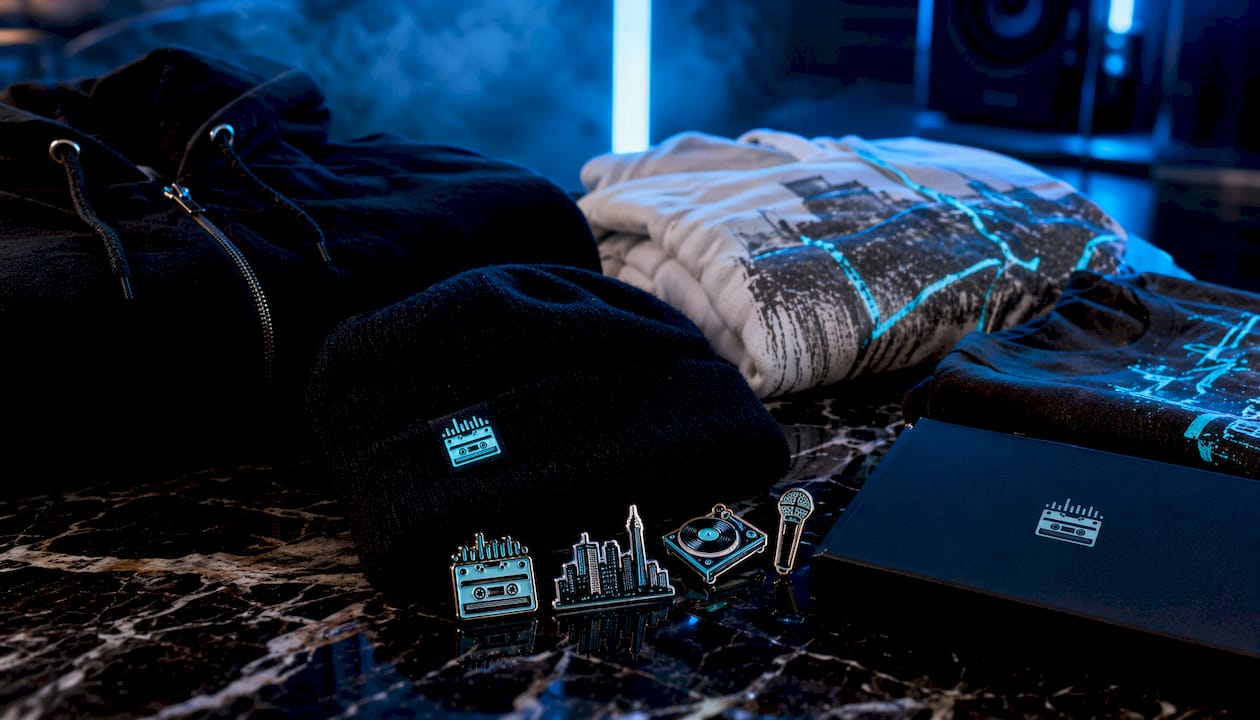
This shift matters because it changes how artists should think about product design. Generic logo tees serve a function, but merch that reflects an album’s visual language, a lyric’s emotional weight, or an artist’s personal aesthetic creates something fans want to wear beyond the concert. That longevity extends the artist’s brand into everyday life.

The most effective merch strategies align products with narrative moments. When an album drops, the merch that accompanies it should feel like part of the same story. Fans who connect emotionally with an album are primed to buy physical objects that anchor that connection. The product becomes a memory artifact, not just a purchase.
Fan co-creation takes this further. Fan-designed merch models turn fans into collaborators, increasing both engagement and sales while reducing risk for artists. When fans vote on designs or submit concepts, they develop ownership over the product before it even ships. That psychological investment converts browsers into buyers at a much higher rate.
Current trends in music merch branding include:
- Subtle, lifestyle-forward designs that fans wear in non-concert settings
- Limited capsule collections tied to album cycles or tour dates
- Fan-voted colorways and styles that create community participation
- Boutique quality materials that justify premium pricing
- Narrative-driven packaging that extends the album’s visual identity
Understanding fan engagement strategies is the foundation for building merch that fans actually want to own long-term.
What modern merchandise strategies actually work?
The most effective modern merch operations combine low-risk production models with multi-channel distribution and scarcity-driven demand. Artists who master all three build sustainable merch businesses rather than one-time revenue spikes.
- Print-on-demand production. Print-on-demand models eliminate inventory risk entirely. Artists list designs, fans order, and a third-party fulfillment partner prints and ships. No warehouse. No upfront cost. No unsold boxes of shirts. This model works especially well for independent artists testing new designs or entering merch for the first time.
- Multi-channel distribution. Combining owned storefronts with marketplaces maximizes reach and revenue. An artist’s own website captures the highest margin. Marketplace listings capture fans who discover the artist through browsing. Both channels serve different buyer behaviors and should run simultaneously.
- Limited drops and scarcity models. Limited-edition drops create urgency and emotional engagement that standard catalog items cannot replicate. A drop that sells out in 48 hours generates social media conversation, FOMO, and a secondary market that keeps the artist’s name circulating long after the sale closes.
- Digital product integration. NFTs, digital collectibles, and exclusive online content bundled with physical merch create hybrid products that appeal to tech-forward fans. This approach is still developing, but artists exploring Web3 fan engagement are building early-mover advantages in a growing space.
- Strategic campaign partnerships. Merch campaigns that align with partner lifestyle brands drive double-digit growth in exposure and revenue for both parties. The key is selecting partners whose audience overlaps authentically with the artist’s fanbase.
Pro Tip: Run a limited drop before a major tour date in each city. Local exclusives create urgency, reward dedicated fans, and generate social content that promotes the show organically.
For artists looking to understand how content formats drive fan behavior, connecting merch launches to content releases is one of the highest-leverage tactics available.

Practical advice for artists building a merch operation
Building a merch operation that works long-term requires more than uploading a design to a print-on-demand platform. It requires a product ladder, a pricing philosophy, and a release calendar tied to meaningful moments in the artist’s career.
A product ladder means offering items at multiple price points so every fan can participate. A $10 sticker pack, a $35 T-shirt, and a $100 limited hoodie serve three different buyer segments. Fans who start with the sticker often graduate to the hoodie over time. The ladder builds loyalty and lifetime value, not just single transactions.
Pricing philosophy matters more than most artists realize. The 39% of fans who feel exploited by merch pricing are not wrong to feel that way. Charging $60 for a basic tee with no premium quality signals disrespect for the fan relationship. Pricing should reflect genuine quality, not just demand. Artists who get this right build the kind of fan trust that sustains a career.
Key practices for a strong merch operation:
- Tie every major merch release to a meaningful moment: an album drop, a tour announcement, or a career milestone
- Use inventory management tools to track sell-through rates and avoid overproduction on non-POD items
- Communicate with fans about what merch represents, not just what it costs
- Reinvest a portion of merch revenue into product quality improvements each cycle
- Treat merch as a fan relationship tool, not just a revenue line
Music monetization works best when artists treat each income stream as part of a connected system. Merch, streaming, live shows, and licensing each reinforce the others when the brand is consistent.
Hip-hop and R&B fans spend above average on merchandise compared to fans of other genres. That is a significant opportunity for artists in these spaces who invest in quality merch programs early in their careers.
Key Takeaways
Merchandise is the highest-margin, most brand-aligned income stream available to artists, and those who treat it as a core business function rather than an afterthought will consistently outperform those who rely on streaming alone.
| Point | Details |
|---|---|
| Merch beats streaming per transaction | One $35 T-shirt equals 8,750 Spotify streams in revenue equivalence. |
| Fan trust determines long-term value | 39% of fans feel exploited by merch pricing; affordability and quality protect loyalty. |
| Print-on-demand removes risk | POD models let artists test designs with zero upfront inventory cost. |
| Limited drops drive cultural impact | Scarcity creates urgency, social conversation, and lasting brand memory. |
| Hip-hop fans lead merch spending | Hip-hop and R&B audiences spend above average on merch, making genre-specific strategies high-value. |
Merch, identity, and the independent artist reality
The conversation around merch in music tends to focus on major artists with full creative teams and six-figure production budgets. That framing misses the point entirely for independent artists.
I have watched independent artists treat merch as an afterthought for years, uploading a single design to a POD platform and wondering why sales are flat. The problem is never the platform. It is the absence of intention. Merch that does not connect to a clear artistic identity does not sell, regardless of how good the distribution is.

The artists I respect most in the independent space treat every merch drop the way they treat a single release. They think about the visual language, the timing, the story behind the product, and the fan experience of receiving it. That level of care shows up in the product, and fans feel it.
Lit Nightz Records operates on the principle that independent artists need to build real businesses, not just release music and hope for streams. Merch is one of the clearest paths to financial independence for an artist who does not have a major label advancing costs. A focused merch strategy, even at a small scale, creates recurring revenue that does not depend on algorithmic favor or playlist placement.
The data on fan exploitation is the most important number in this entire conversation. Artists who extract maximum revenue from fans without delivering genuine value will burn through their audience faster than any bad album could. The goal is not to monetize fans. The goal is to give fans something worth owning, and let the revenue follow from that.
— Stephanos G
Lit Nightz News and the business of hip-hop culture
Hip-hop has always been about more than music. It is a culture that produces artists who think like entrepreneurs, and merch is one of the clearest expressions of that mindset.

Lit Nightz News covers the business side of hip-hop because fans and artists both deserve accurate, honest analysis of how the industry actually works. Understanding hip-hop culture’s origins and impact gives context to why merch carries such weight in this genre specifically. Hip-hop built its identity through self-expression and ownership, and merch is a direct extension of that tradition. Lit Nightz Records supports independent artists who are building real careers, and that means understanding every income stream available. Explore why independent hip-hop keeps growing and what that means for artists building from the ground up.
FAQ
What is the role of merchandise in music?
Merchandise serves as a major revenue stream, a branding tool, and a fan engagement channel. It gives artists direct income that does not depend on streaming platforms or label advances.
How does merch revenue compare to streaming payouts?
One $35 T-shirt generates revenue equivalent to 8,750 Spotify streams. Merch offers significantly higher per-transaction income with greater margin control for the artist.
Why do limited-edition drops perform better than standard merch?
Scarcity creates urgency and emotional engagement that standard catalog items cannot replicate. Limited drops generate social conversation and fan loyalty that extends well beyond the sale window.
How can independent artists start selling merch without upfront costs?
Print-on-demand platforms allow artists to list designs with zero inventory investment. Orders are fulfilled and shipped by a third party, removing financial risk from the equation entirely.

Which music fans spend the most on merchandise?
Hip-hop and R&B fans spend above average on merchandise compared to fans of other genres, making these audiences especially valuable for artists with strong merch programs.
Recommended
- The music manager’s role: essential guide for hip-hop artists
- Music Industry Survival Tips for Independent Artists 2026
- Digital music promotion guide: boost your reach and fanbase
- Music marketing workflow for hip-hop artists in 2026

No Comments